When I wrote last week that Marvin Miller will be on the Hall of Fame’s veterans’ committee ballot next December for the eighth time, I was not suggesting that I knew that for a fact. The ballot will not be determined until the latter part of next year. Nevertheless, I was expressing my view that the Hall’s historical overview committee will surely put Miller on the 10-person ballot.
The committee will do that for one of two reasons:
- As one of the most significant figures in baseball history, Miller should be in the Hall of Fame.
- The committee will do Hall chairman Jane Clark’s bidding and put him on the ballot so the 16-member management-dominated electorate will reject Miller and enable the owners to have a good laugh and declare, “Yeah, we got him again.”
As a group, the owners shouldn’t have that feeling because only one owner, Jerry Reinsdorf of the Chicago White Sox, is still around since any part of Miller’s tenure as executive director of the Major League Baseball Players Association. But even those owners who came to baseball post-Miller are reminded of him when they sign a payroll check.
The owners hate Miller because he disturbed – destroyed – the one-sided nature of the payroll game. Actually, it was Miller and his general counsel, Richard Moss, who did that, but Moss will never receive the recognition he deserves until Miller does. Moss argued and won the Messersmith-McNally grievance. Nothing more need be said because the outcome of that case, which was decided by arbitrator Peter Seitz, brought free agency to baseball.
The owners, however, haven’t been the only people who have opposed Miller’s entry into the Hall of Fame. In response to last week’s column another baseball writer, freelancer Dan Schlossberg, registered his opposition to Miller’s election.
“While I agree that club owners did not compensate their players well before the arrival of Miller, the pendulum quickly swung the other way once he seized power and turned the Players Association into the nation’s most powerful labor union.
“He disrupted the game, with endless threats and work stoppages that effectively turned baseball from a sport into a business. Player allegiance to a particular team disintegrated, even after that team trained and nurtured the player for years. The advent of free agency also devastated fans who followed stars suddenly able to sell themselves to the highest bidder. Most of them wound up with the Yankees since George Steinbrenner had the deepest pockets during most of his tenure.
“As Charlie Finley wisely envisioned, arbitration and free agency unimpeded by a salary cap (which the other major sports have) sparked a salary spiral that has not stopped. Zack Greinke may be a fine pitcher but neither he nor anyone else is worth $1 million a start. And I’m sure you will agree that the minimum salary of $545,000 is totally unrealistic, especially for a rookie with no big-league experience. I remember when Sandy Koufax and Don Drysdale held out for $100,000 apiece.
“Thanks to Marvin Miller, MLB has had to concoct revenue-raising gimmicks like three-divisional play, double wild-cards, and interleague play in order for all teams to meet payroll. Also thanks to Marvin Miller, Cal Ripken’s consecutive games playing streak is not legitimate — there were too many labor disputes (especially the 232-day player strike) that gave him a rest Lou Gehrig never had.
“I’m a traditionalist, Murray, and Old School guy who loved baseball when it had two eight-team leagues, no playoffs, no interleague play, and a World Series between the two best teams in the major leagues. That rarely happens anymore.
“And, in my opinion, Marvin Miller is the main reason.
“In addition, he does not fit any category for election to the Hall of Fame. He was not a baseball executive, manager, umpire, or player — just as Scott Boras, another transformative figure, does not fit either (if any agent belonged in Cooperstown, he would be the logical choice). The Hall of Fame also needs categories for coaches and scouts, vital baseball occupations completely unrepresented in Cooperstown.
“Marvin Miller is 0-for-7 in Veterans Committee votes and I for one would prefer not to see him considered again.”
And here I thought I was a traditionalist. I may have to write a new definition of that term.
I’m afraid Mr. Schlossberg needs to envision what the game would look like if it were played in 2020 under the same format it was played in 1920. I might not agree with all of the changes that baseball has undergone, but change is necessary to keep the game vibrant.
Many fans would probably agree with Mr. Schlossberg that players’ salaries are outrageous, but I have long had two comebacks for that view. A player is worth what an owner is willing to offer him. No player or agent is putting a gun to the owner’s head.
In addition, if the owner doesn’t give that money to a player, what happens to it? Right. The owner keeps it for himself and makes more money while sitting with a fourth or fifth place team (it used to be seventh or eighth).
Some fans say the owner should get the money because he funds the team, but do fans deserve the old Washington Senators or Philadelphia Athletics? They spent their hard-earned money to watch those teams play. They deserved better than they got.
If some fans think an owner would spend more money to make his team better if he didn’t spend an exorbitant amount on one player, think again. The only thing less realistic would be owners reducing ticket prices. Players are paid what the market is willing to pay; ticket prices will also keep increasing as long as fans pay the prices.
CC MISSES BUT GETS BONUS
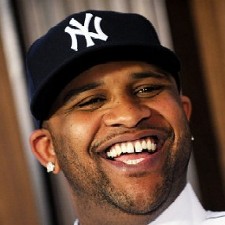 As the creator of coverage of baseball salaries, contracts and payrolls, which I initiated with the advent of free agency in 1976, I have great respect for reporters who get contract details without relying on someone else to publish them first. The best in that business today is Ron Blum of the Associated Press.
But last week Blum went a step beyond his usual contract coverage. Last week I saw a report that the Yankees paid CC Sabathia a $500,000 bonus even though he fell two innings short of the minimum number of innings required (155) to earn the bonus.
Without seeing any article about the Yankees’ uncharacteristic largesse, I knew this article had to be Blum’s. He confirmed it, explaining he figured it out when he was compiling team payrolls.
The Yankees, of course said nothing about the bonus, but that silence was routine. The Yankees don’t disclose players’ contract details. Not routine was their failure to disclose that Sabathia underwent a heart procedure earlier this month.
The 38-year-old, 300-pound pitcher had a stent inserted in an artery to unblock it. The procedure is not major surgery, but it is the heart. The Yankees said nothing about it until news reports began circulating. Once the news was out, General Manager Brian Cashman issued a statement “about the health of CC Sabathia” but didn’t say anything about how Sabathia’s health had been treated:
“We are thankful that CC was smart enough to convey his symptoms to our medical staff, and in turn they immediately engaged New York-Presbyterian Hospital, who quickly determined the root cause of what ailed him. We are also encouraged that the procedure CC underwent was performed as planned. He is such a dynamic person beyond his excellence on the field, and we will proceed with his health at the forefront of our priorities. We will continue to follow the guidance and expertise of the doctors — who have conveyed that CC will report as scheduled to Tampa in February to prepare for the 2019 season.”