When legal betting on professional sports first penetrated the realm of possibility, Major League Baseball was firmly opposed to the idea. The National Basketball Association lobbied aggressively for legal sports betting, but baseball remained silent. Belatedly, spurred by the N.B.A., baseball cautiously dipped its toe into the gambling water to take its temperature. Now baseball has catapulted 180 degrees from its original position and is pandering to bettors.

Baseball in bed with gamblers? Say it ain’t so, Shoeless Joe.
But where there’s money, there’s baseball.
Earlier this winter baseball notified clubs about a new requirement this year. They will have to submit their starting lineups for that day’s game no later than 15 minutes before the scheduled game time.
Explaining the new requirement, officials have said the aim is to protect the integrity of the game. They don’t want, for example, a clubhouse kid noticing a player limping in the clubhouse and calling a bookie to tell him about the injury.
But didn’t M.L.B. deal with that potential problem in 1920, after the 1919 Black Sox scandal, when it named a commissioner, Kenesaw Mountain Landis? Wasn’t that all about the integrity of the game?
The current commissioner, Rob Manfred, did not announce the lineup requirement, but his office issued a statement to reporters who learned of the edict and asked about it.
“We are updating a number of our procedures,” the statement said, “to reduce integrity risks associated with the expansion of sports betting in light of the Supreme Court’s ruling last May. One new procedure is that we now ask Clubs to submit starting lineups in a uniform fashion in order to reduce the risk of confidential information being ‘tipped.’ This approach mirrors those of international sports leagues in more developed betting markets.”
This season marks the 100th anniversary of the Black Sox scandal. Instead of introducing anti-risk steps, M.L.B. should celebrate 100 years of scandal-free baseball. Instead, Commissioner Manfred and deputy commissioner and chief legal officer Dan Halem jump into bed with gamblers, all in the interest of deriving new revenue for their owners.
Baseball officials, of course, deny that their new rules, including the lineup requirement, have anything to do with money. It’s the integrity, stupid. Gamblers, however, have been betting on sports forever. Their betting has been with bookies, but they have been betting.
Where were baseball commissioners when all of that was going on? Did that betting not pose risks for baseball? Manfred has been the commissioner for four years. Did he, until now, ever think that illegal betting might pose a risk for baseball? I would ask him, but he doesn’t talk to me because of columns like this one.
One official I did talk to cited the example of European soccer to defend baseball’s desire to protect the integrity of the game. That defense prompted me to use Google to seek soccer scandals and in no surprise to me, I found plenty of examples:
10 of the ugliest match-fixing scandals in football history
The 15 biggest soccer scandals of 2016
Europe hit by ‘biggest-ever’ match-fixing scandal
Is Euro Cup 2012 the most scandal-filled soccer tournament ever?
Financial scandal tarnishes Spanish soccer glory
Your guide to the World Cup’s corruption scandal
Are these the types of cases the baseball commissioner had in mind when he came up with his way to protect the integrity of the game? He would have provided far greater protection had he told gamblers to take their business elsewhere. But he liked the idea of getting their business and even made a deal last November with MGM Resorts International to serve as an official M.L.B. sponsor.
“I think that we have ensured ourselves on the integrity front,” Manfred said at that time, “by updating our policies, making clear what employees and players can and cannot do, on the one hand, and on the other hand, developing clear guidelines for the commercial activity that Central Baseball, meaning Major League Baseball, will engage in, and similarly, the kind of commercial activities that will be allowed on the club level as well. It’s more than just making a business deal. It’s having in place a set of policies for the industry that give us comfort on what is always our most important issue. That is integrity.”
I must be missing something here. In the past century—100 years — has anyone besides Pete Rose been caught violating M.L.B. anti-gambling rules? Have clubhouses been rife with gambling as they were with steroids under Commissioner Bud Selig and, for part of Selig’s tenure, under Manfred?
If Manfred felt policies had to be upgraded, what was he doing for the first few years of his term? Did it take the onset of legal gambling to tell him policies had to be upgraded?
The old policies seemed to work quite well; at least for 100 years they did. They kept everyone but Rose from betting on baseball, and they nabbed Rose when he did bet. Could the upgraded policies have done better?
Manfred can offer any explanation he wants for whatever he does, but here’s an explanation more grounded in reality. The American Gaming Association, in a study it commissioned by Nielsen Sports, projects that M.L.B. will gain approximately $1.1 billion a year from legal betting and ancillary revenue.
Manfred didn’t know that when he initially opposed marrying into a gambling family, but he’s apparently a quick learner and has fallen hard for the new relatives.
The MGM relationship is a sponsorship deal, not a gambling precursor, both organizations say, but when MGM signs show up throughout baseball this season, you’ll know that betting isn’t far behind.
One sign has already appeared, and you might not even be aware that the 2019 season has already started. The Oakland Athletics and the Seattle Mariners opened the season last week with two games in Tokyo, and the Athletics, in a deal of their own, separate from the M.L.B. deal, wore MGM patches on their uniforms. It was part of MGM’s effort to gain a foothold in the Japanese betting industry.
In this country, MGM has sponsorship deals with M.L.B., the National Basketball Association, the National Hockey League, Major League Soccer and the Boston Red Sox. The National Football League has a similar deal with Caesar’s Entertainment Corp.
An executive of a sports book operation said these deals aren’t betting deals but are headed in that direction. By ordering teams to submit their starting lineups no later than 15 minutes before game time, baseball is also moving in that direction.
The N.F.L. has for years had a weekly injury report, listing players who are injured and the level of their injuries. This weekly injury report is not for the benefit of the other teams. It is for the benefit of bettors, informing them of injuries so that the bettors are more informed before they make their bets.
The N.F.L. takes the injury report so seriously it fines teams if they omit an injury or are not candid about it.
It will be interesting to see how M.L.B. deals with teams that don’t submit the starting lineup they actually start the game with.
Knowing who is playing that day and who is not is of paramount importance to bettors. Knowing who the starting pitcher is provides critical information. So does the absence of a prominent player, such as Mike Trout or Aaron Judge. Give the bettor what he wants, what he needs. That’s what Manfred is doing under the guise of protecting the integrity of the game.
ICHIRO’S AMAZING RECORD
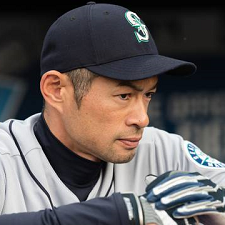 Ichiro Suzuki did the right thing by retiring in Japan, where he was born, lived and began his marvelous career. It is not surprising, though, that 45-year-old Ichiro did the right thing because he has always done the right thing.
That’s one of the many things I appreciated about Ichiro, who I decided several years ago was my favorite player. He was my favorite player because he always played the game the right way. No matter how well or not well he was playing, he respected the game. He never acted as if he felt he was bigger than the game.
To cite a player who comes across as one who thinks he is more important than the game I give you Bryce Harper. The $330 million man may appear the way he does because he has had success at such a young age.
He was, after all, just about ready for the majors when he was in high school and played in the majors when he was 19 years old. But I think he showed his immaturity after he signed with Philadelphia last month and instantly declared he would get Mike Trout to join him when Trout became a free agent in two years.
Harper was clearly tampering with Trout and looked foolish a few weeks later when Trout signed a contract that added 10 years and $360 million to his existing contract with the Angels.
Ichiro would never have said anything so foolish and wouldn’t have said it because he would have considered it disrespectful.
A Gold Glove outfielder 10 times, he batted .311 and played for 17 full seasons and 15 games last year before Seattle released him May 3. The Mariners re-signed him this spring so he could retire with them.
Perhaps the most impressive statistic on his record was the single ejection he incurred in 2,651 games. Brian Runge ejected Ichiro Sept. 26, 2009, in the fifth inning of a game the Mariners were playing in Toronto.
After Runge called him out on a third strike, Ichiro drew a line in the dirt indicating where he thought the pitch was – not in the strike zone – and Runge ejected him. For the sake of comparison, Harper has been ejected 11 times in 927 games.