I don’t know the derivation of the goofy saying that someone is turning over in his grave, but right now Bowie Kuhn must be turning over in his grave.
As commissioner from 1969 to 1984, Kuhn was so adamantly opposed to Major League Baseball having any link to gambling he banned Willie Mays and Mickey Mantle from the game because they had public relations jobs with Atlantic City casinos. After he was retired as commissioner, he criticized a successor, Fay Vincent, for allowing Lotto signs in ball parks.
Today, M.L.B. has a commissioner, Rob Manfred, who has sold his soul for a mess of pottage, in this case, millions of dollars that he negotiated to gain from MGM Resorts International as a sponsor of M.L.B. In that regard, Manfred is the third commissioner of a professional sports league to make a sponsorship deal with MGM Resorts. The National Football League is the only holdout.
It is no coincidence that MGM has negotiated sponsorship agreements with three of the four according to Brett Smiley, editor-in-chief of Sports Handle, seven states have passed laws permitting sports betting: Delaware, New Jersey, Mississippi, West Virginia, Pennsylvania, Nevada, Rhode Island. Coming next year: District of Columbia, Arkansas, Connecticut, Kentucky, and Massachusetts.
As example of how the betting is conducted, Smiley said New Jersey has eight sports books and Mississippi has 20 to 25 casinos where bettors can lose their money betting on major professional sports leagues.
Although no one involved is talking about it, the deals are a forerunner to the introduction of legal betting on sports, the result of a United States Supreme Court ruling earlier this year.
“There’s been a huge change in public opinion and the applicable legal framework surrounding sports gaming,” Manfred said at a news conference. “And I think that it has presented an opportunity for all sports – and baseball in particular. Our research is really strong on the idea that sports gaming can be an important source of fan engagement.
“We operate in a really competitive environment, and we have to take advantage of every opportunity to drive engagement by our fans. We have proceeded in exploring this opportunity cautiously and thoughtfully, always with an eye on preserving the integrity of our sport.”
The infatuation with gambling, Manfred disclosed, is not a recent development.
“This has been a long project in the making for us,” Manfred said. “Over the past 18 months, we have had various senior people in the office involved in various aspects of the sports gaming project.”
And they all apparently saw dollar signs. Nobody saw the bright, blinking sign that said INTEGRITY. The $$$ were blinking bigger and brighter.
 “I think that we have ensured ourselves on the integrity front,” Manfred said, “by updating our policies, making clear what employees and players can and cannot do, on the one hand, and on the other hand, developing clear guidelines for the commercial activity that Central Baseball, meaning Major League Baseball, will engage in, and similarly, the kind of commercial activities that will be allowed on the club level as well. It’s more than just making a business deal. It’s having in place a set of policies for the industry that give us comfort on what is always our most important issue. That is integrity.”
Was Manfred saying he and other high-paid M.L.B. executives were incapable of developing integrity-insured policies without the incentive of gambling chips? If the existing policies were wanting, why hadn’t Manfred plugged the holes before MGM came along offering mad money?
What kind of commissioner is Manfred if he needs MGM money to create policies that would guarantee the integrity of the game? It’s the advent of legalized gambling that will threaten the integrity of the game.
Based on what Dan Halem, M.L.B.’s chief legal officer told me, nothing is changing in the area of integrity. “Players and everyone associated with the league will continue to be banned from betting on baseball,” he said in a telephone interview, adding that Major League Rule 21 would continue to be in effect, prohibiting baseball employees from betting on games or providing information to bettors.
Tony Clark, head of the union, declined a request for an interview, but when SCOTUS overturned PASPA, the law that restricted legal gambling, he issued a statement, saying, “The Court’s decision is monumental, with far-reaching implications for baseball players and the game we love. From complex intellectual property questions to the most basic issues of player safety, the realities of widespread sports betting must be addressed urgently and thoughtfully to avoid putting our sport’s integrity at risk as states proceed with legalization.”
The union was not involved in the MGM negotiations. M.L.B.’s Halem said this is a sponsorship deal, and the union isn’t part of sponsorship deals. Considering the players are the game, when M.L.B. gets into the betting business, it may want to talk to the union.
If Manfred opts not to talk to Clark, the players may consider walking out in a wildcat strike on the basis their working conditions were changed unilaterally. I would suggest that having millions of dollars bet on games would constitute a change in the work rules.
The owners tried to do that in 1995 when the players were on strike, Dan Silverman of the National Labor Relations Board took the owners to court and Judge Sonia Sotomayor, now a Supreme Court justice, ordered the owners to revert to the old work rules, and the players ended their 234-day strike.
When the M.L.B.-MGM agreement was announced last week, I immediately thought it was about betting and I prepared a list of issues to ask about.
I sent this e-mail to the union:
“Was the union involved in the MLB-MGM negotiations? If not, did the union ask to be involved but was rejected? If the union didn’t ask, why not? Doesn’t gambling involve the players?
“If this deal legalizes betting on baseball, how does it affect players? Will they be able to bet on games? If not, why are they not allowed to do something that everyone else in America can do? If they are barred from betting, what about members of their families? What would stop a player from having his brother or father or mother place a bet for him? Could they bet for themselves?
“Will the union share in the gambling proceeds or in the payments MGM will make to MLB? If not, why not? Without players, there would be nothing to bet on.”
Maybe, as it turned out, these questions were premature. But maybe not. With legal betting quickly approaching, very likely in time for the start of next season, these questions are relevant and need to be answered, not just in a conference room at 245 Park Avenue.
If baseball wants to talk integrity, talk to the fans. If the fans think they are being fooled, they will stop going to the ball park and not even watch games on television but opt for a sitcom instead.
Here’s a question for Manfred and mates. The N.F.L. publishes an injury list every week, just before that week’s games. It’s for the bettors. Yes, fans, the NFL colludes with bookies, illegal bookies at that. Will baseball publish a daily injury list for its bettors? I’m betting it will.
If the M.L.B.-MGM agreement isn’t about betting, what is it about?
The joint news release calls the deal “an all-inclusive partnership agreement that combines the MLB brand with MGM Resorts and playMGM brands across league and team sponsorships, data usage in gaming, promotion across MLB-owned media platforms, and domestic and international activations at MLB events.” And if you had difficulty keeping up with that, remember that some poor public relations guy had to write it.
The news release continues: “The new multi-year agreement designates MGM Resorts as the first-ever ‘Official Gaming Partner of MLB’ and ‘Official Entertainment Partner of MLB.’” I wonder how many millions that designation is worth to baseball.
Generally, the agreement calls for the two outfits to promote and advertise each other. MGM will attempt to make separate deals with each of the 30 teams. With three sports in deals, expect to see a lot of MGM throughout the country.
This is all before betting begins. Once the betting windows, the sports landscape will be awash with MGM signs.
This is a recent report from USBets, which recently bought Sports Handle (everyone’s making money in the betting business):
“The MGM deal is precisely what the casino lobby was talking about when it released findings from a study to show that the major sports leagues will collectively benefit to the tune of more than $4 billion from sports betting.”
According to the study, MLB will see $1.1 billion worth of additional revenue from widely legal and regulated sports betting. The study projected that MLB will see $952 million in revenue from media rights, sponsorships, merchandise, and ticket sales, thanks to sports wagering.
“Sponsorship revenues from gaming operators are expected to provide an additional $62 million for MLB.”
While M.L.B. and MGM are ecstatic about their deal, there is one person who is not. Arnie Wexler, a recovering gambling addict, sees no good coming from legal sports betting. Author of “All Bets Are Off: Losers, Liars, and Recovery from Gambling Addiction,” Wexler foresees an enormous increase in gambling addiction emerging from legal sports betting.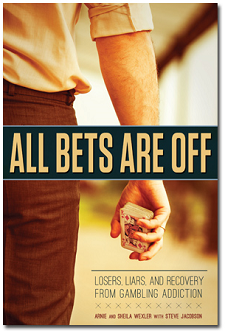
“Any time you add or expand gambling, you open the door for more addiction,” Wexler said in an e-mail Saturday night. “You have no idea how many young kids are ‘gambling’ on fantasy sports and are already seeking help for gambling addiction. And now they will be able to bet on sports!!!!”
“People who never have bet on sports,” Wexler added, “are now betting on sports and the people who have the gene of gambling addiction will get hooked and need help. How many lives will need to be destroyed?”
Gambling addiction, of course, is not a subject that would penetrate Manfred’s mind. His is too busy watching MGM’s dollar signs flying past his eyes and landing in his pockets on their way to his owners.
Manfred, though, has thought of ways betting could help baseball. Since he became commissioner in 2015, Manfred has tried to enhance the pace of play in games but has been unsuccessful. He now says that pace of play could be viewed as positive in the context of betting. A pause in play, time between pitches, he said, “gives the opportunity to be creative with respect to the type of wagers.”
Perhaps Mr. Manfred needs a session or two with Mr. Wexler.
Meanwhile, this gambling thing is not new to M.L.B. The annual winter meetings this month (Dec. 10-13) will take place at the Mandalay Bay Resort and Casino in Las Vegas.