As I contemplated my voting for the Hall of Fame this year, several thoughts occupied my thinking other than for whom I would vote.
Mariano Rivera was obviously going to be elected and the only question was …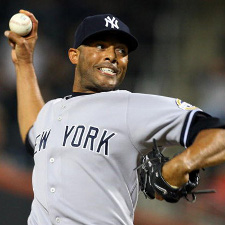
would he be the first player to receive 100 percent of the votes. In a way, I was hoping he wouldn’t because I felt there was something screwy about a three-out closer attaining that honor.
With all of the great players who have played this game, Rivera was likely to achieve a status never attained by Babe Ruth, Ty Cobb, Lou Gehrig, Honus Wagner, Joe DiMaggio, Ted Williams, Willie Mays, Mickey Mantle, Hank Aaron, Walter Johnson, Warren Spahn, Sandy Koufax and others.
But Rivera had something going for him that had not been available to previous candidates. In a departure from past practice, all voters’ ballots will be made public. Even if there was a writer who, say, objected to a three-out closer being in the Hall of Fame, he wasn’t going to omit Rivera from his ballot and subject himself to a torrent of questions and criticism from other writers. In 2016, when Ken Griffey, Jr. received 99.3 percent of the vote much of the focus was on the three people who did not vote for Griffey. Easier to vote for Rivera and avoid all of the scrutiny.
There was another Rivera issue to consider …
About two years ago Randy Miller of NJAdvance Media conducted a stunning interview with Rich (Goose) Gossage in which Gossage brutally questioned Rivera’s standing as a closer compared with what he and some other relievers did.
“…I’m not taking anything away from what Mo did,” Gossage said, “but don’t compare me to him. It’s insulting. It really is.”
“Yeah, it’s totally different,” Gossage also said, “so don’t even compare me here. Chapman’s great. Mo (Rivera) was great … for one inning.”
Miller said, “You mention Mo, but I think he was the one guy who at least was used in the eighth at times by Joe Torre.”
“Bullshit!” Gossage replied. “… That’s postseason. He never did it … Very seldom in the (bleeping) regular season.”
Miller added, “So when people say Mo is the greatest reliever ….”
Gossage responded “(Bleep). That’s bullshit. Do what I did and we’ll compare apples to apples. Or Sutter or Rollie Fingers, the guys that set the bar. I’ll tell you what, setup guys have a harder role today than closers today.”
To support Gossage’s outrage, I randomly selected one of his seasons with the Yankees, 1978. In the first month of that season, Gossage pitched two or more innings in 8 of his first 10 relief appearances: going 3 innings, 3 2/3, 3 2/3, 2, 2, 2 2/3, 4. In the rest of May, he relieved for 3 2/3 in one game and pitched 7 innings of a 13-inning 6-5 win.
In June, his outings included 2 1/3, 3 1/3, 2 1/3, 2, 4 1/3, 2 2/3 and 5. July 4, 2, 4 2/3, 2, 2, 3 and 2 1/3. He began August with a 7-inning relief outing in a 17-inning game, then pitched 2 innings in each of 3 games. In 5 September outings of more than 1 inning, he worked 3 innings, 2 2/3, 3, 3 and 2 2/3, the last for his 27th save in the memorable playoff game against the Red Sox in which he pitched in his 63rd game and saved Ron Guidry’s 25th win against 3 losses.
If people have a problem with the writers’ voting, I can’t blame them. Look no further than the voting for Mike Mussina and Edgar Martinez …
Mussina was a 20-game winner only once in his 18-year career, and that season was his last. In his first year on the ballot, the writers seemed to hold that fact against him. He gained only 20.3 percent of their votes. He didn’t do much better the next year, drawing 24.6 percent of the vote.
Without anyone looking, though, Mussina must have sneaked back into uniform without and reeled off a few more 20-win seasons. Mussina climbed to 43 percent in his third year to 51.8 percent to 63.5 percent and finally to a game-winning 76.7 percent this year.
I have never voted for Mussina because I don’t believe he was ever a dominant pitcher who was instrumental in his team’s success. But if three-quarters of the voters this year though Mussina was a legitimate Hall of Famer, where were they in 2014 and ’15 when fewer than 25 percent voted for him?
Martinez didn’t reach 40 percent of the vote until his eighth year on the ballot. He stood as low as 25.2 percent in his fifth year.
The writers obviously downgraded Martinez because he was a designated hitter most of his career. He served as a d.h. in 1,403 games while playing third base in 563 games and 28 at first base. From 1994 through his last season, 2004, he was a d.h. for all but seven games.
Beginning in 2016, though, the voters apparently changed their view of the designated hitter. It was not unlike their change of view of the use of steroids.
Martinez made a steep and steady climb to his HOF perch, rising from the 20s to 43.4 percent in 2016, then to 58.6, 70.4 and finally to 85.4 percent in his 10th and last year of eligibility. It was a meteoric rise, seldom matched in Hall of Fame voting history.
I voted for Martinez for several years, including this one, declining to hold his role as d.h. against him. He was given an assignment and did it better than anyone else.
After being stuck in the mid-30 percent area in their first three years on the ballot, Barry Bonds and Roger Clemens …
got to the mid-40s for a year, then climbed to the mid-50s in 2017 but gained less than 3 percent this year. With three years of eligibility remaining, Clemens is at 59.5 percent, Bonds 59.1.
Based on the 425 votes this year, Clemens would have to gain an average of 22 votes and Bonds 23 in each of their last three years of eligibility to get to the required 75 percent. This year Clemens gained 11 votes and Bonds13.
Martinez benefited from being in his last year on the ballot, as most players do, but it’s uncertain how Clemens and Bonds would do at that point.
The writers who have not voted for them have withheld their votes because of their suspected use of steroids. It would seem unlikely that the holdouts would vote for them just because they would be in their last years of eligibility, but that remains to be seen.
The next Hall of Fame voting will come in December when 10 candidates will appear on the Modern Baseball Era ballot …
Although there’s no guarantee because the historical overview committee won’t make up the ballot until later this year, it’s most likely that Marvin Miller will be on it, appearing for the eighth time on a HOF ballot.
Several years before he died in 2012, Miller asked not to be put on the ballot. His son Peter has since reiterated Miller’s request. Nevertheless the founding executive director of the union has continued to be a candidate.
The HOF officials continue to make the 16-member voting panel management-dominated and will very likely do it again because they pander to the owners, who enjoy seeing Miller bashed.
Because I believe the Hall of Fame is a farce without the inclusion of Miller, one of the two or three most influential figures in Major League Baseball history, I will recommend several voters for the voting committee: former Commissioner Fay Vincent; Hall of Famer and baseball executive Joe Torre; former union officials Richard Moss, Don Fehr and Gene Orza; former management labor lawyers Richard Ravitch and Barry Rona and Yankees’ president and former management chief labor negotiator Randy Levine.
If HOF officials continue to play their get-Miller game, there is no hope for the Hall and I, for one, will quit playing Jane Clark’s game and withdraw from her band of toadies. That would be the writers.