BASEBALL COVERAGE, ANYONE?
Sunday, August 5th, 2018Is a good sports section of a newspaper in the mind of the reader? I suppose any newspaper section is. But we’re dealing with sports here, specifically baseball, so let’s stick to that.
From readers’ e-mail, I get the idea that many are or were readers of The New York Times sports section but who have become disappointed or disenchanted with it. That’s easy to do these days when baseball has virtually disappeared from the Times. In my view, if you want solid, consistent baseball coverage you have to read Bob Nightengale of USA Today, Jeff Passan of Yahoo! Sports and Ken Rosenthal of The Athletic website.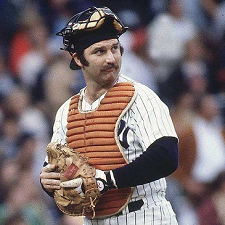
The Times? Its Yankees and Mets beat writers do a good job when they’re allowed, but the Times has taken to covering some of the teams’ games, even home games, with Associated Press accounts.
That practice demonstrates a fundamental failure to understand what it requires to cover a team. It’s not the score of a particular game that matters. It’s what happens on and off the field, in the clubhouse, at the batting cage in batting practice, this conversation with a player, that conversation with a coach.
I remember the instance when Moss Klein of the Newark Star-Ledger spent a lot of pre-game time on the field talking to a guy wearing a suit. A reporter from another newspaper was intrigued at the length of time Klein talked to the man and wondered what they could be talking about.
I don’t know if Klein got a story out of the lengthy conversation, but he was doing his job as a reporter and it was possible that one day in the near future that chat with Bud Selig might result in a story. That possibility doesn’t occur when a newspaper covers a game with the Associated Press.
Maybe if Tyler Kepner of the Times spent more time covering news developments and less time writing about the Phillies, the team of his youth, he wouldn’t need Fay Vincent, the former commissioner, to explain collusion to him. Like President Trump, however, the Times doesn’t care about collusion.
The Times used to be the newspaper to read for such matters, but it no longer covers such issues. I don’t know the reason for that absence of coverage. I can only guess the sports editor, Jason Stallman, has no interest in baseball and thinks readers are like he is and would rather read about soccer, rugby, cricket and cupstacking (for that monumentally stupid article, see the Times of April 1, 2016).
These days the Times seems to favor articles that are different and are exclusive to the Times. The problem, as I see it, is the Times seldom gets those stories and certainly not in baseball. Which, I suppose, is why last week, the newspaper ran a story it passed off as exclusive. Looking back at the plane-crash death of Thurman Munson 39 years ago, the Times featured the work of a lawyer who was obsessed with the fatal plane crash.
After I read the article by David Waldstein and found nothing in it to justify the coverage it received, I asked a friend to read it and tell me what he thought. He was not as critical as I was about it, but the best he could come up with was the reporting of depositions obtained from two nearly 40-year-old lawsuits.
The article quoted excerpts from the depositions, which were submitted by Billy Martin, Reggie Jackson, Graig Nettles and Gene Monahan, the Yankees’ former trainer.
I covered the plane crash and subsequent developments so I have to acknowledge that I knew more about Munson’s death than most people, including the lawyer who instigated the Times’ piece. But I think the only thing I learned from the quoted depositions that I hadn’t known was Monahan’s “revelation” that every day Munson came to the ballpark the first thing he did was “have a couple of cookies and a glass of milk.”
I might have been more impressed with this revelation had Monahan said what kind of cookies Munson liked, but the article doesn’t give us that information.
Don’t get me wrong. I am not making light of Munson or anything he did. I liked Munson and at times had a special relationship with him. Thurman was not easy to deal with because he didn’t want to be easy to deal with, especially where the writers were concerned.
Munson wanted to be one of the guys, and to be one of the guys he had to treat the writers as rudely as many of his teammates did, particularly Nettles. He could not have the other players seeing him being civil to the writers. (You have just learned more about Munson than the entire Times piece tells you.)
But I learned how to deal with the curmudgeonly Munson. When he acted up and refused to answer post-game questions, I would tell him to knock it off and answer the question. He usually did.
When Munson was named the American League most valuable player in 1976, a publication asked him to write a book on hitting, and he asked me to help him write it. We spent a lot of time during that off-season working on it.
That period was probably the high point of my relationship with Munson, and as the next two years went on, he reverted to his irascible self.
As someone who knew Munson better than most, I think I am offended by the Times’ use of his death to create a fraudulent “exclusive” story. There are plenty of exclusive stories to be found if the Times wants to find them. The Times’ problem is it doesn’t want to find exclusive baseball stories because if it found them it would have to publish them.
NO APOLOGY, PLEASE
 Everybody seems to be apologizing for one thing or another these days. More than one player has apologized for derogatory comments he made via Twitters years ago. Why it took years to apologize isn’t clear except it’s possible that no one had ever called out the player for his questionable comments. Two of those players were Sean Newcomb, the Atlanta Braves pitcher, and Trea Turner, the Washington shortstop. They acknowledged that when they were younger, they made comments that were offensive to other people.
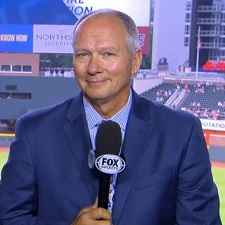
An apology for more recent comments came from a Braves announcer and former major leaguer Joe Simpson. Last week Simpson criticized Los Angeles Dodgers players, particularly Chase Utley, for taking batting practice in what he said was inappropriate dress. The players did not wear their uniforms but apparently anything they happened to throw on.
Simpson was primarily an outfielder with the Dodgers, the Mariners and the Royals in the late 1970s and early ‘80s. Sixty-six years old, Simpson has been a Braves announcer for 27 years.
His comments provoked a storm of criticism, though not from me. I agreed with his reaction, believing it was well deserved and certainly didn’t require an apology. The Dodgers are a professional baseball team and should have act like one. Furthermore, they were taking batting practice in a major league park and should have acted and dressed like major leaguers.
Utley might be in the last months of a distinguished career, but he didn’t need to short-circuit the end. In fact, he should have heeded Diantha Riddle’s advice.
Diantha Riddle was my 12th grade home room teacher (as well as English teacher and advisor to the student newspaper), and on the last day of school she reprimanded me for talking in class and joining in the last-day merriment.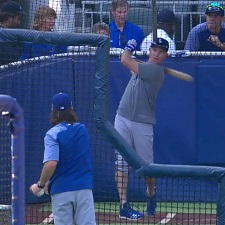
“I would hate to see you,” she said, “tear down in one day what you have spent years building up.”
The Utley incident also reminded me of a conversation I had with Bud Selig in his latter years as the baseball commissioner.
Managers had begun shedding their uniform shirts in favor of various types of sweatshirts, a practice I thought cheapened the product fans were paying to see. Selig said he had noticed the development and planned to do something about it. He never did, and today most managers don’t wear complete uniforms. In fact, if you have watched any of the weekend games between the Yankees and the Red Sox, you saw Aaron Boone of the Yankees wearing a blue Yankees’ sweatshirt and Alex Cora a red Red Sox sweatshirt. I don’t know what managers have against uniform shirts, but they don’t wear them. I don’t think players could get away with that.
On the other hand, the Boone and Cora sweatshirts are more presentable than the frumpy sweatshirt Larry Rothschild, the Yankees’ pitching coach, wears.
When I talked to Simpson briefly last Saturday, I didn’t ask him how he felt about the sweatshirt business. He had talked enough about his comments and wanted to put the matter to rest.
A couple of days after his outspoken criticism Simpson apologized for his remarks. I don’t know why he apologized, but from my point of view I don’t think an apology was called for. I think Simpson was right and told him so.
“It’s over and done with and I don’t want to revisit it,” Simpson said. “We’re past it and I don’t want to discuss it.”