When Gabe Paul was George Steinbrenner’s general manager with the New York Yankees in the 1970s, he had a collection of favorite aphorisms that he expressed frequently.
When rain was delaying a game and he was asked if he thought it would stop raining, he would smile and say, “It always has.” Disdainful of people who lounged in bed late into the morning, he pronounced that “only whores make money in bed.” More appropriate to baseball, Paul often declared, “You can never have too much pitching.”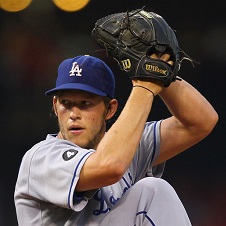
Jim Fregosi, a former player and manager, agreed with Paul at least on the last point. “If you have six pitchers, you have four,” Fregosi used to say.
Frank Wren, the Atlanta Braves’ general manager, recalled Fregosi’s remark the other day when we were discussing the Braves’ battered pitching staff. It’s not opponents’ bats that have battered Braves’ pitchers but injuries. Atlanta has almost as many disabled starting pitchers as some teams have starting pitchers.
“We’ve got a few,” Wren said.
The Braves are not alone in enduring physical ailments, especially to pitchers. The Los Angeles Dodgers knew they would have to start the season without Josh Beckett and Chad Billingsley, but their best starter, the pitcher many consider the major leagues’ No. 1 starter, Clayton Kershaw, joined them shortly before the start of the season.
Texas began the season with Yu Darvish, Matt Harrison and Derek Holland on the disabled list. Aroldis Chapman and Matt Latos of Cincinnati were there, too, as were Jarrod Parker and A.J. Parker of Oakland, Patrick Corbin and Daniel Hudson of Arizona and Matt Harvey and Jon Niese of the New York Mets.
Pitchers were not the only disabled players. The season-opening list also included Carlos Quentin and Cameron Maybin (San Diego), Manny Machado (Baltimore), Jose Iglesias (Detroit), Marco Scutaro (San Francisco), Michael Bourn (Cleveland), Geovany Soto (Texas), Rafael Furcal (Miami), Gordon Beckham (Chicago White Sox) and Matt Kemp (Los Angeles), who has become active since opening day.
In all, 101 players began the season on the disabled list. From seeing and hearing all of the names of players who were going on the list, the number seemed to be unusually high. However, in each of the previous two seasons the opening-day disabled list had 103 names. In contrast, the equivalent 2009 list had 69 names.
During this season’s opening week the population of the list grew to 110, two of the newcomers being Shane Victorino (Boston) and Bobby Parnell (Mets).
The Braves remain the heaviest afflicted. The pre-season plan, Wren said, was to have Kris Medlen, Mike Minor, Julio Teheran, Alex Wood, Brandon Beachy and Gavin Floyd for the rotation.
However, Medlen and Beachy learned on consecutive days last month that they needed elbow reconstruction surgery, Floyd was already recovering from that operation, which he had last May, and Minor was recovering from a shoulder ailment.
In addition, two relievers, Johnny Venters and Cory Gearring, were on the disabled list, Venters recovering from May 2013 Tommy John surgery, Gearring getting over an elbow sprain.
“Every season you try to go into spring training with depth,” Wren said, “and we got into our depth pretty early.”
As a result of the spring developments, the Braves signed a free agent they had no thought of signing when spring training began. Ervin Santana remained free because clubs were reluctant to sacrifice a No. 1 pick in the June draft. Their succession of injuries left the Braves with no choice.
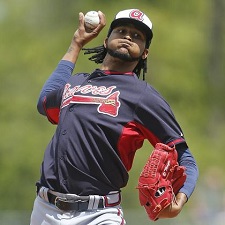 When Medlen hurt his elbow, they made initial contact with Santana. When Beachy got hurt, they signed him to a one-year contract for $14.1 million. That was the amount of the qualifying offer Kansas City made to Santana but he rejected.
“We have Santana joining us next week following a week after that with Floyd,” Wren said.
With Greg Maddux, Tom Glavine and John Smoltz in their recent past, the Braves are accustomed to having good pitching. If they can get some of their pitchers back before too much of the season elapses, they should be in position to compete for the National League East title
While their pitching might be hurting, their position players are healthy. “At least we have that going for us,” Wren said.
Determining who was on the opening-day disabled list should be a simple matter, but in the case of the Dodgers’ Kershaw it isn’t. The 26-year-old left-hander is on the list; yet he pitched and won the first game for the Dodgers against Arizona.
That was the opener played in Australia. By the time the season began in earnest – and in North America – Kershaw was on the disabled list with, the Dodgers said, a strained teres major muscle. That, they said, is the muscle that runs from the top of the arm under the arm pit.
The injury is expected to prevent Kershaw from making his second start for at least a month. That development was not in the Dodgers’ plans for this season, for which they have made expensive plans. They have spared no expense in putting together what they believe will be a championship team, but teams don’t win championships with their best players on the disabled list.
In each of the two World Baseball Classics, critics have blamed the spring event for causing injuries. But there was no Classic this spring, and there were still plenty of injuries.
The Dodgers weren’t certain what caused the injury, but Kershsaw told Los Angeles reporters the injury occurred from “throwing hard, obviously. What caused it? At the end of the day, it happened. I try not to think about that. I feel I prepared as well as I could have. I felt great all spring training. I don’t know what I could have done better. I don’t think the flight itself had anything to do with it. Obviously pitching is what hurt it. Whether it was Australia or not, who knows?”
Shortly after the Dodgers returned home reliever Brian Wilson joined Kershaw on the disabled list. He said the irritation in his elbow very likely resulted from rushing to prepare during a shortened spring training.
Baseball plans to schedule more foreign season openers and will very likely take precautionary steps to protect pitchers. No sense having them pitch in Australia and Japan to sell shirts and caps in those new international markets and not have them healthy enough to pitch in their old markets, their teams’ home cities.
A DIFFERENT TRIPLE CROWN
A report last week on Miguel Cabrera’s 8-year, $248 million contract  extension with the Detroit Tigers said the contract included a $2 million bonus if he won the American League most valuable player award, as he did the past two years, and a $1 million bonus if he won the Triple Crown, as he did in 2012.
The m.v.p. part is correct; Cabrera will earn a $2 million bonus in any season from 2016 through 2023 (the years of the extension), though only $1 million for each of the remaining two years of the original contract.
But as Dave Dombrowski, the Tigers’ general manager, pointed out, clubs are not permitted to give bonuses for winning the Triple Crown, just as they can’t pay bonuses to a player for hitting the most home runs.
Dombrowski declined to disclose the second bonus, but another person familiar with it said Cabrera would receive a $1 million bonus if he won three awards in the same year – league m.v.p., World Series m.v.p. and Hank Aaron award. That would be a Triple Crown of another sort.
FRANCESA ROARS HIS UGLY HEAD
 Tori Murphy had a baby and Mike Francesa had a cow.
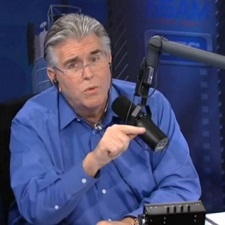
Francesa is a long-time talk show host for New York radio station WFAN who thinks he is the world’s gift to media but is really just a blowhard. He blew especially hard in a recent radio rant over Daniel Murphy, the Mets’ second baseman, missing two games after his wife had a baby.
“You’re a baseball player,” Francesa said on the air in an extended diatribe over Murphy’s absence. “Miss a day and be back in the lineup the next day. What are you going to do, hold your wife’s hand?”
Francesa told his audience that when he children were born, he was present but then immediately went to work the same day. I’m only guessing, but I suspect that Francesa went to work as quickly as he could because he didn’t want to deprive his listeners of his brilliant commentary.
“What was I going to do, sit in the hospital room with my wife?” he asked. “You’re a major league player. Hire a nurse.”
“I don’t get it,” he said repeatedly. “I don’t know why you need three days.
Your wife didn’t need your help the first couple of days.”