Zachary Kram is substituting for Murray Chass this Sunday.
As the initial beats of “Enter Sandman” fill Yankee Stadium, the frenzied crowd cheers wildly, secure in its knowledge that the immortal Mariano Rivera will finish off the win. No matter the opposing team or hitter at the plate, his routine and demeanor are always the same, his Hall of Fame cutter still working its magic and baffling hitters. This season, one Jason Kubel grand slam aside, Rivera has been just as untouchable as in years past, with a 0.98 ERA and twenty saves in 22 chances. As impressive as his year has been, however, other relief pitchers from across the majors have failed to follow suit and match his success.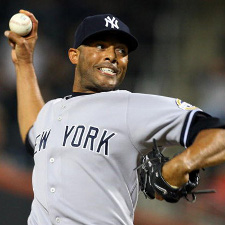
As the trade deadline nears and contending teams scramble to fix the final holes left in their rosters, relief pitching is once again valued at a premium. The dearth of shutdown relievers currently on the market is a problem for every team looking to upgrade its bullpen. Save for possibly the San Diego Padres, every contender would love to have a good new arm to throw at opponents.
Even the team with the best record in all of baseball is looking to improve its middle relief. The major issue for the New York Yankees this year has been the play of Joba Chamberlain in the eighth-inning setup role. Chamberlain, a sensation in the stretch run of 2007 before underwhelming as a starter under the so-called “Joba Rules,” was moved back to the bullpen this season. The Yankees’ management hoped that the flamethrowing rookie would reappear and hold leads for Rivera to finish off. Chamberlain also was to be conditioned as Rivera’s eventual replacement, a la Rivera under John Wetteland’s tutelage in 1996.
Chamberlain (5.66 ERA), though, has been wildly inconsistent, fluctuating from utterly disastrous outings to merely unimpressive ones. Even when keeping a lead intact, Chamberlain seemingly cannot get through an outing without ceding a run or loading the bases before escaping. Yankee fans cringe upon Chamberlain’s entrance into a game with a slight lead, especially with no other viable option to take over the setup role.
Even so, he has fared better than other middle relievers, such as former All-Star closer George Sherrill. Sherrill, the Dodgers’ big acquisition at the 2009 trading deadline, has suffered with a 7.48 ERA in 2010, clearing waivers last week. Chad Qualls, relegated to middle relief after an unsuccessful closing stint for the Diamondbacks, has also pitched poorly while blowing four saves and compiling a 7.86 ERA. In an interesting twist, the Yankees have refused to part with Chamberlain in exchange for Qualls as the two teams haggle over starter Dan Haren.
As it becomes harder to bridge the gap between starter and closer, teams have turned more and more to their closer for both stability and reliability at the end of ballgames. Usually, such as for the Yankees, teams with bullpen issues look to their closer as an anchor capable of carrying the entire pen through its troubles. However, even some closers, long considered the best relievers in the game, have struggled mightily this season.
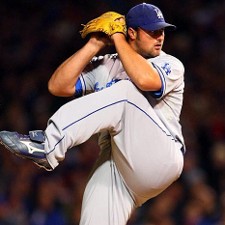
Last Sunday, three supposedly dominant closers, all pitching for playoff contenders, blew saves, with two teams losing in the ninth inning and a third avoiding that scenario only because of a blown call at home plate. Bobby Jenks, entering with a three-run White Sox lead, failed to record an out in the Twins’ ninth-inning rally; Jonathan Broxton (Dodgers) allowed runs in both the eighth and ninth innings to lose to the Cardinals; and Francisco Rodriguez (Mets) blew a two-run lead before escaping further damage on a debatable ‘out’ call at the plate.
 But the carnage of closers was not done yet; throughout the entire week, closers were unable to preserve the leads handed to them.
On Monday, the Rockies’ Huston Street had his first blown save of the season in Florida, and Toronto’s Kevin Gregg blew an extra-inning game in Kansas City.
Tuesday saw Rafael Soriano lose a lead for the Rays in an eventual loss to Baltimore. After Jonathan Broxton’s troubles in loading the bases were compounded by Don Mattingly’s inauspicious managerial performance, Sherrill proved that even those relieving closers couldn’t get the job done.
On Wednesday, Billy Wagner gave up the lead to San Diego. Bobby Jenks was once again victimized, this time by the Mariners, who followed up the next night with a ninth-inning comeback, albeit error-aided and in an eventual loss, against Jonathan Papelbon.
Friday’s Braves-Marlins game was different in that it featured two blown saves: first in the top of the ninth by fill-in closer Jose Veras, and then in the bottom of that same inning by the Braves’ Billy Wagner.
In total, that’s twelve blown saves in a span of six days, by eleven different pitchers, all of whom pitch for teams with a .500 record or better. As recent years have shown (with two tiebreaking games in three seasons), every regular season win and save matters. Only two division leaders currently have a five game lead, so between now and October 3, playoff chances will rise and fall on the arms of the ninth inning pitchers.
The ultimate goal, of course, is the World Series, and closing successes and failures will go a long way in determining who takes home the trophy. Unfortunately for teams in the chase for the championship, the inconsistencies which plague closers throughout the regular season only grow when the playoffs become a reality.
Last year, Fernando Rodney of the Tigers blew a save in the tenth inning of the tiebreaking game against Minnesota and then gave up the winning run in the twelfth inning, effectively depriving Detroit of a playoff appearance. Rodney had an exceptional regular season (37/38 in save opportunities), but the one lasting memory will be of his costly loss.
Papelbon (38/41), Street (35/37), Ryan Franklin (38/43), and Joe Nathan (47/52), the closers to blow saves in the first round of the playoffs, all also had very good regular seasons but wilted under the amplified pressure of the postseason.
For this season, managers have to decide between continuing to trust a struggling pitcher and promoting an inexperienced reliever to a new, more stressful role. For the majority, teams are remaining loyal and hoping for the players to have a turnaround. The Yankees are sticking with Chamberlain as setup man; the Red Sox stay with Papelbon to close rather than hand the ball to young Daniel Bard.
The one change has been in Jenks’s case, in which manager Ozzie Guillen has declared that he will employ a closer by committee. Past success lends credence to this strategy, as Joe Maddon’s Rays advanced all the way to the World Series in 2008 without a traditional closer on their roster. By mixing-and-matching Jenks, rookie standout Sergio Santos, former All-Star J.J. Putz, and lefty All-Star Matt Thornton, Guillen can ride the arm of a hot pitcher and rest a struggling one (at the moment, Jenks).
Each managerial strategy will be picked and prodded at in length no matter the result. If the ploy is successful, then the manager is a genius, but if a closer fails to perform, the manager leaves himself open to the second-guessing that media members are only too happy to provide. Although these decisions are often games of guesswork and luck, teams still live and die with the closers’ pitching. With a World Series hanging in the balance, the pitchers will be thrust into the pressure-packed spotlight, and the mediocre closers will be separated from the truly elite.
At least the Yankees’ fans know that when they call upon their man, Rivera will trot in from the bullpen, do his job, and give them a reason to cheer even louder.