In terms of his baseball life, Bartolo Colon might as well have been dead. He had endured a six-season span in which he suffered a string of injuries in four of the seasons, didn’t pitch in the major leagues in one of those years and plodded through a mediocre season with the New York Yankees, completing it with a 0-4 record and 5.36 earned run average in his last 10 starts.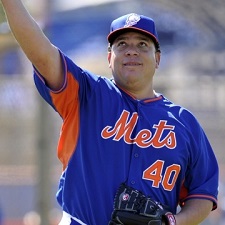
Now, three months from his 41st birthday, the right-handed pitcher is beginning a two-year contract with the New York Mets that will pay him $20 million, the biggest payday of his 16-year career. His salaries in the past six seasons totaled $9 million.
Scott Kazmir, another pitcher, is Colon’s co-contract comeback player, signing a two-year $22 million contract with Oakland. Last season he played for Cleveland for a $1 million salary after having pitched in an independent minor league the year before and making one major league start in 2011.
Though their paths have not crossed physically, Colon and Kazmir have had similar experiences. Both have pitched for the Angels and the Indians and now the Athletics. Kazmir, in fact, is replacing Colon in the Athletics’ starting rotation this year. Both were free agents after last season.
“We signed Kazmir before Colon signed with the Mets,” Billy Beane, the A’s general manager, said from Oakland Friday. “You want to make sure you get somebody. Their timetable may be different from yours, but we needed to fill the spot in the rotation. Once Kazmir was off the board we didn’t like the other options short term. Teams need pitching. Signing a pitcher is always a risk, but you need to have it if you want to go anywhere.”
That Colon at his age can command $10 million a year might be as impressive as Robinson Cano getting $24 million a year.
“He’s a much better athlete than people give him credit for,” his agent, Adam Katz, said of the 5-foot-11, 265-pound Colon. “He’s a superior athlete. He’s dedicated and committed. He’s an incredibly hard worker.”
The Mets’ general manager, Sandy Alderson, and assistant g.m. John Ricco did not return calls during the past week to discuss why they opted to sign Colon rather than any other pitcher who might have been available, including the much younger Kazmir (30), who was a 2002 first-round draft pick of the Mets and the central figure in one of the most controversial trades in their history.
However, J.P. Ricciardi, special assistant to Alderson, said the loss of Matt Harvey for the season following elbow surgery factored into the Mets’ search for a replacement pitcher.
“We looked at several things, knowing we’d be without Harvey, looking for someone to give us innings,” Ricciardi said. “He’s always done that,” he said of Colon, “150-200 innings and a guy who throws strikes.”
Did the Mets consider reuniting with Kazmir, who played in their minor league system for two and a half seasons?
“I don’t think we thought of Kazmir in the same light,” Ricciardi said. “Colon pitched a lot more innings than Kazmir recently. For us he was more on the comfort level. Anyway he was gone by the time we went after Colon.”
If Kazmir hadn’t already signed with Oakland, might his July 30, 2004, trade to Tampa Bay for Victor Zambrano been taken into consideration for bringing back bad memories for Mets fans? “We never got there,” Ricciardi said, “but if we had, that might have been a factor.”
Zambrano was a disaster for the Mets, compiling a 10-14 record in 35 starts. The Mets, looking for an established starter, gave up perhaps their brightest prospect to get him. The fans never forgot and never forgave them.
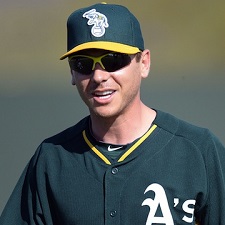 Kazmir toiled for Tampa Bay for three full seasons and parts of three others, then was traded to the Angels, who released him June 15, 2011. In 2012 he pitched in the Atlantic League and the Puerto Rican winter league. Cleveland signed him as a free agent to a minor league contract Dec. 21, 2012 and promised him a $1 million salary if he played in the majors.
He did and produced a 10-9 record and 4.04 e.r.a. in 29 starts. That 2013 performance convinced the A’s that Kazmir was worth $22 million for two years.
“He earned it,” Brian Peters, the pitcher’s agent, said when I asked him how Kazmir went from a $1 million salary to a $22 million contract. “I think the fact that Scott is relatively young certainly played a role as much as anything. It’s a great story what he did; what he did was remarkable. He humbled himself by playing in an independent league.
“He felt himself getting back to form even if results weren’t always there. When he went to Puerto Rico he felt good about himself. He got an opportunity to get into Indians’ camp. He didn’t have the luxury he might have had in years past working on his stuff, his secondary pitches. But he pitched well in spring training and earned a spot.
“His second half was outstanding. What everybody was able to see was a Scott Kazmir whose velocity was back and who played a role. He helped the team win. He pitched in meaningful games down the stretch. All that played a role in his getting what we think is a nice contract.
“He had a long way to go. He had fallen. He had as dramatic a fall as you’ve ever seen. His time in Anaheim, he pitched OK. The following year he was in no position to pitch. He couldn’t compete in the minors.”
Peters said the younger Kazmir struck out a lot of batters but threw a lot of pitches to do so. “What we saw this last season,” the agent added, “was a more economical Kazmir. He grew up. He took ownership of his body and his career. All the credit goes to Scott. He worked his ass off, stayed the course. He has made himself into a dominant starter, a guy who can be at the top of the rotation.”
Colon had eight successive seasons (1998-2005) in which he attained double digits in victories, but then he hit the skids and suffered a succession of losing seasons before Oakland’s Beane rescued him from oblivion.
“We needed a starter pretty quickly,” Beane related. “We had traded for Seth Smith and gave up two young pitchers. We had to fill that spot. He had a decent year for the Yankees the year before and we thought it was worth the cost and there was a need.”
The A’s signed free-agent Colon eight days after they obtained outfielder Smith. Colon resuscitated his career with Oakland. Colon, who won 20 games in 2002 (10 each for Cleveland and Montreal) and 21 games for the Angels in 2005, had records of 10-9 and 18-6 (with a 2.65 e.r.a.) in his two seasons with Oakland. The A’s did not simply discard him.
“We had conversations with him even before the season ended,” Beane related. “We kept in touch with him during the off-season. The problem is they set the timetable sometimes.”
Unwilling to wait for Colon, Beane signed Kazmir. If Kazmir was part of the Mets’ worst trade, Colon was part of another trade that became controversial in hindsight.
On June 27, 2002, the Indians traded 10-game winner Colon to Montreal and in return received a four-player package that included Cliff Lee, Brandon Phillips and Grady Sizemore, all of them minor leaguers at the time. Colon won 10 games for the Expos, but the three players the Indians acquired all became major league stars of varying levels.
Omar Minaya was the Expos’ general manager who made the trade and has been criticized for it, but he had two good reasons for doing the deal.
One was the Expos’ position in the standings, second place, 6 ½ games behind Atlanta. “We were a last-place team the year before and we were in contention,” Minaya recalled the other day. “Colon was one of the top five players in baseball. We had him for half the season and they paid his salary. We turned that team around. As general manager, I felt if we won, someone might step up and buy the team and keep the Expos in Montreal.”
That was another reason Minaya made the deal.
“Major League Baseball was running the team under the climate of contraction,” Minaya said.
It turned out that contraction was a ploy the owners used to try to induce the union to get what they wanted. The ploy failed. If the threat of contraction had not existed, would Minaya have made the trade anyway?
“I can’t say no,” he said. “Whenever you have the opportunity to get a pitcher like Colon you’re going to have to give up three players or so.”
Would Minaya have made the trade again? “In a heartbeat,” he said.
The trade did not catapult the Expos into the playoffs. From the day of the trade, the Braves had a 53-29 record, the Expos 42-43, and the Expos finished 19 games behind the Braves.
SIMILARITIES END AT DOLLAR SIGN
Joba Chamberlain and Boone Logan were teammates with the  New York Yankees for four years. They shared seats in the bullpen, Chamberlain a right-hander, Logan a left-hander. Chamberlain is 28 years old, Logan 29. Chamberlain has 6 years and 55 days of major league service, Logan 6 years and 140 days.
Logan has always been a relief pitcher, appearing in 420 games. Chamberlain has started 43 games, relieved in 217. In the four years they have been bullpen seatmates, Logan has relieved 256 times, Chamberlain 167.
 Logan has been traded twice, Chamberlain never. Chamberlain has been on the disabled list three times, Logan never.
Both players were free agents after last season; both left the Yankees. Chamberlain has joined the Detroit Tigers, Boone the Colorado Rockies.
Chamberlain has always been the more celebrated of the two pitchers, if not the more effective one. His celebrity, or notoriety, however, has not translated into Chamberlain’s being the better paid. Logan signed a three-year contract with the Rockies for $16.5 million. The Tigers gave Chamberlain $2.5 million for one year.
HAWKINS IGNORES AGE AND $$$
Deacon McGuire isn’t quite a household name these days, if he ever was. But then he was known in a lot of baseball households because he played for a lot of teams. In fact, until Matt Stairs played for San Diego in 2010, McGuire held the record of having played for 12 major league teams. If you missed it, don’t worry. Primarily a catcher, he played his first game in 1884 and his last in 1912.
LaTroy Hawkins, as usual, is playing for a different team this year, but it doesn’t get him any closer to the McGuire-Stairs record because he played for Colorado in 2007. In its record book, the Elias Sports Bureau credits a player for only one team if he repeats.
What’s fascinating about Hawkins is at his age, which is now 41, he continues to find work, and he’s not even left-handed.
He played for the Twins in his first nine seasons in the majors and has played for nine other teams in the 10 years since. The Rockies are his first repeat team.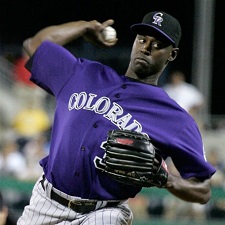
“We had him in ’07,” general manager Dan O’Dowd said in a telephone interview. “One of the many mistakes I’ve made here was not holding onto him. During our incredible run, he was a big part of that.”
O’Dowd referred to the Rockies’ torrid streak in which they won 14 of their last 15 regular-season games, then swept the division and league series (21 of 22) before Boston swept them in the World Series.
The Rockies declined to exercise the reliever’s $3.75 million option for 2008, and he signed with the New York Yankees for that same amount. Since then he has played for the Astros, Brewers, Angels and Mets. Now the Rockies have him again.
“It’s the whole package,” O’Dowd said. “We saw him throw the ball exceptionally well. He sinks the ball on both sides of the plate. We know what he brings to the party day in and day out. And he has that special thing that goes on in the clubhouse.”
The Rockies have so much confidence in Hawkins, O’Dowd said, that “he will close for us.”
“We really signed him as a closer,” the general manager said. “We felt that’s where he could impact our club the best. It allows us to keep some of our young power arms in other positions. The eighth and ninth innings require more intensity. This is the game plan as we start the season. We’ll see how it goes.”
I asked O’Dowd why Hawkins has had to move from team to team instead of staying put for a few years. “It’s logical that clubs begin to doubt as you age,” he said. And what happened with the Rockies after the 2007 season? “We couldn’t agree on money,” he said.
Hawkins has never been expensive. His salary with the Rockies this year is $2.5 million, which is below the average salary, and last year his salary with the Mets was $1 million. The most lucrative contract he has ever had was the two-year, $8 million agreement he signed with the Cubs for the 2004-05 seasons. His desire obviously is to keep playing, and his willingness to accept relatively small salaries helps make that goal possible.
“The guy’s got tremendous work ethics, very disciplined,” said his agent, Larry Reynolds. “He’s got a real sense of what it takes to be successful on and off the baseball field. His discipline is what has enabled him to play all these years.”
Relief pitching is at such a premium that a reliever who gets batters out is valuable.
“There’s always a need in the bullpen,” Reynolds said. “LaTroy has always been a guy who if the opportunity is presented he doesn’t get caught up in how much he’s going to make. If a team is interested, he says let’s go. Get in where you fit in, that’s how he’s looked at his career. If you sit around looking for another $250,000 or to get a job, you might not get it.”
Reynolds said Hawkins has more than his pitching going for him. “He’s one of the most liked and respected guys in the game,” the agent said.
This off-season, Reynolds said, about five teams expressed interest in Hawkins, who was a free agent for the eighth time (he has been traded three times).
“He said ‘I want to win,’” Reynolds said. “Here’s an opportunity to win. The Rockies stepped up and gave him a role. He wanted a challenge. He’s a very practical guy. It translates onto the field and he doesn’t think about a big contract and salary.”
In his 18th year of major league service, Hawkins doesn’t have retirement plans. “He takes it year by year,” Reynolds said. “If he has a good year my guess is he’ll go back out next year. He hasn’t said anything to me. He’s a step-by-step guy. If an opportunity comes up, he’ll keep going.”