When the Yankees fired Joe Girardi as their manager last month after a decade in the job, General Manager Brian Cashman said it was a matter of his ability to communicate and connect with his team’s young players. In other words, Cashman was saying, Girardi had difficulty dealing with young players.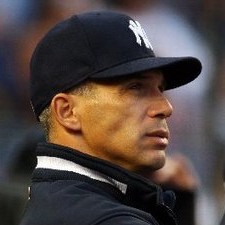
Joe Girardi Didn’t Sufficiently Connect With Yankees Players, read one headline.
A similar idea was suggested to me recently in a different way. When I told a Yankees executive recently that I thought the wrong person was fired, that the Yankees would have been better off firing Cashman, 20 years the general manager, the executive said, “You haven’t been in the clubhouse.”
He was right, but the idea that there was a communication/connection problem between Girardi and the young players was puzzling.
The Yankees had not been expected to be a playoff contender, but they were that and more. They challenged the Red Sox for the American League East title and finished the regular season only two games shy of Boston.
Once they got that far, they went farther. They won the wild-card game, they won the division series, they won three of the first six games of the league championship series. They fell only one game short of the World Series. Will a manager who will supposedly have better communications and connections with the young players do better?
As it turns out, though, it apparently wouldn’t have mattered what the Yankees did in Game 7 of the A.L. championship series or in the World Series itself. Hal Steinbrenner, the Yankees’ managing partner and son of George himself, was quoted last week at the general managers meeting in Orlando, Fla., as saying no matter what might have happened in the World Series, even if the Yankees had been in it and won it, Girardi would have been fired.
That is the most stunning statement I have ever heard or read coming from a Steinbrenner, and I’m only sorry I learned of it too late to confirm it. But that’s what the man supposedly said, the man who has operated 180 degrees from his father when it comes to firing people.
But back to Girardi and young players. Young players named Judge, Sanchez and Severino were instrumental in the in the Yankees’ success. Would they have been more instrumental under a manager more to Cashman’s liking? How about more to the young players’ liking?
On the day last week that he won the American League rookie of the year award, I asked Judge this question when he was on a conference call with baseball writers:
Since the Yankees manager was fired, it has been suggested that he did not have a good relationship with the young players, and that’s the reason, if not one of the reasons that the Yankees are making a change. Could you comment on your experience with him?
“Yeah, I had a great relationship with Joe,” Judge said. “He was my first manager in the big leagues. He stuck with me through the good times and the bad times; and he always had my back, always staying positive with me, so I felt like I had a great relationship with him. We communicated well, and my goal is to go out there and play so I just basically focus on that, and that’s what I’m going to focus on next year as well so I’m excited to see who we get, but I’ve got a lot of respect and love for Joe, and what he did for me in my first year.”
I suspect something else is in play here. I suspect that Cashman is among general managers who want to take greater control of developments on the field, in many cases hiring younger or less experienced managers who will be easier to dictate to.
This move by general managers into clubhouses and dugouts is an outgrowth of the burst of advanced metrics into the game, Managers will still take the lineup cards to home plate before games and the lineup cards will be in the managers’ handwriting, but the thinking that goes into the lineups will come from the general managers and their analytics staffs.
BAM BAM MIGHT BE THE MAN
 As a major leaguer, Hensley Meulens was a .220 hitter. As an interviewee for a major league managing job, he is in position to hit .000 or .500.
He went 0-for-1 about a month ago when he interviewed for the Detroit managing job but didn’t get it. Now he awaits word of the outcome of his second interview, that one with the Yankees Nov. 16.
The Yankees have interviewed three other candidates and are expected to talk with a few more. Those who have interviewed besides Meulens are Rob Thomson, the Yankees’ bench coach; Eric Wedge, a former major league manager, and Aaron Boone, a former major leaguer and now a television analyst.
Meulens was the Giants’ hitting coach the last eight seasons and is scheduled to be the bench coach this year.
MVP MEANS WHAT?
Unlike many, if not most, other years, the post-season awards have not caused a ruckus. However, one award bothered me because too many voters continued to treat most valuable player as if it were best player. I don’t know why voters find it difficult to differentiate between the two. The best player is the one with the best statistics – highest batting average, most runs batted in, most home runs or some combination thereof. That player is easier to select because the decision is usually based on numbers.
Most valuable requires some thinking and lots of consideration, weighing Player X’s value to his team against Player Y’s value to his team. If a voter treats his decision in this way, he will most likely wind up voting for a player who was in a pennant race, not one whose team finished in last place.
A player doesn’t have to be on a playoff team, but he has to make some contribution to his team that enables it to achieve some status it otherwise would not have.
Using that guideline, was Giancarlo Stanton the National League m.v.p.? The Marlins finished in second place but a distant second, 20 games from first and with a losing record and two fewer wins than the year before. Paul Goldschmidt of second-place Arizona would have been my choice.
On Stanton’s conference call with the writers, I asked him this question:
People have different views of what an MVP should be. Some people look at him as the best player, others look for the player without whom its team could not have done what it did during the season. I just wonder where you think you might fit into those two views and how you view it.
“I think that it’s a lot of factors, but at the same time, whether your team is in the playoff race or not, that it’s the same starters, the starters set up the same way, maybe the back-end is different, but it’s the same pitching. You’re going to face guys that are in the race that need to win so it just depends how your flow helps the team. If your team’s pretty good and you make them a better team, or if your team is already great and you just add into the flow. It’s a big dynamic, and it’s a lot of things to go over to determine that.”