There is no other organization like the Minnesota Twins. On the same day, Sept. 30, the day after the season ended, that the Chicago Cubs fired their manager, Dale Sveum, after a second losing season in his two-year tenure, the Twins extended the contract of their manager, Ron Gardenhire.
The Twins had just completed their third consecutive losing season under Gardenhire in his 12-year tenure, a development that might have prompted other organizations to change managers. Not the Twins.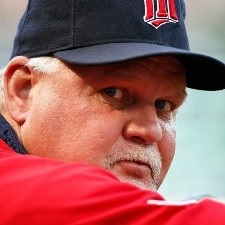
In the past 27 years, they have had two managers, Tom Kelly preceding Gardenhire. In that same period, the other 29 teams, some of which did not exist that entire time, employed 250 managers, according to research by Elias Sports Bureau.
Treating the other 29 teams as if they all played that entire time, they have averaged 8.6 managers in the time Kelly and Gardenhire have managed the Twins.
“I don’t know how much different we are,” Terry Ryan, the Twins’ amiable general manager, said in a recent telephone interview, downplaying the team’s different style of operation. “Gardy and Tom and I have a long term relationship. There’s a lot of trust and responsibility. Ron set a pretty good track record here.”
Succeeding Kelly in 2002 upon his retirement, Gardenhire quickly established himself, managing the Twins to three successive division titles, four in five years and six in nine.
Recent seasons, however, haven’t been so kind to Gardenhire and the Twins, who have endured three consecutive losing records.
Nevertheless, the Twins gave the 56-year-old Gardenhire a two-year extension, avoiding the need to do what five other clubs have done this off-season. But the appointment of new managers has taken on an unusual look. Four of the new managers have never managed in the majors and two haven’t managed in the majors or the minors.
Brad Ausmus, who has replaced the retired Jim Leyland in Detroit has had only one managing assignment. He managed the Israeli team in this year’s World Baseball Classic, but his role was short-lived – one game because his team lost its qualifying-round game. Other than that, his post-career experience has been in the San Diego front office.
Bryan Price, who has replaced his most recent boss, Dusty Baker, in Cincinnati, has been a pitching coach – highly regarded – in the majors for 14 years but never a manager.
Matt Williams, the new Washington manager in place of Davey Johnson, who apparently was told last spring that he was retiring, served as an interim minor league manager for the last two months of the 2007 season, but that has been the extent of his managerial experience. The last four years he has been a coach with Arizona, the last three as third base coach.
Rick Renteria, the Cubs’ new manager, managed in San Diego’s minor league system but nowhere else. He most recently has been the Padres’ bench coach.
That leaves Lloyd McClendon, Seattle’s successor to Eric Wedge, as the only new manager with major league experience. McClendon managed five of Pittsburgh’s 20 successive losing seasons (2001-05). Most of the time since then he coached under Leyland in Detroit.
Gardenhire assumed command of the Twins in 2002 after Kelly had managed them to two World Series championships in 15 years. He coached under Kelly after putting together three first-place finishes in his first three years managing in the Twins’ minor league system.
“If he has the talent, we wouldn’t have the problems we’ve had,” general manager Terry Ryan said in a recent telephone interview. “We were struggling with pitching and hitting. I’m not going to pass the buck. He’s been around almost 30 years in the organization. The same with Tom. There’s a certain loyalty here.”
 Ryan himself epitomizes that loyalty. In 2001, there was talk among the owners about the possibility of contracting, or eliminating, two teams. It turned out to be a labor ploy, but when talk was at its peak, the Twins were considered a prime candidate for contraction.
Faced with the elimination of his job, Ryan was offered the opportunity to move elsewhere in the same position. Thinking of the co-workers he would be abandoning, Ryan said no, thank you, and stayed put. It was an unselfish act of loyalty that made me and many others a big Ryan fan.
“That’s a long time ago,” Ryan said. “That was some difficult times. None of us knew what the future was. Gardy was part of the coaching staff. They didn’t know what was going to happen. He’s got a lot of those traits. Loyalty, doing it the right way, has no shortcuts.”
Now Ryan is in his second term as general manager – the man who replaced him and whom he replaced, Bill Smith, has remained with the Twins – and now it has been Ryan’s turn to be loyal again.
“Gardy has the things we look for,” he said, explaining his decision. “I felt very comfortable with Ron. We’re close. There’s accountability in this organization. We know we’re struggling and we have to fix it. We’re not running away from it. We’re going to have to make some changes but we have some things here in place and we’ll build from there.”
Kelly, a Minnesota native and career member of the Twins’ organization, remains a consultant and has been around long enough to know how the Twins operate.
“They’re secure in what they do in hiring people,” Kelly said. “They feel they make good decisions. I think the people here have been very understanding, even the Pohlads, who aren’t baseball people per se. They trust the general manager to do his job and hire the people to run the team.”
The Pohlads have been unusual owners. They actually let the people they hire do their jobs. Carl, a wealthy financier, was the head of the family and the Twins until he died in 2009. Now his oldest son, Jim, is the Twins’ chief executive officer.
“Overall here,” Kelly said, “I believe we’ve had good meetings to run the show and they’re realistic about the team put on the field. As long as they see people working hard and trying hard and busting their butt they see no reason to change.”
MAUER TO SET TREND
The Twins have actually already made a change for next season, and it is so major that it will influence other teams to make similar changes.
The team announced last week that Joe Mauer, their all-star catcher, was abandoning that position for first base. The move is aimed at preserving Mauer’s health and extending his career. First basemen are not as susceptible to concussions as catcher.
“This is one of the tougher decision I’ve had to make, but also one of the easiest,” Mauer said on a conference call. “I love catching and it’s something I worked hard at my whole life, to become the best catcher that I can be. I’m just a little disappointed my catching career had to end like this, but I’m also thankful I could help my team any way that I can.”
Mauer, 30, was bothered by concussion symptoms the last two months of last season after taking a foul ball off his catching helmet and a foul tip off his mask.
“They told me if I were to receive another blow or concussion, the recovery time would be as long or even longer,” Mauer said. “That made the decision pretty easy.” Mauer said.
Mauer’s decision is certain to prompt other catchers and teams to follow. If a catcher of Mauer’s caliber can make the move, why shouldn’t others?
Someone, however, has to catch. A team can’t play without a catcher. Otherwise, someone would get very tired chasing the ball to the backstop on every pitch.
So how will Mauer’s replacement feel? He might welcome the chance to play every day, but he’ll face the same potential peril that Mauer is avoiding.
CC GETS SIGH YOUNG
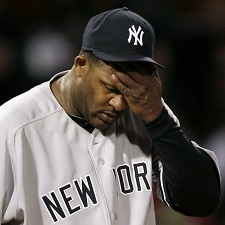 Now that Max Scherzer and Clayton Kershaw have won the Cy Young awards, it’s time to declare the winner of my fourth annual Sigh Young award. And the winner, as the worst pitcher in the majors this year, is the Yankees’ CC Sabathia. He joins previous winners A.J. Burnett, John Lackey and Ricky Romero.
Sabathia could be a controversial choice because he had a winning record, 14-13. But he gave up the most runs and earned runs in both leagues, and he allowed the fourth most hits.
Other leading contenders were Joe Blanton of Anaheim (2-14, 6.04 e.r.a.). Edwin Jackson of the Cubs (8-18, 4.98) and Lucas Harrell of Houston (6-17, 5.86).
Sabathia, however, had something going for him that the others didn’t have – a $23 million salary. That kind of money should have brought the Yankees a much better season than Sabathia gave them. Sabathia’s poor performance, in fact, might have cost his team a place in the playoffs.
Congratulations, CC.