Remember the names Mike Hazen and Mike Chernoff. They will not be the first two players selected in the annual draft next June; their baseball-playing days are behind them so you will not see them playing in the majors. In the not-too-distant future, however, they will very likely be major league general managers. It is their destiny.
Hazen and Chernoff are assistant general managers, Hazen with the Boston Red Sox, Chernoff with the Cleveland Indians. They are only two of 30 assistant general managers with major league clubs, but they serve with a distinction.
Chernoff works for the Indians; Hazen used to work for them. Working for the Indians, it seems, works like magic. The Indians produce general managers like the Dominican Republic town of San Pedro de Macoris produces shortstops. No other organization can match the Indians for their development of general managers.
Dan O’Dowd is with Colorado, Josh Byrnes was with Arizona and is now with San Diego, Neal Huntington is with Pittsburgh, Chris Antonetti with the Indians, Ben Cherington with Boston. Mark Shapiro is the Indians’ president after having served as their general manager, and Paul DePodesta served a two-year term as the Los Angeles Dodgers’ general manager.
In 1998, the year after they lost the World Series to Florida in an 11-inning Game 7, the Indians had a front-office whose roster included O’Dowd, Shapiro, Byrnes, Huntington, DePodesta and Cherington.
That was Cherington’s lone year with the Indians; he joined the Red Sox the next year.
“I think a year was enough to get a good taste of it,” Cherington, Boston’s rookie general manager, said Friday in a telephone interview. He was talking about how his year in the Indians’ service was enough to learn their way of training their front office personnel.
“There was a very strong leadership core starting with Hart and O’Dowd under him,” Cherington said. “They found a way to build a competitive advantage by going out and finding people who had a passion for baseball, working ungodly hours and building a team, changing disadvantages to advantages.”
John Hart was the leader of this assortment of unusually bright, young baseball minds. A former minor league catcher, Hart learned from his predecessor, Hank Peters, a veteran front-office executive, and formulated the plan that would end the Indians’ 40 years of wandering in baseball’s unforgiving desert. They finished in fifth place or lower in 27 of those 40 years.
“It was a philosophy that both John and Dan had instilled in me,” Shapiro said. “To be very aggressive in finding young, talented, passionate people who would make the organization better and bring in these people to contribute. They instilled that belief in me and pushed me to find more people and then pushed them to find more people. It takes some continuity, which we’ve had here and other organizations don’t have. I think it’s pretty unique.”
It’s also remarkable that Shapiro was talking about front-office people, not players. Where have you heard a general manager talk about seeking talent when he’s not talking about players? That, indeed, makes the Indians unique.
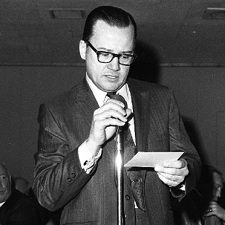 The turn in the Indians’ fortunes came when the Baltimore Orioles let Peters go as their general manager after the 1987 season. Peters had served in that role for 13 years.
“Dick Jacobs approached me about coming to Cleveland,” Peters, then 63, now 87, said, from his home in Highland Beach, Fla. “I said I’d like to work a few more years so I’ll come for three years, maybe four. I said we’re not going to win whiIe I’m there because the organization is in terrible shape. It needs a complete overhaul.”
“Maybe you’re not going to stay,” Peters said the owner responded, “but build us a good organization while you’re here.”
O’Dowd had been with Peters in Baltimore, and he joined him in Cleveland. Hart, who had also worked for the Orioles, was another important target for Peters.
“I talked to John about working in the front office,” Peters recalled. “He had gone back and forth between the field and the front office. I told him he had to decide which he wanted to do. I told him ‘I’ll train you to be a general manager. I don’t know if you’ll get the job when I leave.’ He decided on the front office. I spent the next three years teaching him about being a general manager.”
Hart, who had managed in the minors, adapted well to a desk, and Jacobs accepted Peters’ recommendation to make him his successor. Hart, in turn, followed Peters’ strong recommendation to hire Mark Shapiro
“I hired Mark at old Municipal Stadium with a potted plant and a heater in my office,” Hart recalled. “I convinced Mark to come and started the process.”
A Princeton graduate, Shapiro was working not in baseball but in real estate development and merchandising. Peters knew Shapiro’s father, Ron, a prominent Baltimore-based player agent.
“We needed someone who was literate in computers,” Peters said. “Today just about everyone is, but then there weren’t a lot of computer experts. We hired him, and John and Dan brought him along. It seems if you hire good people they, in turn, will hire good people. It’s a credit to these people who have been successful at picking out talent.”
Hart nearly didn’t make it to the Indians’ front office. The Orioles’ owner, the legendary lawyer Edward Bennett Williams was blocking his move.
“He denied permission,” Hart related. “He said you’re my next manager and I don’t want to let you go. Hank said he’d leave the seat open for a season.”
That’s all Hart needed. Williams died that summer, and Hart joined Peters in Cleveland. “I didn’t know my way around the front office,” said Hart, who learned fast enough.
“Dan O’Dowd had been with me in Baltimore, and he came to Cleveland and became my assistant,” Hart said. “He was a valued friend and confidante. We came up with some creative things. I created the long-term contracts.”
The Indians had a bunch of promising young players, and Hart began signing them to long-term contracts, insuring their retention and saving money by avoiding salary arbitration. Other teams subsequently adopted the idea but none as successfully as the Indians, who had Manny Ramirez, Albert Belle, Carlos Baerga, Jim Thome, Kenny Lofton, Omar Vizquel and Sandy Alomar Jr.
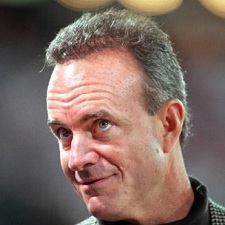 “I realized my strengths and my limitations,” Hart said. “I wasn’t a Wharton school graduate. The game was beginning to change. I realized that to be successful you were going to need some bright young guys to create projects.
“We put these guys into a training program and internships. We gave these guys projects, but I wanted them to get the baseball part of it from me. I had them go with me when I met with the manager. I always exposed them to the baseball piece of it.
“Each of these guys would have been successful without me. But I tried to give them a leadership function and let them grow their baseball ability. It helped us become wildly successful.”
The Indians’ new brain trust, O’Dowd said, made a strategic decision.
“We were going to try something different,” he said. “We hired people who had a passion for baseball. They didn’t have to have a playing background but were bright individuals. We started to earmark guys we thought were really intelligent.”
Shapiro credited Hart and O’Dowd with the Cleveland reconstruction, but noted that the godfather of it all was Peters.
“John and Dan collectively were put in place by Hank Peters,” Shapiro said. “Hank believed in finding talented people. John and Dan instilled in me that it was best to bring in bright young people.”
While other teams were out looking for good players, the Indians went a step beyond, sought the executive equivalent and treated them like No. 1 draft picks.
“These guys in one way, shape or form flourished from things they picked up as young men,” Hart said. “I encouraged dissent and opinions. The door was always open. We talked baseball, and I brought them into meetings. It was an exciting time. That’s how they learned. We were able to do creative things in Cleveland because of the talented guys we had. Our guys were smarter.
“I might not have been able to master a computer or run a spreadsheet, but I asked how as an organization do we get better?”
O’Dowd and Shapiro, Hart said, helped get the system started “as we began to acquire the right talent and put this intern program together. My role was I was a good teacher and a good listener. I don’t take credit for it.”
Huntington, however, said, “John’s legacy tree is far reaching. Mark’s is, too, already. Both deserve a ton of credit. They challenged you, yet let you do your job. They provided constructive criticism when it was needed. They are great role models.”
Antonetti joined the Indians in 1999, having spent a couple of years with Montreal. By the time he joined the Indians, the Hart venture was well under way, but Antonetti was familiar with it.
“It stems from a culture of development starting with John and Dan,” he said. “They identified people they thought had potential, and they empowered them and let them do their jobs. It was the environment I came into. As things continue to evolve, other teams have placed emphasis on development.”
One practice they initiated was video advance scouting. That was the job Cherington had for his one year with the Indians.
“We had the money to send them out on the road,” Hart said, “but I had been in those scouting meetings. You’d get the information, but it was a dysfunctional system. We continued to send a guy on the road but backed it up with video.”
The video system not only provided information for the Indians but also served as an educational tool for its operators.
“I watched and charted five or six games a day,” Cherington said. “Watching 5, 6 games a day you can’t help but learn about players. You also find managers’ tendencies that are helpful for coaches in games.”
Huntington began his career as a video scout, too, though with Montreal.
“You learn how to interact with the major league staff,” he said. “You give information to different coaches, answer to a whole gamut of voices that have a very different need. You quickly learn what plays and why it plays at the major league level. It’s been a defining role for people coming through the organization.”
Unlike most young, bright Indians, Cherington left after only a year.
“I had done an internship with the Red Sox,” he said. “I was 24 and felt I was ready for a fulltime job. I wanted to learn how to scout at the grassroots level. I was considering a couple opportunities, and the Red Sox offered me a job, and that’s the one I got. I became an area scout in Atlanta
Less than two months into the season, though, Cherington was moved into the baseball operations department and set out on the road that took him to the general manager’s seat.
Byrnes, on the other hand, worked for the Indians for the final six years of the 1990s, then served as assistant general manager in Colorado and Boston before becoming general manager of Arizona and now San Diego. As he moved around, he didn’t forget what he learned in Cleveland.
“I didn’t want people who learned baseball on the Internet but who liked baseball,” he said. “The passion to watch and follow the game is what separates people.”
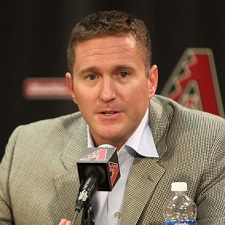 In Cleveland, Byrnes said, “John included me in a lot of things. I understood what he was trying to do, how he made decisions, what went into trades. They put people in roles that fit them.”
Byrnes was such a big believer of his Cleveland experience, he devised a test to determine the level of people’s passion for baseball.
“I put a 15-question quiz together,” he said. “Most people wound up crying they thought it was so difficult. Sample questions:
- Who made up the Tigers’ double play combination 1979-95?
- What was the Dodgers’ infield 1973-1981?
- Who hit a famous home run against Dennis Eckersley in the 1988 World Series?
- Who hit the ball on which Willie Mays made a great catch in the 1954 World Series?
- Who was the shortstop who put his arm around Jackie Robinson on thaw field as a show of support to unruly fans?
“You have to be following the game to know the answers,” Byrnes said.
Note of caution to readers: Byrnes is not taking applications for jobs, not even from the two Mikes mentioned at the start of this column. Both Hazen (Red Sox) and Chernoff (Indians) laughed when I told them the pressure was on them to get jobs as general manager in the not-too-distant future to maintain the Indians’ reputation.
“I think I was the ugly duckling of the group,” Hazen joked about his five years in Cleveland.
“The time that Mark had for me, even as an intern,” he added. “It’s hard to have time for someone that low on the totem pole. They do such a good thing. Everything they do is about developing everyone they’re around. They’ve taught me so much about how to act and work in the game.”
Hazen said he was particularly impressed with the amount of time club executives spend on hiring an intern.
“They place a high standard on the guys they hire, even at an entry-level position,” he said. “It’s very easy to hire an intern. They put a lot of time on the process. Those same qualities are important in hiring those people. That’s why they came up with quality front offices.”
Chernoff is starting his 10th season with the Indians and knows precisely how they do things.
“It’s clear to me,” he said, “leadership positions focus on developing people. They empower the people who work for them. They’re not the type of people who have to take credit’ yet they empower people with decision-making responsibilities.
“It’s a challenging place to work because they give us a lot of responsibility. We’re given leeway to make decisions without anyone micromanaging. You hear about places where they’re afraid to bring in some people who are smarter than they are. That’s not the case here. We spend a lot of time on the initial process, putting interns through the wringer to get the best people we can.”
O’Dowd is beginning his 13th season as the Rockies’ general manager, which means he has been gone from the Indians since 1998. “I’m proud of having been part of it,” he said.