In a period running less than three months in the second half of last year, two and a half professional sports teams were sold for these astounding amounts: Miami Marlins $1.2 billion, Houston Rockets $2.2 billion and 49 percent of the Brooklyn Nets, valuing the team at $2.3 billion.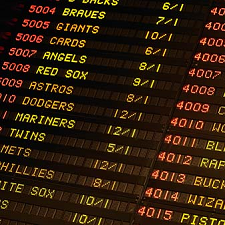
Those are b’s, not m’s, and they require extra zeros. Coupled with current events, they prompted an e-mail from Fay Vincent, the former baseball, who obviously is paying closer attention that most others, including a newspaper sports editor, who he mentioned but I have intentionally omitted.
“How can gambling be so important,” Vincent wrote, “that it is seriously affecting the prices being paid for sports franchises and yet so little is being written about what is going to have to be done to establish the new context for all sports in this country? How can the media not be at least trying to spell out the effects of an economic revolution that is about to hit? The Supreme Court could act any day. It may make betting on sports to be legal. There is likely to be some $150 billion-$400 billion or more that will be betting revenue based upon our sports industry.”
Vincent, who is the first person I know who saw this development coming, initially mentioning it to me nearly one year ago, is talking about the possibility of legalized betting coming to the four major professional sport leagues. Don’t bet on it yet, but its arrival depends primarily on two developments:
- The decision of the United States Supreme Court in a case it heard last month, in which the state of New Jersey challenged a lower court decision on the constitutionality of a 1992 Federal law that permits only Nevada and a few other states to conduct betting on sports events.
- The willingness of Congress, should the court strike down the no-betting law, to keep its hands off and not usurp the states’ rights to decide the issues for themsleves.
Nothing is certain, but sellers and buyers both are dealing as if the new economic world had arrived. Vincent said he confirmed with one of Jeffrey Loria’s lawyers that Loria’s $1.2 billion asking price for the Marlins was predicated on the reality of the new economic era.
The positions of the four leagues are mixed. Until the last few years, all of the leagues opposed the idea of having fans vote on their games, but the climate is changing. The escalation of the amount of money in which the leagues would share might have something to do with the change in the leagues’ thinking.
The National Basketball Association is well ahead of the other leagues in thinking, planning and acting. Dan Spillane, a league lawyer and executive, appeared last week before a committee of the New York State Senate last week and spelled out what the N.B.A. would want from the state should legal betting be enacted.
“The time has come,” Spillane told the State Senate Committee on Racing, Gaming and Wagering in Albany Wednesday, “for a different approach that gives sports fans a safe and legal way to wager on sporting events while protecting the integrity of the underlying competitions.”
Spillane presented a package, the most significant piece of which was the league would want a 1 percent share of revenue the state would receive as its share of revenue from gambling proceeds.
The team, of course, would not get to keep all of its money. Much of it would already have been committed to players’ salaries, which like franchise values will rise strikingly. If agents were smart, they would start seeking higher salaries now and not wait to see if betting is made legal.
There is another serious issue involving players. Will they be allowed to bet on their games, and will they be allowed to bet on games in which their team is not involved?
The answers may appear to be obvious, but the union may want to have something to say about the answers. Should players have less right than anyone else? And if the union should agree that players couldn’t vote, what about family members, wives, brothers, sisters, mothers, fathers, aunts, uncles? What about next-door neighbors?
And if players aren’t allowed to bet, will they receive even higher pay to make up for the possible loss of income?
Players, on the other hand, wouldn’t automatically win their bets. Pete Rose didn’t when he was found to have bet on his team’s games.
Baseball would have to negotiate an agreement with umpires, too. It probably wouldn’t be a good idea to have the guy behind the plate calling balls and strikes with a bet on the game.
The other sports would encounter problems as well. Their referees and officials are just as critical as baseball’s umpires. For league officials to favor legalized betting runs counter to everything officials have upheld. I am not suggesting that umpires and referees couldn’t be trusted to call a fair and honest game, but why would you want to drop that temptation in their laps?
Major League Baseball did not have a public response to the betting issue or the N.B.A.’s initial step. The other leagues had no response either.
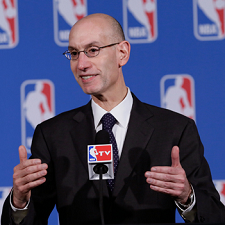 The N.B.A. is out front as it was in November 2014 when Adam Silver, then the league’s new commissioner, wrote an op-ed piece in The New York Times supporting the idea of legal betting. The other commissioners haven’t joined him, but baseball’s commissioner, Rob Manfred, has exhibited a softer positon on the issue than his predecessor, Bud Selig.
Speaking to reporters last July, Manfred said, “If there’s going to be a change in the regulatory structure with respects to sports gambling, we needed to be in a position to meaningfully engage and shape, try to shape, what the new regulatory scheme looks like. We’re in the process of talking to our owners and figuring out where we want to be in the event that there is in fact a significant change coming.”
This week is the biggest sports-betting week of the year. Why? It’s the Super Bowl, stupid. Last year, according to the Nevada Gaming Commission, a record $132.5 million was bet on the Super Bowl in Nevada.
The American Gaming Association has estimated that $4.7 billion will be wagered on this year’s game, 97 percent of it being bet illegally.
That’s the kind of mathematics that has drawn Adam Silver to legalized betting. If fans and other bettors want to place a few dollars on a Cavaliers-Suns game, why shouldn’t the N.B.A. get the portion that would otherwise go to the bookies and off-shore gentlemen?
Money has that kind of effect on people, even wealthy people who have more money than they can use. It has that kind of effect on politicians, too.
That’s why states like New Jersey and Connecticut eagerly await the Supreme Court ruling. Both states have serious economic problems and need the revenue legal sports betting would produce.
I spoke to a man Saturday night who doesn’t fit in that category. Arnie Wexler is a recovering compulsive gambler who warns anyone who will listen about the dangers of gambling, which include betting on the Super Bowl. No event is exempt.
“Super Bowl Sunday to the compulsive gambler is like New Year’s Eve to the alcoholic,” Wexler says in one of his arguments against compulsive gambling.”
In arguing against legal sports betting, Wexler said as long as sports betting is illegal people won’t go looking for someone to bet with – a bookie. But, he added, “If it’s legal, they’ll try it. Then we wind up with more compulsive gamblers.”
He recalled a survey he was in charge of that found 31 percent of the people polled would bet illegally with a bookmaker, but 81 percent bought state lottery tickets.
Wexler criticized the National Football League for putting out weekly injury lists, saying they are strictly for gamblers, and he was critical of the two-week break between the conference championship games and the Super Bowl.
“They just want two weeks of action” Wexler said. “They didn’t do that when I was gambling.”