In October 2006 the St. Louis Cardinals and the Detroit Tigers were heading for a confrontation in the World Series, and representatives of the owners and the players were confronting each other in negotiations for a new collective bargaining agreement.
Commissioner Bud Selig was a participant in the labor talks, but at some point he decided it was time to leave the table. Memories about the incident seven years later do not agree on why.
“Bud was threatening to go home without an agreement. They couldn’t reach agreement on revenue sharing,” Gene Orza, the union’s No. 2 lawyer at the time, recalled.
“He was going to the World Series,” said Rob Manfred, then the clubs’ chief labor executive. “He wasn’t just leaving.”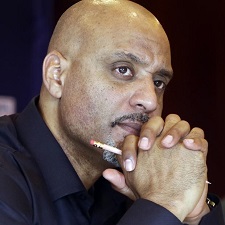
Disagree as they might on Selig’s reason for leaving, Orza, Manfred and others agreed on who saved the day and the talks.
“They couldn’t reach agreement on revenue sharing and Tony convinced him it was worth it for him to stay,” Orza said. “Tony and Mark Loretta went to see Bud. They went to see him privately without lawyers.”
The players, Manfred recalled, “played a very basic role. They convinced him not to go.”
Tony was Tony Clark. He was the first baseman for the Arizona Diamondbacks and a union player representative then. Now he is the executive director of the Major League Baseball Players Association, the first former player to lead the union.
He succeeds Michael Weiner, who died of brain cancer Nov. 21. Weiner hired Clark in 2010 as director of player services, and he was elevated to deputy executive director last July when Weiner was being treated for an inoperable brain tumor.
Weiner himself groomed Clark to lead the union.
“Mike had talked to him for a year or more” after his cancer diagnosis, Donald Fehr, Weiner’s predecessor, said. “He was going to learn everything top to bottom. He was going to be Mike’s Mark.”
Fehr referred to Mark Belanger, one of the best defensive shortstops in baseball history, who became a union executive after he retired but died of lung cancer in 1998.
The major difference between Belanger and Clark is Belanger, as a player or a union official, experienced every one of the five strikes and three lockouts that dominated baseball relations from 1972 through 1995 while Clark’s entire playing career and union association occurred in peacetime.
Had Belanger met privately with any baseball commissioner, except perhaps for Fay Vincent, the session most likely would have been contentious. Clark’s meeting with Selig mirrored the times that have developed.
“I won’t get into the details of what was discussed,” Clark said, “other than to suggest we recognized the possibility of a deal being done and thought it would be beneficial to have him, as commissioner, available should that common ground be found.”
“I don’t have a specific recollection” of the meeting, Selig said, “but it wouldn’t surprise me. I’ve always liked Tony.”
Although Selig has a rule against major announcements being made during the World Series, the two sides announced on the day of the third game of the 2006 World Series that they had reached agreement on a new five-year labor deal.
It was an unprecedented second straight labor contract players and owners worked out without a strike or a lockout. By the time the current contract expires Dec. 1, 2016, baseball will have bathed itself in 21 years of labor peace.
What’s an untested union leader to do in 2016 if problems develop in collective bargaining and a strike has to be considered? The union will have no living history or experience with striking. Nobody who is playing then will have gone through any kind of work stoppage.
In fact, only one player who was on a 25-man roster before the 1994-95 strike is still active, and his active status is tenuous. Alex Rodriguez played in 17 games for Seattle in 1994 before the strike began Aug. 12 of that season.
Clark, a 15-year major league first baseman, said the strike altered Detroit’s plans for him.
“I was coming up Sept. 8, but the strike delayed my arrival to ’95,” he said in a telephone interview. “I was on the fringe of being on the roster. I had conversations with a lot of guys about what was going on.”
The 41-year-old Clark readily acknowledges that he faces challenges, not only from his lack of professional labor experience but also in following the triumvirate of Marvin Miller, Fehr and Weiner (everyone forgets Ken Moffett, who briefly and ineffectively succeeded Miller in 1982).
“I am smart enough to know that in areas where I’m not as smart as I need to be I surround myself with others,” Clark said.
 “I am not a lawyer” – like Fehr and Weiner – “and I am not an economist” – like Miller – “but I am a player who has been involved intimately from my second year going forward. I have bargaining experience over the last three negotiations, and I have knowledge of our history.”
Clark said he has been asked if he will be able to apply what he has learned from Miller, Fehr and Weiner.
“I didn’t know Mr. Miller well, but I have spent considerable time with Don and Michael,” he said. “I think I’ve been truly fortunate to be able to take any number of things from those three gentlemen and apply them to leading the association.”
The closest Clark came to a strike was as Boston’s player representative in 2002.
“We did set a strike date,” he said. “That date came and went. I was in Boston at the time. Teams didn’t travel that day, August something. The noon deadline came and went. We got on a plane and traveled, I think, to Cleveland.”
The negotiators reached agreement later that day, surprising the baseball world with the announcement of a settlement instead of a strike.
(Having covered all five strikes and three lockouts, I was stunned. What do I do now, I wondered.)
Clark has participated in the last three collective bargaining negotiations, making him part of the team that has engineered the peace that has eluded other sports unions in recent years.
“There’s no doubt in my mind we’ve been fortunate to have labor peace since ‘94-’95,” he said. “Michael said peace is not the goal; an agreement that advances player rights is the goal. Our players are more advanced in rights than ever.”
When Weiner hired Clark in 2010, it was with the idea of educating players in their role in the union and the union’s role in their careers. When Miller launched the union in 1966, he had one lawyer, Richard Moss, the general counsel, and no players on the staff. The union now has at least nine lawyers and eight former players, not counting Clark.
“We have on our staff retired players who have seen it all,” Clark said. “There’s a lot of value in having our staff be reflective of our entire history.”
The union has found over the years that it helps to have good lawyers, too.
Moss, one of those lawyers, said of Clark, “He’s bright, seems to have all the right instincts, relates very well to other players. I think with proper legal help he’ll do well.”
Orza said, “I think he understands he will need help. It depends on how much help is given. The staff has a lot of junior people.”
Fehr called Clark “an extraordinary leader” who “dominates the locker room, commands the respect of players and cares about their future,” adding, “He has enormous integrity.”
Fehr dismissed concern for Clark’s lack of labor background. “I think that can be learned,” he said.
Steve Fehr, longtime outside counsel to the union who now also works with his brother with the hockey union, said Clark provides qualities that his predecessors could not: “his experience as a player and, as importantly, as a player rep.”
He added, “His grasp of the issues is impressive and his ability to command a room is remarkable. During his career no player was more active in the MLBPA than Tony.”
Given his strong feelings about players’ rights, Clark is unlikely to stumble into the situation Gene Upshaw was seen falling into in his 25-year tenure as head of the National Football League players’ union. A former all-pro player and Hall of Famer, Upshaw was viewed as becoming too cozy with N.F.L. commissioners and thus not always keeping the players’ best interests as the focal point of his job.
AT 6-6, WINFIELD CAN SEE EYE TO EYE WITH 6-8 CLARK
If the Players Association has executed a “first” by naming a former player its executive director, following right on its heels is another unusual move.
Tony Clark, the new head of the union, induced Dave Winfield, the Hall of Fame outfielder, to give up his position as executive vice president and senior adviser with the San Diego Padres to join the union as his special assistant.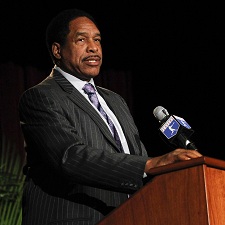
“He’s been there, he’s done that,” Clark said. “He has been a union supporter and active union member who has passion for and commitment for advancing player rights. Having him on board and be a support mechanism and sounding board for players will be great for us.”
“I’ve had a wide range of experiences in baseball; it’s been my career and my life,” Winfield, 62, said in a telephone interview. “I know people throughout our industry. It just seemed that with this opportunity, with my unique range of experiences and background, I can make a difference for players and fans.”
“The Players Association,” he added, “is one of the most important parts of a player’s career from the day they start playing to the day they receive their last pension check.”
During his 22-year career, Winfield served as a player rep for 15 seasons. He was not a player rep in 1994 when he joined Cal Ripken Jr. and Eddie Murray in speaking to younger players at a strike-update meeting in New York.
Ripken’s chance of breaking Lou Gehrig’s streak of 2,130 straight games in 1995 was on the line if the strike continued into the following season and the owners carried through with their threat to use replacement players.
“If it’s replacement players, it’s not major league baseball and I won’t be playing,” Ripken said that day with his streak at 2,009.
Winfield was in his next-to-last season and had nothing to gain from the strike, but he was there to explain the facts of labor life and urge the younger players to stick together.
When Winfield was finished speaking, Murray, smiling, said, “Thank you, Reverend Winfield.”
Gene Orza said, “Dave Winfield is the premier union member in my personal book.”
CANO, LIKE DANGERFIELD, GETS NO RESPECT
 If someone offered me $25 million a year for seven years, I don’t think I could dispute that person’s sincerity. I might question that person’s sanity bit not his sincerity.
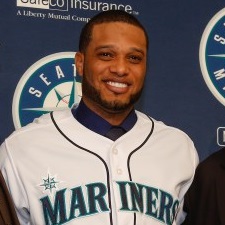
The New York Yankees say they offered Robinson Cano that much money, but Cano said they didn’t respect him and that’s why he is moving to Seattle.
Maybe Cano learned a different definition of respect in his school in the Dominican Republic than I learned at my school in Pittsburgh, but the precise definition shouldn’t matter. One hundred seventy five million dollars is a lot of respect.
What has Jay Z been teaching his client? Where will Jay Z be a couple of years from now when Cano has a constant stomach ache playing on losing teams in Seattle and cries to get him out of there?
Cano also said that his decision to take Seattle’s $240 million wasn’t about the money. A wise old baseball man once said when they say it’s not about the money, you can be certain it’s about the money.
This was about the money. It was also about the deep-seated egos of Cano and Jay Z.
I’m not going to feel sorry for the Yankees that Cano wouldn’t take their money, but it would be nice if players were willing to acknowledge their greed. When Goose Gossage signed with the Yankees in 1977 and was asked why he chose the Yankees, he said, “My agent told me to.” He was never penalized for his honesty.
JOBA RULES HIS FUTURE
Robinson Cano might have found the grass greener on the other side of the country, but he didn’t need a change of scenery to improve his performance. Joba Chamberlain, on the other hand, may very well benefit from a change in scenery following his signing with the Detroit Tigers. If he hoped to improve his performance, he needed to get away from the Yankees.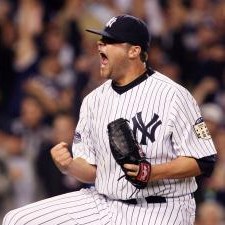
Maybe it was a case of Yankees’ overhype, that the pitcher was never going to be as good as the Yankees touted him to be. But maybe it was a case of too much messing with his head.
The Yankees couldn’t decide if Chamberlain should be a starter or a reliever so they moved him back and forth. Then there were the Joba rules, dictating how many pitches he could throw in a game, how often he could pitch. Would it be this many pitches if he had so many days off or another number of pitches if he had a different number of days off?
Maybe the Tigers will just let him pitch and let his success or his lack of it determine what he does. Maybe Jeff Jones, their good pitching coach, and Brad Ausmus, their new manager, will be able to straighten him out. Maybe they will hand him a baseball and say remember how you used to do it when you got batters out, do it that way and maybe you’ll get them out again.
At least he’s away from the Yankees and will now have a chance to pitch the way that used to work for him.