Give Ruben Amaro credit for one thing. He may do dumb things, but when he admits to one of them, he doesn’t whisper his admission, hoping no one will hear him. He issues the admission in a huge, public way.
Except the Philadelphia general manager does not consider his acquisition of Roy Oswalt last week as a correction for his trade of Cliff Lee last December.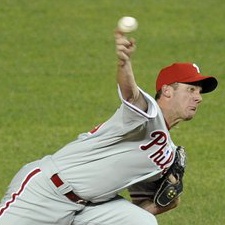
It’s my opinion and that of many others, including other general managers, that Amaro made a mistake trading Lee instead of keeping him and pairing him with Roy Halladay as the fiercest 1-2 pitching punch in the major leagues. With Lee and Halladay in their starting rotation, the Phillies were probably halfway to the World Series.
But Amaro sent Lee to Seattle, and when he obtained Oswalt from Houston, he seemed to acknowledge that the Phillies needed more pitching if they were going to get to the World Series for the third successive season.
The Lee and Oswalt deals, Amaro said, were a matter of the future of the franchise,” adding, “On paper, having Lee and Halladay at the top of the rotation and Hamels coming off a subpar season would have been great. But Lee couldn’t have helped us hit better. We were struggling offensively and hadn’t played very good baseball from the beginning of the season. We may not have been looking for that front of the rotation guy.”
Amaro meant the Phillies might not have felt the need to add a front-line starter had they hit better and won more games. On the other hand, had they retained Lee, they would not have had to score many runs in his starts to win more games.
But instead of making early post-season reservations, the Phillies struggled through the first half of the season. Meanwhile, Lee went to the Texas Rangers last month, poised for another post-season performance (he beat the Yankees twice in the World Series last year).
What bothered me about Amaro’s trade of Lee wasn’t the trade itself; if the Phillies wanted to undermine their chances to repeat, that was their business. I was skeptical, however and remain so of the Phillies’ stated reason for making the trade.
Amaro, echoed by team president David Montgomery, said last December and reiterated last week that the Phillies needed to restock their minor league system because they had given up so much young talent in their acquisition of Halladay.
“We could have kept both of them,” Amaro said on the December day on which he made the trades, “but it was a baseball decision for me and our organization and the people in the organization. We could not leave the cupboard bare. If we had just acquired Roy and not moved Lee, we would have lost seven of the best 10 prospects in our organization. That is not the way you do business in baseball.”
In the telephone interview Friday, Amaro said, “We had moved so much talent out of our farm system we needed to replenish.” Then, switching to Oswalt, he added, “We acquired Oswalt under our terms. He can help us now and in the future and won’t be a financial burden. We are committed to Oswalt through 2011.”
 The Phillies, however, saw last season what Lee could do for them, especially in the post-season, and they have no record with Oswalt, whom the Washington Nationals battered in his first start for the Phillies.
It was telling and perhaps foretelling that Oswalt’s initial start for the Phillies was against a National League East team. In 13 starts this season and the previous two seasons against N. L. East teams, whom he will see more often than other teams this season, Oswalt has a 0-6 record with a 7.54 earned run average.
Oswalt may still prove to be what the Phillies need, but I continue to believe that had they kept Lee they would not be chasing Atlanta and thinking wild card as a fail-safe option for the playoffs. I further believe that money was the primary concern in their decisions. They simply didn’t want to have to pay Lee what he would have required to stay in Philadelphia after this season.
Amaro didn’t entirely rule out money as a factor.
“We knew we could keep a No. 1 starter on our terms and not wait for Lee to decide,” Amaro said. “I had great discomfort with my original negotiations with him. So we decided to go with our No. 1 starter. We stood a chance, had we not added Halladay, of going beyond 2010 we could have one starter in our rotation, Hamels, because could go somewhere else. We did the Oswalt deal under our own terms.”
When the Phillies traded for Halladay, they signed him to a three-year, $60 million extension. They had not signed Lee to an extension when they acquired him, but they could have had him this year on a cheap deal, $9 million for the final year of his contract.
In the Oswalt deal, the Astros will give the Phillies $11 million to offset the $23.4 million left for this year and next plus the buyout of a $16 million option for 2012.
“These deals are something we’ve been fortunate where we are in our baseball life cycle,” Amaro said. “We felt we owed it to our organization and fans to do what we needed to do to make a run for it.”
The next two months will let Amaro know if he could have done more for the organization and the fans by keeping Lee.
ANOTHER YANKS’ MONEY GAME
The free-agency months are the time of the year that other teams fear and hate the Yankees most intensely. If there’s a good free agent or three out there, they know the Yankees will get them because they will offer them more money than anyone else. Money plus the offer of the best chance to win make for a formidable clinching combination.
Other teams have come to expect those developments. For example, if Cliff Lee is a free agent at the end of the season, other teams will expect him to sign with the Yankees.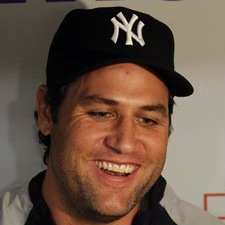
But there’s another time of year when other teams have no love for the Yankees, and that’s the trading deadline. The way mid-season trades have developed, money comes into play, and the Yankees will spend whatever is required to complete a deal.
The Yankees are in stronger financial position to correct a mistake or a deficiency than others. If most other teams make a mistake, they have to live with it.
The Yankees’ ability and willingness to take on contracts put them in an even more enviable position. They get other teams to include money in deals to defray the cost of the player’s salary, and teams are willing to pay the money because they want to shed the contract and not having to pay, say half of it, is better than having to pay all of it.
Consider the Yankees’ deal with Houston for Lance Berkman. The first baseman is in the last year of a 6-year, $85 million contract. At the time of the trade, he had $5.15 million left from his 2010 salary of $14.5 million. He also has a $2 million buyout on a 2011 option for $15 million.
The Astros will pay the Yankees $4 million, leaving the Yankees to pay the $3.15 million balance. Why would the mid-market Astros pay the wealthy Yankees $4 million? Because it’s a savings of $3.15 million over what they would otherwise have to pay Berkman.
In their deal with Cleveland for reliever Kerry Wood, the Yankees will receive $2.1 million to pay part of the approximately $3.67 million remaining on Wood’s $10.5 million salary. The Indians will pay the Yankees $500,000 less if Wood spends no time on the disabled list the rest of the season.
The Yankees aren’t the only team that engages in this money game. In trading Roy Oswalt to the Phillies, the Astros included $11 million to pay nearly half of the $23.4 million the pitcher is owed the next two years. And the Cubs will give the Dodgers $2.5 million to help pay the $4.2 million remaining in Ted Lilly’s $12 million salary.
HOMER FOR FIGGINS, NOT FOR PIERRE
 Chone Figgins hit a home run last week. He hit it against Mark Buehrle of the Chicago White Sox after not having hit a home run in his first 366 at-bats this season.
The home run eliminates Figgins, the Seattle second baseman, from contention for the most times at bat this season without a home run.
The leading contenders for that dubious distinction are Juan Pierre with 401 at-bats, Nyjer Morgan 385 and Jason Kendall 354.
Pierre has already exceeded the number of at-bats he had last year without hitting a home run, 380, and his target now is the 668 at-bats he had in 2007 without a home run. In 5,934 career at-bats, Pierre has hit 13 home runs, sometimes more than one in a season.
STRANGE COMBO: CAPUANO AND “W”
This is a belated salute to Chris Capuano, the Milwaukee pitcher, who last month gained his first victory in three years and stopped his progress toward an undesirable record.
When Capuano returned from a two-year injury absence and lost his first start June 3, it marked his 19th consecutive start he had not won. The first 18 were his last 17 starts in 2007.
His winless streak did not reach the longest such streak in history. Tom Sheehan, who pitched in the early decades of the last century, endured a streak of 21 starts without winning one.
Capuano did not get there because in Pittsburgh July 19 he limited the Pirates to one run and three hits in five innings, and the ‘W’ was his.