Are the Toronto Blue Jays waiting for the Baltimore Orioles to pass them before they acknowledge they have a serious problem?
When J.P. Ricciardi interviewed for the Blue Jays’ general manager’s job in 2001, he told Paul Godfrey, the chief executive, that he could do a better job for less, not less money in his paycheck but less money on the player payroll.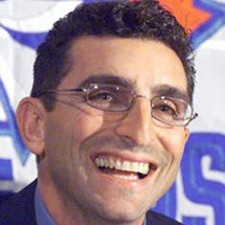
Nearly eight years later, the Blue Jays are in position to achieve their fourth losing season under Ricciardi and second successive fourth-place finish in the American League East. They have not reached the playoffs under Ricciardi, and last season the previously inept Tampa Bay Rays sped by them in the division and went all the way to the World Series.
The Orioles don’t seem to be in position to pass the Blue Jays this season, but questionable developments make one wonder about the Blue Jays for the future.
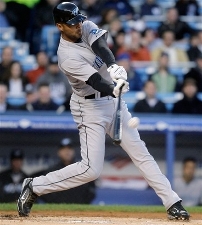
Just this week the Blue Jays let their right fielder, Alex Rios, go to the Chicago White Sox on a waiver claim, opting to jettison him barely a year after they signed him to a seven-year contract worth $69,835,000.
At the same time they were deciding that Rios had no future with them, the Blue Jays tried to trade their best pitcher, maybe the league’s best pitcher, Roy Halladay. They handled their effort so badly that they turned it into a farce.
And a month ago the Blue Jays released B.J. Ryan, owing him nearly $15 million from a five-year, $47 million contract that many thought they were foolish to give the closer.
The decision to let Rios go to the White Sox was as peculiar as any roster move in recent seasons. Although it was a waiver claim, the Blue Jays could have pulled Rios back and worked out a trade, but since the White Sox were willing to pick up the entire contract, they weren’t willing to give up players, too.
In effect, then, the transaction involved more money than any deal has ever included. The White Sox will owe Rios $61,473,224, money the Blue Jays now won’t have to pay. Salary dump? Don’t even think it. The Blue Jays, they said, acted to gain financial flexibility.
“Many people feel it’s a salary dump and it looks like it,” Paul Beeston, the interim chief executive officer, acknowledged. “I don’t blame them for thinking that but it was to get out from under the contract to help us in the future.”
Ricciardi echoed Beeston, also in a telephone interview.
“If the economy was where it is now and our marketplace was where it is, we wouldn’t have done the contract a year ago,” Ricciardi said. “A lot has changed in the game from our end. The flexibility is more important to us.”
 That flexibility, Ricciardi added, will serve the Blue Jays well. “Hopefully we’ll be able to address things in the off-season,” he said. “This could give us an opportunity to do some things we don’t even envision now.”
The Blue Jays, however, have had opportunities in recent years and squandered them. Three years ago the owner, Ted Rogers, gave Ricciardi an additional $100 million to spend on payroll over three years after Ricciardi said the Jays couldn’t compete with the Yankees and the Red Sox at their then payroll level of $70 million.
But in the next two seasons the Blue Jays finished 13 games ($82 million payroll) and 11 games ($98 million) from first place, and this season, the third of the extra payroll money ($80.5 million), they have had a double-digit deficit every day but one since the All-Star break.
To be sure, the Blue Jays are in a tough division. To get out of the division and into the playoffs, the Blue Jays have to leapfrog the Yankees and/or the Red Sox. With Ricciardi in place, they have done that once, in 2006, finishing ahead of Boston by a single game. But they didn’t make the playoffs because they finished eight games behind Detroit in the wild-card standings.
Now the Blue Jays’ task has become more difficult because the Rays have joined the Yankees and the Red Sox as division competitors, creating a three-way roadblock for Toronto.
“Last year at the conclusion of the season it felt like we were in last place,” Beeston said. “It’s not been a total disaster; it just feels like it. We were in fourth place in our division.”
Yet Beeston saw the Blue Jays’ position from a glass-half-full, half-empty perspective. “Playing in the A.L. East is an advantage,” he said, “because it makes you be better. It’s a matter of putting the team together.”
Try as they might, the Blue Jays have failed to put a contending team together. The Rays, Beeston acknowledged, “have done it very well: good trades, judicious free agent signings, good players developed.”
“I would hope we could do that in the near future,” he continued. “We have good young pitching, good young players in Hill, Lind and Snider. We have the ability, if we want, to get in the free agent market. But long-term contracts will always tie your hands.”
Why didn’t the Blue Jays think of that before they signed Rios and not 15 months later? But then various questions can be asked about the way the Blue Jays have operated their team in recent years.
“We are putting ourselves in a position to make a very prolonged run,” Beeston said. “I think J.P. has done a terrific job stocking the organization with young arms.”
Halladay, 32, is no longer a young arm, but his is the best arm the Blue Jays have. Yet they spent the month of July trying to trade him in a very public manner. Ricciardi determined that Halladay would probably not remain in Toronto beyond next year, the last of his contract, and announced that he would talk to anyone who was interested in trading for him.
The fact that Ricciardi went public with his plans created a mess for the Blue Jays.
“The Halladay thing got a little sloppy,” Beeston said. “We got ourselves in a position where it was almost no win. It came out in a way that wasn’t ideal.”
For a while, there were daily reports throughout baseball about the Halladay talks and where they might be headed. Privately, though, the Blue Jays realized there was virtually no chance they would or could trade the star pitcher.
“The only deal we would have accepted is a deal that no one would have made,” Beeston said. “In hindsight I’m not sure it was ever going to happen.” And then he added, “Maybe it was bad, but if someone had blown us away, perhaps we would have done it. At the end of the day, it wasn’t fun for Roy. People were always asking him where are you going.”
In the end, the Phillies and the Angels were the only serious bidders for Halladay. The Blue Jays tried to entice the Yankees into a deal along the lines of the one the Yankees made with the Phillies the day before the deadline in 2006. The Yankees wanted Cory Lidle, and the Phillies said they could have him if they also took Bobby Abreu.
The Blue Jays told the Yankees they could have Halladay if they also took an outfielder, Rios or Vernon Wells, and give up a young pitcher, Joba Chamberlain or Phil Hughes, and prospects. The Yankees, however, never seriously entertained a trade for Halladay.
Having failed to trade their superstar, the Blue Jays have adopted a new theme. They are saying they will be contenders in 2010.
The 2010 season is also the last in Ricciardi’s contract. The prevailing view in Toronto is that the Blue Jays will not extend his contract. Ricciardi said there has been no discussion about the matter. Beeston, who hopes to be gone from his position by 2010, said when asked about Ricciardi, “I’m a big fan of J.P. and I’m here. I have no intention of doing anything.”