Albert Pujols, their best hitter and maybe the best hitter in baseball, took the money and ran. Tony La Russa, their manager for 16 years and two World Series championships, retired. Even Jeff Luhnow, their No. 2 baseball executive, left to become general manager of the Houston Astros.
But the St. Louis Cardinals haven’t missed a beat. They won 11 of their last 18 games last year, and they won 11 of their first 18 games this year. Their year-ending 11-7 record last season took them to their second World Series triumph in six years. Their season-starting 11-7 record this year served notice that the losses they suffered during the winter weren’t going to undermine their plans for this season.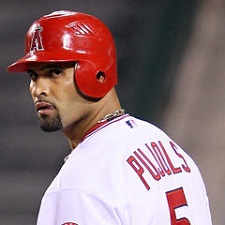
“A lot of people thought the sky might fall but we had a lot of talent here,” said John Mozeliak, the Cardinals’ fifth-year general manager. “I think people saw that last October. Expectations were high even with the people we lost.”
As important as La Russa was to the Cardinals as their long-term manager, Pujols was the primary force behind the team. In each of his first 10 years he drove in more than 100 runs, averaging 123 runs batted in a season, He slugged more than 40 home runs in six seasons, falling just two home runs short of averaging 41 a season. He batted .331 with .624 slugging and .426 on-base percentages.
At the age of 31, the first baseman slipped last season, hitting .299 with 37 home runs and 99 r.b.i. His slugging percentage dropped to .541, his on-base percentage to .366.
The teams that wanted to sign Pujols as a free agent were not concerned that the slippage was an omen. The Cardinals went beyond their means in a vain attempt to keep him in St. Louis. Among longer-term proposals, they offered $120 million for 5 years, which made eminent sense, considering his age.
The Angels, however, offered him twice the number of years and twice the money, and it was California, here I come.
Pujols, though, has not blossomed in the American League. Entering Sunday’s game, he was hitting .226, had not hit his first A.L. home run and had driven in only four runs. The total of his slugging and on-base percentages, .588, was lower than his career slugging percentage, .617.
One ramification of Pujols’ dreadful start is he has not helped the Angels get off to a strong start in their purported role as an A.L. West contender. The Angels lost 14 of their first 20 games and quickly fell 9 games behind first-place Texas.
The Cardinals, meanwhile, have not suffered from their loss, which is as major as any team could experience. At the start of play Sunday, they led the National League Central by four games with a 14-7 record.
They had the league’s highest batting average by far, had the best on-base percentage and were only two points off the top slugging percentage. Albert Pujols? Who needs Albert Pujols?
“In Albert’s case we knew there was a chance we’d lose him,” Mozeliak said in a telephone interview Friday. “If we did, we didn’t think we could replace him with one person but needed to do it in an aggregate sense. Shore up defense, which we’ve done. Find someone to hit second to fourth in the lineup; that was Beltran. See more production out of a player like Freese. The expectations would be higher of him coming into 2012. But in an aggregate sense we felt we could replace him.
 Third baseman David Freese was an October phenomenon last year. He batted .397 in all three post-season series, .545 in the league series and .348 in the World Series. He hit 5 October home runs and drove in a post-season record 21 runs.
He was named most valuable player of the league championship series and World Series and couldn’t be m.v.p. of the division series because that award doesn’t exist.
Little wonder that Mozeliak expects good things from Freese this season. Through the team’s first 21 games, he was providing them, hitting .343 with 5 home runs, a team-leading 20 r.b.i. and combined .973 slugging and on-base percentages.
Beltran was doing his part, leading the Cardinals with five more home runs than Pujols had hit and knocking in 11 runs. They signed him as a free agent in December for two years and $26 million.
Another full-time addition is shortstop Rafael Furcal, whom the Cardinals acquired from the Los Angeles Dodgers at the trading deadline last season. Furcal is still around and hitting .310 with 8 r.b.i.
Then there’s Jon Jay, the team’s sometime center fielder. In 14 games, he was hitting .404 and had combined .992 slugging and on-base percentages, numbers that more closely resemble Pujols’ Cardinals numbers more than they do his Angels numbers.
The Cardinals have not restricted themselves to gaudy offensive statistics, How about these numbers for their starting pitchers:
- Lance Lynn: 4-0 won-lost record, 1.33 earned run average
- Kyle Lohse: 3-0, 1.62
- Jamie Garcia: 2-0, 2.49
- Jake Westbrook: 3-1, 1.30
The name missing from that group is Adam Wainwright. A 20-game winner in 2010, Wainwright missed all of last season following elbow surgery. Back this year, he has a 0-3 record and 7.32 e.r.a.
“I think he’s going in the right direction,” Mozeliak said, “Every start has been better than the last one. He’s made a couple mistakes that have hurt him.”
As much as any of these hitters or pitchers have great responsibility for the Cardinals’ fortunes this season, the man who has the greatest heat is Mike Matheny, the 41-year-old former catcher, who has replaced La Russa as the team’s first new manager in 16 years.
Matheny had not managed or even coached in professional baseball; yet he was hired only two weeks after La Russa announced his retirement. “We knew the day would come,” Mozeliak said. “You have to replace La Russa, but you don’t replace him. Matheny is the perfect guy for us. He knew the organization.”
In addition, Mozeliak said, “When you look at someone who has to replace Tony after a world championship, you needed someone with high character and who is well respected. As we went through the process, I realized Mike could do that.”
ALBERT, MEET OSCAR
Nearly 35 years before Albert Pujols, there was Oscar Gamble. The cases aren’t the same in all aspects, but they are close enough to be instructive.
Pujols, a $240 million free agent, is off to a horrible start with the Angels, but he’s only the latest player to get a huge contract as a free agent and cause himself and his new team great anguish. Gamble was the first.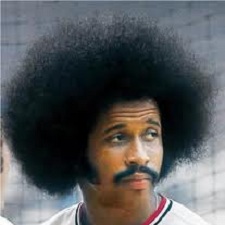
The player known more his huge Afro than his bat signed with San Diego Nov. 29, 1977 as a member of the second class of free agents. He signed for what was then a big contract – 6 years for $2.85 million. Yes, Virginia, that was a lot of money then.
With the Chicago White Sox in 1977, Gamble hit 31 home runs and drove in 83 runs. He hit .297. With the Padres in ’78, the outfielder hit 7 home runs, knocked in 47 runs and batted .275. In his remaining seven seasons, he never attained 31 and 83 again.
This is not to suggest that the Angels try to have the Pujols contract annulled. However, it has been established that there is a syndrome that affects players who defect to new teams for a wagonload of money.
Why does it happen? Probably the most sensible explanation is players feel pressure to justify their contracts. Instead of playing as they did to earn the big payday, they try too hard and wind up hitting or pitching less effectively than they had leading to their free agency.
Some more recent and expensive examples than Gamble:
Adam Dunn, White Sox, 4 years, $56 million: In two years with the Nationals, 2009-10, he hit 76 home runs and drove in 208 runs. Last year with the White Sox he hit 11 home runs and knocked in 42 runs. As a bonus for putrid hitting, he batted .159.
Carl Crawford, Red Sox, 7 years, $142 million: Dropped last year from .307 to .255, 19 homers to 11, 90 r.b.i. to 56, 47 stolen bases to 18
Jayson Werth, Nationals, 7 years, $126 million: Dropped last season from .296 to .232, 85 r.b.i. to 58
Jason Bay, Mets, 4 years, $66 million: Dropped in 2010 from 36 homers to 6, 119 r.b.i. to 47, 103 runs scored to 48
Andruw Jones, Dodgers, 2 years, $36 million: Dropped in 2008 from .222 to .158, 26 homers to 3, 94 r.b.i. to 14
Barry Zito, Giants, 7 years, $126 million: Went from 102-63 in his first seven seasons to 43-61 in the five years after he got the contract.
Carl Pavano, Yankees, 4 years, $39.95 million: Went from an 18-8 record in 31 starts in 2004 to a four-year total record of 9-8 in 26 starts.
Chan Ho Park, Rangers, 5 years, $65 million: Went from 80-54 in six years for the Dodgers (1996-2001) to 22-23 in four years with the Rangers.
Mike Hampton, Rockies, 8 years, $121 million: Went from 37-14 in consecutive seasons with the Astros and the Mets to 21-28 in two seasons with the Rockies (2001-02)
MINAYA’S METS MULTIPLY
 When Omar Minaya was fired as the Mets’ general manager following the 2010 season, he and his regime were criticized for having failed to develop a productive farm system. How unproductive could it have been, though, in light of the Mets’ lineup for a game against Miami last week?
Eight of the nine starters were drafted or signed as Latin American free agents by Minaya and his aides, and the ninth, David Wright, was drafted when Minaya was a Mets’ assistant general manager.
The lineup by positions:
- 1B Ike Davis – drafted 2008
- 2B Daniel Murphy – drafted 2006
- SS Ruben Tejada – signed as free agent in Panama in 2006
- 3B David Wright – drafted in 2001
- LF Jordany Valdespin – signed as free agent in Dominican Republic in 2007
- CF Kirk Nieuwenhuis – drafted 2008
- RF Lucas Duda – drafted 2007
- C Josh Thole – drafted 2005
- P Jonathan Niese – drafted 2005
This lineup might not win a pennant any time soon, but it beat the Marlins that day, and most of the players who were in it are everyday starters for the Mets.