If Bryan Price was fired, can Buck Showalter and Bob Melvin keep their jobs much longer? History and gambling odds say no.
Before the Cincinnati Reds fired him April 19 only three weeks and 18 games into the season, Price was viewed by oddsmakers as being one of the three managers most likely to be the first manager fired this season. The offshore Bovada bookmaker had Price at 3 to 1, the same as Bob Melvin of Oakland. The only manager Bovada odds said was more likely to be fired was Showalter at 3 to 2.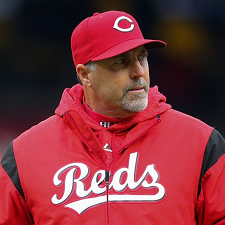
Price did not have a rewarding tenure as the Reds’ manager. He replaced Dusty Baker, and that inexplicable decision turned out to be one of the most ill-advised in franchise history.
With Baker on the job, the Reds won division titles in two of his last four years and 90 games in his last year. In Price’s first four years the Reds had losing records each year, winning 76, 64, 68 and 68 games. The 3-15 record with which they started his fifth season offered no hope for anything different.
[Price lasted longer than either Bob Lemon or Yogi Berra did with the Yankees in the 1980s. Lemon was fired after 14 games (8-6) in 1982 and Berra after 16 games (6-10) in 1985.]
Enter Jim Riggleman, the Reds’ bench coach and a veteran manager notoriously known for walking away from his job as manager of the Washington Nationals in the middle of the 2011 season when the general manager wouldn’t talk to him about a contract extension, let alone give him one.
As this season has progressed, it has regressed for Showalter and the Orioles. They don’t have the worst record in the American League, but at 6-15 entering Sunday’s schedule, they had the worst record in the A.L. East and that was bad enough for the Orioles because that record put them 11 1/2 games behind the rampaging Red Sox. (17-3).
Peter Angelos, the Orioles’ owner, has been uncharacteristically quiet and calm, but his mood could change without warning. So could Showalter’s status.
Some other managerial situations worth watching and debating:
Gabe Kapler has made some weird moves in Philadelphia as a rookie manager, but the Phillies have started the season somewhat impressively and are winning for a change. Furthermore, Kapler is the first manager hired by the new executive team of president Andy MacPhail and general manager Matt Klentak.
Don Mattingly manages the Miami Marlins, whose new chief executive and minority owner, Derek Jeter, was a teammate of Mattingly briefly in 1995 with the Yankees. The Marlins have a poor team, for whom the manager probably doesn’t matter, but at some point Jeter might have to or want to address the possibility of firing Mattingly.
No similar possible conflict exists at Yankee Stadium, but lots of managers have been hired and fired there in the past quarter century.
George Steinbrenner, of course, is gone, and that’s why Joe Girardi was able to serve as manager for 10 years and that’s why Brian Cashman is still hanging around as general manager after two decades despite relatively little success on the field.
Cashman fired Girardi ostensibly to allow greater harmony in the clubhouse between the manager and the Yankees’ new younger players. However, no problems were found among the younger players, and youngsters like Aaron Judge, Gary Sanchez and Didi Gregorius performed pretty well under Girardi, who managed the team to the American League Championship Series.
Cashman’s problem with Girardi was the former catcher was too established and couldn’t be told by the general manager what to do. The trend in the game today is toward the general managers running the team from the front office. A manager in Girardi’s position wouldn’t accept that role.
Cashman hired not only a young manager but one who had never managed or coached before. Aaron Boone came to the Yankees with a completely clean slate, one that had never been written on before, one that had all that space to be filled in by the general manager.
The Yankees, of course, have begun the season in a mediocre manner.
They still have plenty of time to catch and maybe even overtake the Red Sox, who like the Yankees, fired their manager, John Farrell, and hired a young manager, Alex Cora (42).
PAY MASTER
 Speaking last week in answer to a question about the possibility of a shorter schedule, say 154 games instead of 162, Commissioner Rob Manfred said player salaries would naturally have to be reduced if a shorter season went into effect. Why?
I understand what Manfred is saying, but I think he’s missing the point of what a player’s salary is.
Manfred, I realize, has been the clubs’ chief negotiator in the past few negotiations for a new basic agreement, but players are not hourly workers who earn so much an hour and so much for a 40-hour week.
They are paid for a season and should have the right to negotiate what they can get for a season, no matter how many games are played.
If a player or his agent can convince an owner he has a value of $5 million for the season and subsequent to their agreement the season is changed from 162 games to 154, he should receive what he negotiated for the season.
What, you might ask, should happen if the length of the schedule is made longer, I would say the same rule should apply unless a difference were negotiated.
This situation, however, would hardly be likely to come up. If either side were thinking of proposing a shorter or longer schedule, the proposal would be negotiated in advance, and there would be nothing automatic about the result, unlike Manfred’s expressed view.