Before Peyton Manning, there was Ted Beard. Well, Manning and Beard don’t quite occupy the same plateau in Indianapolis sports history, but before Manning, long before Manning, before professional football came to Indianapolis, Beard was a celebrated professional athlete there.
He was an outfielder for the Indianapolis Indians, an AAA minor league team, playing there before, during and after he played in the major leagues for parts of seven seasons (1948-58), mostly with Pittsburgh, and hit.198 in 194 games.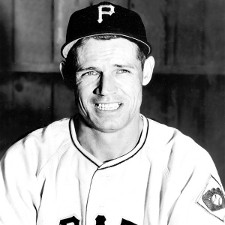
At Indianapolis, though, he was a star. He had team-leading seasons in runs scored, walks and stolen bases and remains among the top three career Indians leaders in runs scored, hits, doubles, triples, walks, stolen bases, games played and at-bats. He wasn’t quite good enough to maintain an extended career in the majors, which is why he was able to accumulate the minor league statistics, but he was one of those players referred to as a 4A minor leaguer, hovering between Triple A and the majors.
A small (5-foot-8) left-hander, he was also good enough to catch my young fan’s attention and become my favorite player. Ralph Kiner was hitting tons of home runs, but I preferred Beard.
Why am I writing about Beard now? He still lives in the Indianapolis area, and he is a Colts fan who will be rooting for them against New Orleans in the Super Bowl Sunday.
“I like them; I like them real well,” Beard said on the telephone last Friday, still fresh from celebrating his 89th birthday earlier in January. “I believe they will win. At least I’m pulling for them.”
This will be a unique Super Bowl as far as the Colts-Saints matchup goes. Neither Indianapolis nor New Orleans has a major league baseball team, neither will ever have a major league baseball team and except for several pre-1900 seasons when Indianapolis had a team in the National League neither city has had a major league baseball team.
That pairing has never happened in any other Super Bowl. In fact, this is the first Super Bowl since 1992 (Washington-Buffalo) in which neither represented city had a major league baseball team at the time of the game.
Indianapolis and New Orleans have long had professional baseball, both beginning in the 1880s, but throughout the expansion era (1961-1998) when the majors nearly doubled their size, neither city was ever seriously considered.
Asked if he thought Indianapolis could have supported a major league team, Beard said, “I think they would have. I don’t know what happened. They weren’t expanding back then.” He meant in the years he played, but the majors began expanding not long after, in 1961.
Indianapolis maintained its AAA franchise throughout the 20th century. The Indians began life in 1902 and played in the American Association for all but a few seasons in the 1960s until the league was folded into the International League in 1998.
Their all-time roster is filled with names well known to major league fans: Randy Johnson, Herb Score, Ken Griffey Sr., Hal McRae, Andres Galarraga, Pedro Martinez, Rocky Colavito, Larry Walker, among many others.
New Orleans had a Class AA minor league team, the Pelicans, from 1887 through 1959. After a 17-year hiatus, the Pelicans returned as an AAA team in the American Association with Indianapolis in 1977.
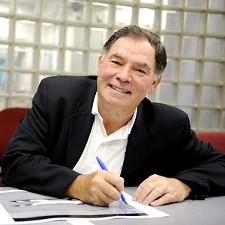 “They played in the Superdome for a year,” said Ron Swoboda, the former Mets’ outfielder, who was a New Orleans sportscaster and is a commentator for its baseball games. “They were trying to present themselves as a potential big league town, but it was a difficult fit. They did it for a year. The city downsized the team trying to sell the idea that we’re a big league wanna be. There are a lot of things missing from the equation. They say half the population is fish.”
The city, Swoboda added, does not have enough businesses for sponsorship of a team. “The Saints,” he said, “get by because they’re so popular and sell a lot of tickets. They’re a 500-pound gorilla. There’s an affection for the Saints.”
The city’s current baseball team is the AAA Zephyrs. It took up residence in 1993, migrating from Denver when the National League expanded there. “It’s been a pretty good success in a quiet way,” Swoboda said..
This probably shouldn’t be taken as an omen for the Super Bowl, but on April 10, 1993, the Zephyrs played their first games and swept a doubleheader from Indianapolis.
In January 2005 the Zephyrs established the New Orleans Professional Baseball Hall of Fame. Among its members are Mel Ott, Mel Parnell, Rusty Staub, Zeke Bonura, Howie Pollett, Gene Freese and Will Clark.
Later that year Hurricane Katrina struck the city, forcing the Zephyrs to evacuate to Oklahoma City.
“My wife and I evacuated in opposite directions,” Swoboda recalled. “I was going home to Baltimore where my mother had serious cancer surgery. My wife headed for Gainesville, Florida, then up to Asheville when we realized we wouldn’t be in New Orleans. I stayed in Baltimore.”
The Zephyrs returned to New Orleans the following April and opened the 2006 season with a crowd of 11,006, the largest opening-day crowd in franchise history.
Swoboda did not play in New Orleans. Neither did Staub.
“I was born and raised there,” Staub said. “I played in what we called NORD, the New Orleans recreation department. I played from the time I was 8 to 12 or 13. I went to Jesuit High School and played through my high school career there. After my junior year we won the American Legion little world series.”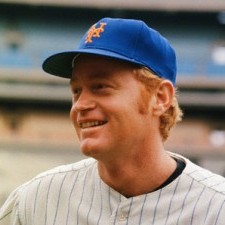
The only other times Staub recalled playing at home were in exhibition games with the Montreal Expos and the New York Mets against the New York Yankees. He did not watch much baseball as a youngster, he said.
“I saw one Pelicans game,” he related. “I have no idea who was playing for the Pelicans. We went to school, played and studied. My dad was a school teacher. I had to cut the lawn.” Staub recalled the day he signed a professional contract with the Houston Colt 45s. It was in 1961 on Sept. 11, a date that would live in infamy 40 years later.
Although New Orleans has not served as home for a major league team, it has hosted spring training, though not recently. In fact, the last time a team held spring training there was 1928 and ‘29 when the Indians had their spring camps there. The Indians also had spring training there from 1916 through ‘20, 1912, 1905 and ‘06 and 1902 and ‘03.
The Red Sox were last before the Indians from 1925 through ‘27, preceded by the Yankees 1922 through ‘24 and the Dodgers 1921. The White Sox joined the Indians in 1905 and ‘06. The Reds, who as the Red Stockings played the first professional baseball games in the city in 1870, were the first team to hold spring training there in 1896, then did it again the next year and again in 1900.
Indianapolis, not surprisingly, has never hosted spring training. Something about the weather, I guess. However, during World War II, to alleviate travel problems, the Cubs, the Pirates and the White Sox trained in French Lick, Muncie and Terra Haute, Ind.
HEALTHY AGAIN – MAYBE
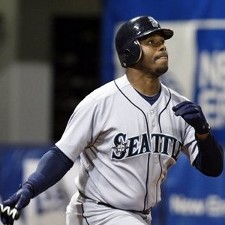 One of the hardest-to-believe off-season developments has to do with the calendar. It says that Ken Griffey Jr. has turned 40.
It just doesn’t seem possible. It’s not that I remember the young Griffey running around the clubhouse when his father played for the Yankees. It’s that he began playing in the majors when he was 19 years old, and can it possibly be that more than 20 years have passed?
If that isn’t difficult enough to comprehend, how about all of the time Griffey has lost because of injuries? He is the active career leader in hone runs with 630, and who knows how many he might have hit had he remained healthy his entire career?
He has hit a home run every 15.4 times at bat, and at that rate, had he averaged 550 at-bats in a healthy career, he would have had an additional 1,850 at-bats and 120 more home runs, putting him at the threshold of the questionable Barry Bonds record of 762. The baseball world and its fans would feel a lot better about that.
But injuries are inherent in the game, and Griffey suffered more than his share of them.
As it is, Griffey is coming back from his second knee operation in a year, and the Seattle trainer reported last week that he is “better than he was at any time last year.” Besides the knee being better, Rick Griffin said, Griffey has lost weight.
“He knows he has to lose weight. And he has,” Griffin said.
Griffey batted .214 last season with 19 home runs and 57 r.b.i., not terribly impressive statistics, but general manager Jack Zduriencik was sufficiently pleased with his performance and his presence in the clubhouse that he re-signed him for this year.
JOHNNY, WE HARDLY KNEW YOU
The start of the month in which spring training begins is upon us, and Johnny Damon still has no job. His agent, Scott Boras, assures us – and presumably Damon – that he will have a job. But Damon has always known well before this juncture where that job is and where he should make plans for spring training.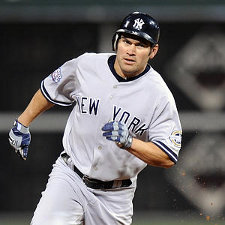
He needs a plane ticket to get to spring training unless he is staying in Florida and then he can drive from his home in Orlando. But he also needs somewhere to stay, and depending on where he winds up, apartments may not be plentiful, especially desirable apartments.
No, it is February, and the man needs to know where to go. He could blame one of three people for not knowing – his agent, Boras; himself or the Yankees.
As good as Boras is in serving his clients, he does screw up sometimes, and this could be one of those times. Boras, according to the Yankees, told him he had to have $13 million a year for two years. Damon has just completed a four-year contract for $13 million a year so he was willing to take half the years but no less money per year. That was their first mistake.
They might have thought Damon shouldn’t have to take a paycut, but other players have. And when a guy would still be making $7 million a year, that’s not exactly a pauper’s wage. That’s what the Yankees offered him – $7 million a year for two years.
It is not for any of us to tell Damon what salary he should accept. That’s his right to determine. But the Yankees have not treated him badly or unfairly. They gave him an attractive contract four years ago when the Red Sox wouldn’t give him what he wanted, and Boras should have prepared for the likelihood of a similar development this winter.
I was told that Damon said on a radio interview the other day that he would have taken two years for $22 million. Well, that was still more than the Yankees wanted to give him, but did he ever tell them of his willingness to take a cut?
When all is said and done and Damon has a job with another team – presumably he will – he will have to ask himself if he is happier in his new home however much he might be paid than he would have been having taken a paycut with the Yankees. He will not be able to replicate for any amount of money what he had the last four years, especially last year.