If this were an Internet version of the old television show “This Week in Baseball,” it would feature only two stars, Joe Torre and Jay McGwire. Jay McGwire? Yes, he’s Mark’s younger brother, and in trying to peddle an outrageous book, he has done Mark the kind of favor Brian McNamee has done for Roger Clemens; Kirk Radomski has done for dozens of players, including Andy Pettitte, and Jose Canseco has done for McGwire and others. With friends or brothers like these, who needs enemies?
Torre, on the other hand, has only himself to blame for planting his feet in his mouth, and boy did he plant them deep. Torre, with help from a co-author, has published an outrageous book.
When news of Torre’s new book first erupted last weekend, I initially decided I would not write about it. I’m not in the practice of selling books for misguided authors. But then I saw something that got my attention and changed my mind.
It was an interview with Torre’s co-author, Tom Verducci of Sports Illustrated, and it appeared on the magazine’s Web site, apparently aimed at justifying the book.
“Anybody who knows Joe, especially during his time in New York, knows he’s a very honest man and he is very honest in the pages of this book,” Verducci said.
Joe Torre is not an honest man. I have known that since the night in 1996 when he blurted what I took to be his true feelings about baseball writers.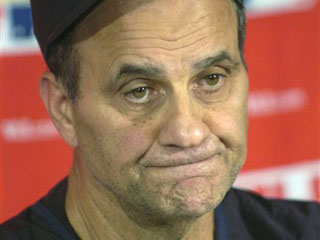
Torre had long been a favorite of writers. He was friendly, easy to approach and talk to and helpful. I had long had a good relationship with him and at times went beyond the question-and-answer pattern of writers’ relationships with managers.
I was always interested in learning what I could of a manager’s philosophy and his approach to the job and would ask questions to elicit information that reflected those aspects of the job. Torre easily answered the questions, and I appreciated and enjoyed our conversations.
Then one night at Yankee Stadium in September 1996 the routine failed. The Yankees, in first place by four games over Baltimore, split a doubleheader with the Orioles, losing the second game when Mariano Rivera, not yet the closer, gave up three runs in the eighth inning on hits to four of the five batters he faced.
Well after the game, I asked Torre a question about strategy based on a development in the game. He could have answered it the way he had answered similar questions previously. He could have said he didn’t feel like talking about it at that moment. He could have said nothing. He chose none of the above.
“You don’t know shit about baseball,” he growled, sounding more like Billy Martin than the man I thought was Torre.
Had he stopped there, I would have taken his remark as a personal attack, but it wouldn’t have been the first time I heard such things from managers. But he didn’t stop there.
“None of you guys know shit about baseball,” he added in the same brusque tone.
His comment was no longer aimed at me alone. It was an indictment of the entire baseball press corps. It was an indictment of every writer who covered the Yankees and covered Torre and may have covered Torre through his then 15-year career.
Here was a manager who for all of those years had feigned a certain attitude toward writers that had now been exposed as phony. A person can’t have any regard for people whom he sees as knowing nothing about the job he and they are doing.
It was a stunning revelation. Torre had no visible reason to be upset that night, a reason that would have prompted his outburst. It wasn’t as if the tough loss imperiled the Yankees’ position in the division race. They had a four-game lead with only 10 games to play. The loss did not threaten to affect the outcome of the race or the team’s season.
Torre, however, never acknowledged his unusual response, never said he was having a bad night or had a bad headache. His statement stood, and from that moment forward, I looked at him differently, watched and listened to the way he spoke with reporters in group interview sessions before or after games and could only think he was wearing a mask that served as a barrier that shielded the real Torre from the couple of dozen or more reporters and columnists who surrounded him in the dugout or crammed into his office to hear.
I was not surprised in the fall of 2007 when he rejected the Yankees’ contract offer for one year and success-based incentive bonuses, saying the offer insulted him and he did not need incentives to do his job when he had accepted success-based incentives in previous contracts with the Yankees.
In the Internet interview about the Torre book, Verducci also said, “People also know Joe Torre doesn’t go around ripping people…” I know Joe Torre, and I know that one night early in his Yankees’ tenure he ripped people, the writers who cover him.
As for the book, it has been the most popular subject for reporters and columnists the past week. The best column I have read was written by Mike Vaccaro of the New York Post. Questioning Torre’s wisdom in writing the book, Vaccaro wrote, “Why would you justify all the sinister things your enemies always hinted about you: that you were a champion grudge-holder, that the disparity between public pied piper and private grouch was considerable, that you were someone who’d do just about anything for a buck?”
Torre, who earned $16.5 million from his last contract with the Yankees, did not need the money, which has been estimated at $1.5 million to $2 million. Why, then, did he do the book? The Yankees’ treatment of him, offering a one-year contract, offended him so much that he was going to get even.
Jay McGwire apparently felt the same way in trying to sell a book that featured his older brother. Jay, the youngest of five sons of John (a retired dentist) and Ginger McGwire, is estranged from Mark, though no one has said why.
When Jay was a young boy, according to a family friend, a BB ricocheted off a rock and struck him in the eye, impeding his athletic career. Besides Mark’s career in baseball, Dan, the second youngest, was a National Football League quarterback for five years.
Jay became a bodybuilder and at one time had a gym. In his book proposal, according to published reports, Jay turned his baseball-slugging brother onto performance-enhancing drugs in 1994.
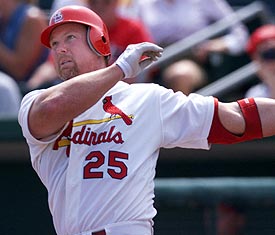 “I became the first person to inject him, like most first-timers he couldn’t plunge in the needle himself. Later a girlfriend injected him,” Jay wrote in the proposal for a book he titled, “The McGwire Family Secret: The Truth about Steroids, a Slugger and Ultimate Redemption.”
In Canseco’s first book he wrote that he got McGwire started on performance-enhancing drugs in 1988, but Jay McGwire disputes that tale. Why is he trying to sell the book idea, other than for money, of course?
“My bringing the truth to surface about Mark is out of love,” Jay wrote. “I want Mark to live in truth to see the light, to come to repentance so he can live in freedom — which is the only way to live.”
In telling his brother’s story, Jay is following the lead of others who have turned friends and teammates onto steroids and other performance-enhancing drugs, then told about their use for the sellers’ own benefit – to sell books and make money or to stay out of jail.
McGwire and Canseco fall into the first category, Radomski and McNamee the second.
Without Radomski, George Mitchell would not have had a report. Of the 90 or so players named in the report, all but a few came from Radomski. They had been clients of his steroids distribution business, and he fed the names to Mitchell because the government told him that was his way of staying out of prison.
Like Canseco has done and Jay McGwire hopes to do, Radomski has written a book about his escapades. In a recent Internet interview, the former Mets’ clubhouse attendant said he wrote his book because “my side of the story needs to be out there.” Nonsense. His side of the story has been “out there” for a year. He told it to Mitchell by squealing on his customers.
Radomski was sentenced to five years probation after pleading guilty to distributing steroids and laundering money. McNamee wasn’t sentenced to anything because he was never charged with anything. He was able to avoid charges by cooperating with authorities and testifying honestly about his involvement with performance-enhancing drugs in baseball.
He has become entangled in a lawsuit filed by Clemens for defamation of character, but McNamee’s tale of injecting Clemens with performance-enhancing drugs has jeopardized Clemens’ freedom and his chances of being elected to the Hall of Fame.
It’s impossible to feel sorry for any of them, dealers or customers, but you have to wonder about the deal and squeal guys.
You have to wonder, too, about Torre. He might have added a few dollars to his bank account with his new book, but he didn’t enhance his reputation. Actually, the best story I have heard about the book isn’t about Torre. It’s about the newspaper competition to be the first to report the book’s contents.
The New York Post and the Daily News had the story first, but the New York Times belatedly discovered it could have been first. The book had been sitting on a desk in the newspaper’s cultural news department for a week with nothing being done with it. Come to think of it, that’s what the book deserved to have done with it.