The best thing I think I can probably say about Bobby Valentine and the Boston Red Sox is to borrow part of an infamous remark from something another infamous manager once said: The two of them deserve each other.
I’m not suggesting that, as Billy Martin said about Reggie Jackson and George Steinbrenner, one’s a born liar, the other’s convicted. But they surely do deserve each other.
As of their celebration of the 100th anniversary of Fenway Park last Friday, the Red Sox were off to a rotten start. Throw in Valentine’s off-the-field comments, and the manager was off to an even worse start.
Nothing Valentine has said or done came as a surprise because his words and actions followed the Valentine career script. The timing of his questionable remarks, this time about Kevin Youkilis, earlier this month might have come earlier than usual, but the remarks themselves, publicly questioning a veteran player for his poor performance, were to be expected sooner or later. It turned out to be sooner.
The Red Sox concern about their manager’s deeds, not his words, might better be focused elsewhere. As exhibit A, try Daniel Bard’s pitching performance in an April 16 game against Tampa Bay.
The game, played in 79-degree heat on an uncharacteristically hot day in the northeast, turned out to be a 1-0 loss for the Red Sox, indicating that Bard pitched well in his second start as a new member of the starting rotation. However, it wasn’t how well he pitched but how long.
Valentine’s decision to leave Bard in the game long enough to walk three batters in the seventh inning and force in the game’s lone run could understandably raise suspicion about the manager’s motive.
For background, you have to go back three weeks. Late in spring training, a Boston Globe columnist, Christopher Gasper, wrote that Valentine and general manager Ben Cherington were immersed in a disagreement over who the starting shortstop should be, Jose Iglesias or Mike Aviles, and whether Bard should start or relieve.
Valentine, the columnist wrote, favored Iglesias and relieving, Cherington Aviles and starting.
The disagreement was not unusual for any manager-general manager combination but especially not where Valentine is concerned. An integral aspect of Valentine’s managerial history is his desire and attempt to do the general manager’s job for him.
Valentine denied that he was scrapping with the rookie general manager, but denials in such situations are to be expected.
“I think it’s lazy journalism,” Valentine told reporters. “That’s what I think. I think it’s an easy story to write. It has no validity. Absolutely none.”
Gasper’s column, however, followed news media reports about the shortstop preferences and Valentine’s criticism of Bard after a recent exhibition start.
As the team’s plans developed, Aviles was named the starting shortstop while Iglesias was sent to the minors to gain experience, and Bard was placed in the starting rotation.
 That’s where the hard-throwing 26-year-old right-hander was when the season began, and that’s where he was April 16 when he held the Rays scoreless for the first six innings with only 73 pitches.
Bard also retired the first two batters in the seventh with five pitches but then suddenly lost sight of the strike zone, a sure sign of a tiring pitcher. The Rays loaded the bases on a walk, a single and a walk, but Valentine made no move to summon a relief pitcher.
He left Bard in the game to pitch to Evan Longoria, always a dangerous hitter, and Bard walked him, too, for what would turn out to be the only run of the game.
“In hindsight,” Bard told reporters after the game, “probably the signs pointed that I was getting tired. In the moment, I wanted to be out there.”
Valentine acknowledged that his decision to leave Bard in the game was wrong, explaining, “When the inning started, he looked good, he got the two quick outs, he got two strikes on the next two guys. I committed at that time he was going to finish the inning or at least try to finish it. It didn’t happen.”
But there could be another explanation, one that would fit the Machiavellian motives of the manipulating Mr. Valentine. What if he left Bard in the game long enough to look bad and show the general manager who was right? Walk, single, walk, walk in a scoreless game.
Most managers like to remove a pitcher, especially a young or inexperienced one, when he can still feel good about himself and his game. Bard can remember his 6 2/3 shutout innings, but the three walks will dominate his mind. That memory will be discouraging, not encouraging.
Do I have any evidence or anyone else’s opinion that my suspicion has validity? I do not, but Valentine watchers know the kind of games he plays, and his Bard decision fits snugly into his modus operandi.
With a sweet coincidence, on the day Bard pitched, before the game, Valentine was apologizing to Youkilis for having demeaned him in a television interview the previous day.
“I don’t think he’s as physically or emotionally into the game as he has been in the past for some reason,” Valentine said, angering Youkilis’ teammates and his many fans.
The manager’s comment questioning the veteran third baseman’s commitment was weird, coming less than two weeks into the season, but it was reminiscent of a similar episode 15 years earlier.
In this case, it’s not that you can’t teach old dogs new tricks but that old dogs don’t give up their old tricks.
When Valentine was in his first full season managing the Mets in 1997, Todd Hundley was his catcher. Hundley was not performing as Valentine wanted, and the manager let reporters know it, telling them Hundley needed to get more sleep at night.
Translation: Hundley was hurting himself and the team by drinking and running around too much at night.
Valentine subsequently explained that he chose Hundley as his motivational target because he thought Hundley was good enough and tough enough that he could take it. Hundley didn’t take it easily.
Two years later, after he had been traded to the Los Angeles Dodgers, Hundley expressed his view of Valentine in a spring training interview with two New York reporters.
Hundley hated Valentine. He said Valentine had become too personal with him and was jealous of his popularity. Hundley also said the manager used him to deflect attention from other players, citing the drinking story as Exhibit A.
In Hundley’s view, the problem with Valentine began when the manager appeared to be jealous of the player’s standing with the fans. “He comes into a whole new situation and goes right after, I guess, the most popular guy,” Hundley said. “It’s not my fault I’m the most popular guy.”
Hundley was especially upset at the timing of Valentine’s comments on his sleep habits because his mother was being treated for cancer and his wife was pregnant.
He also said that Valentine was transparent.
“You see him coming from a mile away,” the catcher said. ”He thinks he’s working in the shadows, but he’s not. You can see right through him. I didn’t have to remember what I said to who and keep track of all this other junk. I’m not going to lie. It seemed like he had to keep track of, I said this to this guy, this to this guy, this to this guy, and he got caught up in his web.”
Players throughout the major leagues have experienced or heard of Valentine’s bad acts. Youkilis is just the latest Valentine target, but he might have established a record for receiving the earliest Valentine rebuke both in terms of the season and in a new managerial tenure.
Youkilis learned about Valentine’s comment from his agent Sunday night. On Monday he told reporters Valentine’s comment had surprised and confused him. Then he spoke to the manager about it.
Speaking to reporters, Youkilis said, “Everyone here knows I go out and play with emotion. The only time there has ever been a question is because I’ve been too emotional.”
 Asked specifically about Valentine’s comment, Youkilis said, “That’s not what I see. I go out every day and play as hard as I can – take every ground ball in the morning, take every at-bat like it’s my last. I don’t think my game has changed at all. I still get upset with myself. I still get mad.”
Valentine said he apologized to Youkilis for what he said when they met, and the next day Youkilis said, “We’re good. We’re one happy baseball family.” The next day Youkilis declined to talk about the incident at all. “We’ve moved on,” he said.
However, Dustin Pedroia, the Boston second baseman, hadn’t moved on.
“I don’t know what Bobby’s trying to do. But that’s not how we go about our stuff here. He’ll figure that out. The whole team is behind Youk. We have each other’s back here.” Asked if Valentine might have made the comment as a motivational technique, Pedroia said, “Maybe that works in Japan,” alluding to Valentine’s managerial tenure in Japan.
No comment was forthcoming from the Red Sox ruling triumvirate – the principal owner John Henry, the chairman Tom Werner and the chief executive Larry Lucchino. It was their decision to hire Valentine so what could they say? Oops?
If they somehow missed the critical elements of Valentine’s managerial history, they could do worse than read any of the columns I have written on the subject:
- IT DIDN’T TAKE VALENTINE LONG
- NEW SOX SPRING DRILL: INSERT FOOT A IN MOUTH B
- JETBLUE RED SOX SEEK EARLY COMEBACK
- TWO OF A KIND: VALENTINE, ROYSTER
- VALENTINE-RED SOX WED FOR BETTER OR WORSE
- WITH THIS WOULD-BE MANAGER, V IS FOR LOSER
- VALENTINE VEERS INTO FANTASY LAND
- GETTING IT WRONG ON SANTANA AND VALENTINE
- “V” IS NOT FOR VICTORY
- ADVERTISEMENT FOR HIMSELF
I said at the start that they deserve each other, and there’s no question that the Boston triumvirate deserves Valentine. Besides selecting him as their manager, they created the need for him by ushering his predecessor, Terry Francona, out the back door.
Not only did they kick him out the back door, but they also dragged him through the mud outside Fenway Park. No one has taken credit for anonymously leaking that Francona’s managing last year was affected by his divorce and pain medication he took, but someone did, presumably to make Francona look bad and to justify his dismissal.
Oh, that’s right, the Red Sox never said Francona had been fired; they suggested that he left of his own volition, and nice guy that he is, he didn’t dispute it.
But who leaked the phony excuse for firing the manager of two World Series champions? Unlike the beer and fried chicken part of the story that accompanied Francona’s departure, that’s not the kind of stuff that comes from clubhouse kids. It comes from the top, and in this instance the part of the top that seems to be most likely is Lucchino. He would be more likely to leak that kind of information than Henry or Werner.
But that’s old news, last season’s news. This is a new season, the Red Sox have a new manager and the results have been blatant for everyone to see. Entering Sunday’s schedule, the Red Sox had a 4-10 record. Their last two losses were to the Yankees, one on the 100th anniversary of the opening of Fenway Park, one after they had a 9-0 lead.
Now that they have lost 10 of their first 14 games, they are in position to match last September’s playoff-costing record by losing 10 of their next 13 games.
SAN JOSE SOLUTION FOR SELIG
Commissioner Bud Selig appeared before the Associated Press Sports Editors last week and told a funny joke, a very funny joke. The Oakland Athletics need a new ball park, he told them.
To the people who are in the news business, that was not news. To the Athletics, that isn’t funny either. The reason I call it funny and a joke is it is Selig who is keeping the Athletics from getting a new park. He is blocking the way to San Jose.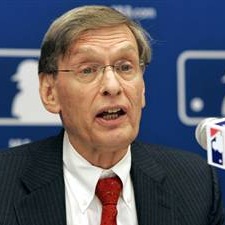
“The one given everybody believes is that Oakland needs a new stadium,” Selig said. “The last time I was there, I probably shouldn’t say this, but I’ll say it anyway, it reminded me of County Stadium and Shea Stadium, and that’s not a compliment, in either case. … You can’t ask people to compete if they have a stadium that doesn’t produce any kind of revenue to give them a chance to compete. So that’s a given.”
The Athletics, without question, want a new park, but they want to build it in San Jose and Selig won’t make the decision that will let them do that. Under Major League Baseball rules, San Jose is in the San Francisco Giants’ territory, and they won’t relinquish it.
Selig could act in the best interests of baseball and award San Jose to the A’s – and it would definitely be in the best interests of baseball, but he doesn’t want to do that and anger the Giants. But let me cite two reasons why the Giants’ arguments for maintaining their territory are not valid. The commissioner should feel free to use my arguments.
I.
Santa Clara County was originally a shared territory between the Athletics and the Giants, just as New Jersey is a shared territory between the Yankees and the Mets. Neither team could do anything without the other’s approval.
In 1990 the Giants were unable to get a new park in San Francisco and wanted to move to Santa Clara or at least use it as leverage with San Francisco.
Wanting to help the Giants, Walter Haas Jr., the A’s owner, magnanimously agree to give up his share of Santa Clara, getting nothing in return for it.
The Giants, however, never went to Santa Clara, building a new park in San Francisco instead, It could be argued that the Giants got the territory under fraudulent pretenses and should have to revert to a shared status with the A’s.
II.
The Giants’ current owners say they bought the team with the understanding that Santa Clara County, in which San Jose is located, is part of their territory. Altering that status, they say, would be economically catastrophic for them.
However, if a person buys an expensive mansion and does extensive, expensive remodeling and it turns out that the seller had stolen the deed to the house, the buyer doesn’t have the right to the mansion. It belongs to and the deed has to be returned to the original owner from whom it was stolen.
In other words, the buyer of the mansion can’t argue that he remodeled the house or took other steps based on what he believed to be his ownership of it.
In his remarks tuo the sports editors, Selig said, “I’m always hopeful when there are debates amongst clubs, I try to lead teams in a direction of solving their problems themselves,” Selig said. “However, this group has an interesting comment whenever they get in trouble: ‘That’s why you’re here, commissioner.’ That’s what they tell me. I don’t know that that’s a particularly good answer. … We’ve had a lot of meetings, spent an enormous amount of time. I’ve just met with both clubs again and we’ll continue along this process.”
In case anyone is keeping track, the commissioner is in his fourth year of studying the problem. At this rate he won’t have it resolved by the time his term extension is up after the 2014 season.