The word is ugly, the condition uglier: glioblastoma. It is a brain tumor, the worst kind of brain tumor, virtually always a fatal brain tumor.
Michael Weiner, executive director of the Major League Baseball Players Association, learned in August 2012 that he had a glioblastoma, and he died last Thursday, only15 months later, the average life expectancy after the tumor is discovered in one’s brain.
Weiner, who led the union for just under four years, died six days short of a year after Marvin Miller, the union’s founding director, died of liver cancer at the age of 95.
At 51 and a graduate of Williams College and Harvard Law School, Weiner was far too young and too bright and had too many productive years ahead of him to die now. Glioblastomas, however, are not selective.
That particular tumor has had a nasty history with baseball, particularly the last dozen years. Weiner joins six, maybe eight. former major league players in succumbing to the tumor in the past dozen years: Johnny Oates, Dan Quisenberry, Tug McGraw, John Vukovich, Bobby Murcer, Gary Carter, maybe Bobby Bonds and Ken Brett, whose types of brain tumors haven’t been determined. And in 1987, Dick Howser.
Former major leaguers Darren Daulton and Chris Duncan are being treated for glioblastomas. Daulton had two brain tumors excised last July. Duncan’s tumor was removed last October. His mother, Jeanine, wife of Dave Duncan, long time pitching coach for Tony La Russa, died of a glioblastoma in June, having survived 22 months after diagnosis.
Average time of survival following diagnosis is 15 months, the mark hit by Weiner, who was diagnosed last August. Here is the time of survival of those who have died:
- Oates 38 months
- Murcer 19 months
- Vukovich 18 months
- Weiner 15 months
- Howser 12 months
- Quisenberry 9 months
- McGraw 9 months
- Carter 8 ½ months
Once his tumor – inoperable – was discovered, Weiner did not sit around waiting to die. Wearing his trademark blue jeans and sneakers – the outfit always fit him better than it did his predecessor, Donald Fehr – Weiner appeared in the office daily and did his job as he had done since he began to work for the union in 1988, two years after his graduation from Harvard.
Probably the most remarkable part of his post-tumor job was his tour of spring training camps last February and March. The tour of 30 camps – 15 in Florida, 15 in Arizona – with intermittent trips home for chemotherapy treatments – was grueling. It was always grueling in normal times.
Sometime near the middle of his tour I called Weiner to find out how he was doing but also to ask why he was doing it. He was incredulous when I told him why I was calling.
“You want to write about me doing my job?” he asked.
 He had always done that part of the job, as had Miller and Fehr before him, but never with a malignant brain tumor in his head. But Weiner remained true to his job, knowing the importance of meeting with all of the players, updating them with developments and answering the questions they were sure to have.
“The spring training tour is at one and the same time the single most important thing the executive director does,” Fehr explained, “because it allows him to speak to and answer questions from the entire membership. I can’t stress how important it is. Having said that, any time you’re spending four, five weeks on the road, staying in hotels, in addition to the WBC, it’s a grind. It becomes taxing.”
Nevertheless, Weiner completed the tour and continued doing his job daily during the season. He went into the union’s East 49th Street office as often as he could, and when he couldn’t he worked at home in New Jersey, as he had done occasionally even before the tumor.
According to the American Brain Tumor Association, “Glioblastoma mutliforme (GBM) is one of the deadliest types of brain cancer, killing approximately 13,000 people every year – including Sen. Ted Kennedy in 2009.” In addition, 16,000 people are diagnosed with glioblastomas every year.
“In fact,” ABTA says, “most patients succumb to the disease within 16 to 18 months of their diagnosis.”
Because most of the former players who have died from the tumor played on artificial turf in Kansas City, Philadelphia and Montreal, some people have speculated that the turf is the culprit. Experts quick reject that suggestion, asking what cause the glioblastomas in the thousands who never played on artificial turf.
In the days after his death, Weiner has been lauded on both sides of the labor fence for helping to create a different style and tone that have created a more civilized form of negotiations between the union and the clubs. No doubt he deserves credit for what he has brought to the bargaining table.
Baseball labor, however, has entered a different era. In their time, Miller and Fehr were what the players needed to achieve basic rights. Weiner missed the good stuff – salary arbitration, free agency, collusion, the owners’ repeated misguided attempts to break the union.
Commissioner Bud Selig was an integral part of all of that, and he quietly acknowledges that he has learned a lot from the days of labor war.
The clubs also have as their labor chief a Weiner equivalent in Rob Manfred, baseball’s chief operating officer, who is standing in line to succeed Selig if he really retires after next season. No more Ray Grebey, no more Richard Ravitch.
The time was right for Michael Weiner, but Michael Weiner’s time was far too brief.
THERE’S ‘ROID RAGE AND NOW A-ROD RAGE
By storming out of his own hearing last week with what very likely was feigned fury, Alex Rodriguez might just as well have painted a bright scarlet S on his forehead. Unlike Nathaniel Hawthorne’s scarlet A for adulterer, that’s S for steroids.
In walking out of the hearing before Frederic Horowitz, the impartial arbitrator, Rodriguez insulted the man who will decide the fate of his 211-game suspension. The melodramatic act was also reminiscent of Mark McGwire’s performance before a Congressional committee in 2005.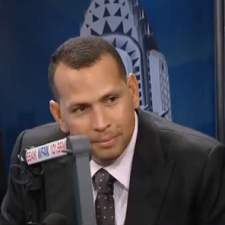
No matter what substance-related question he was asked, McGwire replied, “I’m not here to talk about the past.”
Whatever advice he had received from his lawyers to avoid perjuring himself, McGwire was tacitly admitting he had used steroids. No one watching thought otherwise. There was no more speculating, no guessing. He might as well have admitted his use right then and there. He eventually made that public admission.
The motive behind Rodriguez’s walkout might not have been as blatant as McGwire’s mantra, but it was easy to see that the New York Yankees’ tarnished star was using the arbitrator’s refusal to order Commissioner Bud Selig to testify as a way of extricating himself from the thorny position to testify or not to testify.
If Rodriguez had testified and admitted he had used banned substances, it would have been game over. If he had testified and denied using, he could have subjected himself to perjury charges because he would have been testifying under oath, and lying under oath is the same if the individual does it in court or at an arbitration hearing.
I raise the possibility of Rodriguez lying because he has lied about his use of steroids before, denying his use most notably in a nationally televised interview with Katie Couric. He got away with the lie until he was found to have tested positive in an anonymous test in 2003.
Instead of lying about Major League Baseball’s drug allegations, Rodriguez opted for a safer strategy, creating a distraction by screaming and yelling that the arbitrator was unfair and was running a farce of a hearing. Were he to stage that sort of stunt in a courtroom, Rodriguez would wind up behind bars for contempt of court.
Rodriguez paid a platoon of lawyers handsomely to devise that scheme, but he would have put his money to more intelligent use by hiring lawyers who knew more about arbitration than his legal representatives apparently do.
Consider this comment from Rodriguez’s lead lawyer to ESPNNewYork.com:
“So what we’ll do is, we’ll head to another venue and we will be able to call up Mr. Selig one way or another.”
Memo to the lawyer, Joseph Tacopina: You can go to another venue – Federal court, he presumably meant – but courts don’t overturn arbitrators’ decisions unless the arbitrator can be shown to have been corrupt. If Tacopina can show that the commissioner paid Horowitz so he wouldn’t have to testify, A-Rod might have a case.
“If you can show the arbitrator was paid off you can overturn his decision but short of that you can’t do it,” said Richard Moss, the most successful lawyer in grievance cases in sports history.
Fay Vincent, the former commissioner, has also noticed comments from Rodriguez’s lawyers, one of whom said, “We’re considering all the options.”
“They have no options,” Vincent said.
Reporters and television talk show hosts don’t know any more than the lawyers. They don’t ask the lawyers or Rodriguez if they are aware that judges do not overturn arbitrators’ decisions.
After he walked out of the hearing, Rodriguez plopped himself in front of a WFAN microphone and let Mike Francesa “grill” him. For his own sake, Francesa better grill ribs better than he grilled A-Rod. Not once did he say, “Alex, you and your lawyers keep talking about going to court, saying ‘we’ll win there.’ Do you or the lawyers know you can’t win there?”
Tacopina, who likes to look tough on television, also told reporters that Rodriguez would testify if Selig did. Now I don’t know how good or bad a lawyer Tacopina is, but it seems that his task is to convince Horowitz that his client is innocent of baseball’s charges and should not be suspended.
If Rodriguez could help his case by testifying, why wouldn’t he testify no matter what Selig did or didn’t do?
Instead of arguing the case before Horowitz, the third baseman’s legal platoon seems to be forging a fight for Rodriguez’s public image. That seems uppermost in Rodriguez’s mind, and he presumably instructed his representatives to bolster his image.
In interviews following his appearance or non-appearance at the hearing, Rodriguez was most vocal about his fan support.
“The support has been overwhelming in the streets today,” he told ESPNNewYork.com. “People were jumping out of their cars. I been coming to N.Y. for 20 years and, including 2009, I have never had a more positive reaction in the streets. I couldn’t believe this.”
One of his high-priced lawyers should tell A-Rod that his future in baseball will be decided by the arbitrator, not the fans.