Each news article that appears on the mlb.com Web site carries this tag line: “This story was not subject to the approval of Major League Baseball or its clubs.” That disclaimer is supposed to assure readers that mlb.com has not censored the article or made changes other than routine editing changes.
But what about an article that doesn’t appear? Has that article been “subject to the approval of Major League Baseball or its clubs?”
Last week the Yankees’ page on mlb.com carried an article about the late owner George Steinbrenner. “Steinbrenner to be honored at B.A.T. event,” the headline read, referring to the Baseball Assistance Team, which helps former players in need.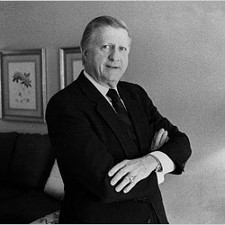
That same day another article about Steinbrenner appeared in many, if not all, newspapers and on other Web sites. “Watergate Prosecutor Urged an Investigation of Steinbrenner,” read the headline on the Associated Press story in The New York Times.
The A.P. article was the result of a request made by the A.P. and other news organizations under the Freedom of Information Act after Steinbrenner’s death last July. The information came from Federal Bureau of Investigation files on the Yankees’ owner.
The article, however, did not appear, nor was there any mention of it, on mlb.com. So much for the censorship-free Web site of Major League Baseball.
When you talk about the absence of censorship on mlb.com, though, you have to do it with a wink. The articles that appear on the Web site might themselves have not been censored, but mlb.com reporters censor themselves, avoiding subjects they know they cannot write about. They learn what those subjects are either from mlb.com or the clubs they cover, and they adhere to the “rules” because they like their jobs, especially in today’s shrinking job market.
I know that Christmas day is probably the most difficult day to get people to respond to questions, but that was the day I was writing this column, and I understandably did not get an immediate response from a spokesman for mlb.com.
Returning to Steinbrenner, he was a target of an F.B. I. investigation in what would turn into his conviction for making illegal contributions to the Presidential re-election campaign of Richard (“I am not a crook”) Nixon.
The owner avoided prison time by pleading guilty, but baseball Commissioner Bowie Kuhn suspended him for two years in 1974, later lifting the suspension after 15 months. His involvement in Watergate was long a sore subject for Steinbrenner, probably more painful than his suspension by Commissioner Fay Vincent in 1990 for consorting with a two-bit gambler, Howard Spira, to get damaging information on Dave Winfield.
The two episodes also posed an interesting contrast in Steinbrenner’s view of law enforcement.
The F.B.I. files contained memos that reported that agents tried several times to interview Steinbrenner about his campaign contributions but never succeeded because, the memos said, agents were told he was traveling.
By the time of the Spira scandal, Steinbrenner had changed his view of law enforcement. The authorities, including the F.B.I., had become Steinbrenner’s allies, his best buddies. He became so close to them that he used them to his advantage.
As low life as Spira was, I believed that Steinbrenner used F.B.I. agents to put together the kind of evidence needed to convict him.
The owner also often hired former agents to work for him, On the eve of his Spira suspension, for example, Steinbrenner named a new club president and chief executive officer, Jack Lawn, who was head of the Drug Enforcement Agency in the administration of the first President Bush.
And as his liaison with Spira, Steinbrenner designated his security chief, Phil McNiff, former head of the F.B.I. bureau in Steinbrenner’s adopted hometown of Tampa, Fla.
EILAND KNOWS WHY HE WAS FIRED
 Dave Eiland, who was the Yankees’ pitching coach the past three years, said in a radio interview last week that he was surprised that the Yankees fired him and didn’t know why they did.
The Yankees took exception to that view.
“What he says publicly and what he understands privately are two different things,” Brian Cashman, the Yankees’ general manager, said. “Privately he knows.”
The Yankees have declined to say why they fired Eiland, though it had nothing to do with the quality of his work. “Out of fairness to him I won’t say anything,” Cashman said. “He’s starting a new chapter with Tampa Bay. I wouldn’t say what it was.”
Eiland took a leave of absence in June to deal with problems of the most personal kind, then returned to his job, said a person with knowledge of the matter, without having fully resolved the problems. The person said Eiland was permitted to return and was told he could keep his job as long as he didn’t violate terms of his return.
However, the person said, Eiland violated the terms and was fired.
A STRIKING START FOR REYNOLDS
With only three full seasons in the major leagues, Mark Reynolds has already firmly established himself in the record book, but his trade to Baltimore earlier this month will deprive him of even greater notoriety.
When the Elias Book of Baseball Records, my record keeper of choice, is published before next season, Reynolds will have a second line. He was already in the book for most strikeouts in a season (223), and in the coming edition he will join Hack Wilson, Mike Schmidt and Adam Dunn as holders of the record for most consecutive seasons (3) leading the major leagues in strikeouts. He is a virtual lock to hold the record with 4 straight seasons a year from now.
When he breaks that record, he will tie another – most seasons leading the majors, a mark of 4 held by Babe Ruth and Rob Deer, a pair of players with different pedigrees.
Although he can start a new streak in the American League with the Orioles next season, the third baseman will have to wait to tie Wilson, Vince DiMaggio, Juan Samuel and Reggie Jackson for most successive seasons (4) leading the same league.
But none of these players, stars or otherwise, has done what Reynolds has done. In attaining their records or shares of records, none of those players struck out 200 times in a season. Reynolds struck out more than 200 times (204, 223, 211) in each of his first three full seasons with Arizona. He has a striking future ahead of him.
Reynolds’ fanning feats are phenomenal compared with his ancestral strikeout artists.
Ruth, for example, led the league in strikeouts in 1927 when he set the home run record with 60, but he struck out 89 times. In more modern times, Deer tied Ruth by leading the American League four different times, but 186 was his highest number.
In their streaks of three straight seasons leading the majors, Wilson (1928-30) had a high of 94, Schmidt (1974-76) 180 and Dunn (2004-06) 195. Dunn has come closest to 200, falling one short this year with Washington.
Having signed as a free agent with the Chicago White Sox, Dunn can resume his rivalry with Reynolds in the American League.
Reynolds, meanwhile, is only 1,829 strikeouts behind the career leader in strikeouts, Reggie Jackson, who in 21 seasons never struck out 200 times, struck out 150 times in only three seasons and struck out a career-high 171 times in his first full season, 1968.
DOCTOR PROVIDES RIGHT ANTIDOTE
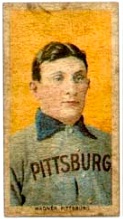 What to do? An order of nuns, the School Sisters of Notre Dame in Baltimore, had their hearts in the right place when they put up for auction a valuable baseball card, but their hearts were jilted when the winner of the auction failed to come forward and actually pay for the card.
It was a rare Honus Wagner card, one of about 60 Wagner cards said to exist, and the winning bid was $220,000, a tidy sum for the nuns’ charities. And then the winning bidder disappeared. No bidder, no funds for charity.
(Digression: When I was a schoolboy in Pittsburgh, my sister worked for the Honus Wagner Sporting Goods Company, and one day she brought home two Honus Wagner autographs for her little brother. They would be quite valuable today – if I hadn’t misplaced them years ago.)
The nuns were more fortunate. Heritage Auctions of Dallas, which conducted the bidding, contacted an old customer, and Dr. Nicholas DePace agreed to buy the card for the amount that had been the winning bid.
The nuns had the card because they had inherited it from the brother of a dead nun when he died earlier this year.
Now I relate this story not because it’s a heart-warming tale. I have asked you to read this far so I can tell you the punch line. The punch line is the profession of the man who came forward and saved the sisters’ economic heart and soul. It was only fitting that Dr. DePace buy the card. He is, you see, a cardiologist