For most of August and September, the Red Sox led the Yankees in their American League East race by 3 to 5 games but mostly 3 or 4. Some time in the first week of September or the last week of August – I didn’t note the date – I made a bold declaration. If the Yankees got to where they were 2 games out, I said to no one in particular, they would win the division championship.
Well, the Yankees cut the Red Sox lead to 2 games but not in August and nearly not in September. They arrived at that critical juncture of the season last Friday with only two games left on the schedule. For me to be right, the Yankees had to win the last two games while the Red Sox lost their last two, and if those scenarios developed, the Yankees would have to beat Boston in a playoff game Monday.
The Yankees played their part winning Saturday afternoon, but that night the Red Sox beat Houston, 6-3, scoring 5 runs against Lance McCullers Jr. in the third and fourth innings while Drew Pomeranz allowed only 1 run in 6 innings.
So the Red Sox won the division championship for the second straight season, and the wild-card Yankees were relegated to playing the Minnesota Twins at Yankee Stadium Tuesday night for the right to continue in the post-season.
The regular season ended Sunday with the Yankees two games behind the Red Sox.
HOME RUNS, STANTON AND JUDGE
Home runs were the hit of the season, or should that be the hits of the season?
Players hit a record 6,105 home runs, 8.8 percent more than last year and 7.2 percent more than the previous record 5,693 that were hit in 2000.
The leaders of the homer onslaught were Giancarlo Stanton of the Miami Marlins, who slugged 59, and Aaron Judge of the Yankees, who whacked 52, breaking the major league rookie record of 49 that a pre-steroids Mark McGwire hit in 1987.
Besides hitting the most home runs, Stanton led the majors with 132 runs batted in and a .633 slugging percentage and tied with Jose Ramirez of Cleveland with 91 extra-base hits. He was second in the National League with 123 runs scored and 377 total bases.
 Then there is Judge, who was first in the American League with 52 homers, 128 runs scored and 123 walks and second with 11 intentional walks, 114 runs batted in, a .422 on-base percentage, a .627 slugging percentage and a combined 1.044 OPS. He was third with 340 total bases and tied for fourth with 79 extra-base hits, only two and three behind the two players ahead of him.
And let’s not forget Judge’s strikeouts. He achieved all of those impressive offensive levels while striking out 208 times, 15 short of the major league record, and he was the only player to reach 200. Stanton struck out 163 times.
Perhaps the most impressive aspect of Judge’s performance was he did it all as a rookie. As happens to all rookies, pitchers began catching up to him, his hitting suffered and he began striking out more. In his first 59 games, through June 12, he batted a season-high .347, hit 22 home runs and struck out 72 times.
Most media observers refer to his slump as starting after the All-Star break, but it’s hard to ignore what he did in the month before the break. In that stretch of 25 games he batted .284, hit 8 home runs and struck out 37 times. His season batting average dropped to .329.
Judge, however, did not seem to let the change of fortune affect him. He might have struck out more, but he didn‘t become impatient as pitchers continued walking him. He didn’t chase pitches out of the strike zone and calmly took his walks, with many of the walks turning into Yankees runs. Many veteran players don’t handle frequent walks as well.
In judging Judge for the American League most valuable player award, voters should consider that part of Judge’s game as critical to the Yankees’ success. Despite Judge’s hitless at bats and strikeouts, Manager Joe Girardi never took Judge out of the lineup, and the manager was rewarded when Judge figured out what pitchers were doing and made adjustments of his own to counter what they were doing.
As far as I’m concerned, MVP voters should not hold Judge’s slump against him. Unlike many, more experienced players, Judge continued contributing to the Yankees’ post-season efforts with his walks and runs. His defense in right field was also not affected.
I would vote for Judge for MVP. I don’t see a better candidate.
WILL THEY EVER LEARN?
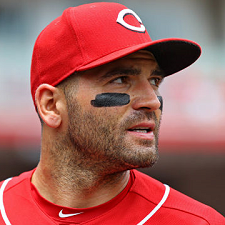 Speaking of MVP candidates, The New York Times had a bizarre column about Joey Votto being the National League most valuable player. Fortunately, The Times doesn’t allow its writers to vote on awards of any kind so the writer of that column, Tyler Kepner, won’t be in position to cast a vote for Votto.
I suspect, though, that other writers who are voters will mark Votto’s name on their ballots because they don’t understand what the award is about. That’s why Mike Trout won the A.L. award a year ago.
Trout won the 2016 award despite playing for the fourth-place Angels. Votto plays for the fifth-place Reds. What did Votto do this season that proved so valuable to the Reds?
I asked a retired baseball writer who during his working days often voted for the award what he thought of writers voting for Votto and Trout. This was his reply:
“How valuable can a player be if his team is never a factor in the race–especially these days, when there are extra spots for wild-card entries? The team’s games don’t have the same intensity or pressure as the games of contenders and the player’s contribution can’t be measured in the same way. There’s a huge difference between being valuable and simply being a star player on a losing team. As great as Mike Trout was last year, and Joey Votto this season, they don’t make sense as MVPs. You can be a ‘Player of the Year’ but not an MVP. It’s totally different.”
It’s also ridiculous. The Reds finished in last place in the N.L. Central with the league’s third worst record. How valuable could Votto have been? Did he keep the Reds from finishing with the second worst record in the league?
Was Trout’s value to the Angels last year that they finished fourth instead of fifth?
It’s bad enough that younger voters have contaminated their ballots with new-fangled metrics. But not to understand what the award is for is inexcusable. Kepner doesn’t hide his ignorance.
Talking about Trout’s time missed to injuries, Kepner writes, “Trout has simply been Trout: the best player in baseball, just a bit short in volume this season.
Hey Tyler, stop fantasizing about your beloved Phillies and learn the difference between most valuable and best. The award is for the most valuable and not the best player.
About Votto, Kepner mentions a few other players who might be contenders for the N.L. award and notes that Votto “was higher in all three” – batting average, on-base percentage and slugging percentage.
Perhaps Jack O’Connell, the Baseball Writers Association officer who supervises the awards should require Kepner and others who think like he thinks write on a blackboard 100 times “MVP does not equal best player.”