Archive for May, 2009

THE CITY THAT NEVER SWEEPS

Sunday, May 31st, 2009

Washington experienced a sweep last November when the Democrats won the White House, the Senate and the House of Representatives. The political sweep, though, only offered a glimpse of what was to come in the nation’s capital. Its baseball team has turned Washington into Sweep City.

The Nationals, who easily have the major leagues’ worst won-lost record (13-35 through Saturday), have incurred nearly half of their losses in sweeps of three and four-game series. Their own division has been particularly rough on them, accounting for all five major-league leading sweeps they have suffered: two by Florida and one each by Philadelphia (four games), Atlanta and New York.

With losses Friday and Saturday in the first two games of a three-game series with the Phillies, the Nationals were on the brink of their sixth sweep, a development that would make 19 of their 36 losses achieved in sweeps.

The Nationals, on the other hand, have not swept anyone. In fact, in 13 series of at least three games, the Nationals have won two games in only three.

Anyone who scrutinizes the results of their games would find it difficult to remember that the Nationals are not an expansion team. Okay, so they were once an expansion team – in 1969. That’s 40 years and another city and another country ago. Isn’t there a statute of limitations on how long a team can masquerade as an expansion team?

This is the franchise’s fifth season in Washington and third full season under the ownership of the Lerner family. “Under Lerner family ownership,” the team’s media guide says, “the Nationals are building an exciting and competitive organization through trade, draft and player development.”

True, such construction takes time, but the Nationals have yet to be exciting or competitive. The victory total last year plummeted from 73 to 59, and if they play the rest of this season at their current rate they will plunge even more steeply to 43. That’s not the desired direction any team wants to take.

“I can’t answer why we aren’t winning games,” Stan Kasten, the club president, said in a telephone interview last week. “There was a stretch until the last two weeks that our bullpen wasn’t performing. The all hit a spot where none of them could get guys out. We’ve had an unbelievable number of bullpen losses and blown saves. We could be .500 otherwise.”

It’s okay to engage in wishful thinking or have dreams of fantasy, but Kasten is right about the bullpen sabotaging the Nationals’ chances of competing. Their relief corps, entering Sunday’s games, had the National League’s worst won-lost record (3 wins, 17 losses) and the worst earned run average (5.85) and had allowed the most hits (181) and the most runs (115, 107 earned).

The poor relief pitching has prompted a steady flow of relievers up and down in the Washington system. In the past month alone the Nationals have called up Mike McDougal, Jason Bergmann, Jesus Colome and Ron Villone from the minor leagues and sent down Logan Kensing, Garrett Mock, Mike Hinckley, Terrell Young and Saul Rivera.

The pitching staff as a whole was also the worst in the league, having compiled a 5.71 e.r.a. and given up 493 hits and 304 runs (274 earned), not to mention 215 walks and 27 wild pitches.

“The bullpen has settled down the last week and a half or so,” Kasten said. “I continue to be optimistic. I thought our Achilles heel would be our young starters, but that’s been a bright spot. They’re better than I thought they would be.”

Manager Manny Acta has used only seven starters this season. One, Daniel, Cabrera, was designated for assignment last week. Another, Scott Olsen, went on the disabled list with a shoulder ailment.

That leaves a rotation of John Lannan (24 years old), Shairon Martis (22), Jordan Zimmerman (23), Craig Stammen (25) and Ross Detwiler (23). All but Lannan were rookies when they began pitching for the Nationals this season, and they previously had a collective total of four major league starts (all by Martis).

“They’re going to take their lumps as all young pitchers do,” Kasten said, “but they will be the future.”

Kasten is enthusiastic about the young starters because he remembers some young starters from an earlier time in his career. Kasten was president of the Atlanta Braves when they had young pitchers named Tom Glavine and John Smoltz, who matured and developed to power an unparalleled streak of 14 consecutive division titles.
“If we could find three major league starters this year out of that group and the four or five behind them and get a rotation solidified, I think we’ll find a way to stabilize our bullpen this year or next,” Kasten said. “I think we’re going to get a good rotation if they develop as the season goes along. The second half will be better than the first half and next season will be better than this season.”

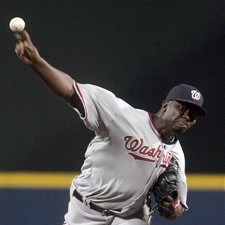
Of the current Nationals starters, Martis (at left) is the only one with a winning record. He has a 5.62 e.r.a., but he has won five of six decisions, which is pretty impressive when the other pitchers on the staff, starters and relievers, have a combined .190 won-lost percentage (8-34).

Interestingly, the Nationals have hit well. They entered Sunday’s games with the league’s fourth best batting average (.268) and the third most runs scored (238).  But their run differential was the worst in the league because their opponents had scored 66 runs more than they had. They had also allowed the most unearned runs (32), a result of the league-most 48 errors they had committed.

Missing from the Nationals’ offense is Lastings Milledge, who was their opening-day center fielder and leadoff batter. Milledge, acquired from the Mets before the 2008 season for Brian Schneider and Ryan Church, was demoted to the minors after only 7 games in April. He batted .167 with 4 hits in 24 at-bats.

“I don’t know,” Kasten said when asked about him, “but we still have big hopes for him. He’s a major league offensive talent. He’ll be a .300 hitter, probably a corner outfielder. We have a need for him. When he went down, the phone started ringing,” meaning other clubs were interested in acquiring him.

Kasten said that Milledge broke a finger and will be out for two to four more weeks.

The National seem to have moved beyond the front-office problems they encountered earlier in the year. The problems, the alleged skimming of bonus money for teen-age amateur Latino players and the false identity and age of a Dominican player the Nationals signed, resulted in the resignation of general manager Jim Bowden and the dismissal of Jose Rijo, the former pitcher, who was a Bowden aide on foreign players.

Major League Baseball continues to investigate both issues but nothing has surfaced in recent months.

NATIONALS PREPARE TO PAY TO PLAY

When Stan Kasten was assessing the Nationals’ pitching future, he dared utter the name Stephen Strasburg, the San Diego State pitcher. He didn’t say that the Nationals planned to take Strasburg as the No. 1 pick over-all in the June 9 draft, but he uncharacteristically included him in his listing of potential starters for Washington in the near future.

Strasburg is the obvious first choice in the draft, and the only reason the Nationals wouldn’t take him would be their concern that they would be unable to reach agreement on a contract with Strasburg’s representative, Scott Boras, whom other baseball officials have quoted as saying he wants a $50 million contract for his client.

Asked if he knew what the Nationals would do about Strasburg, Kasten said, “The general manager says if the draft were today we’d draft Stephen Strasburg. As a fan, I love offense, but no one respects starting pitching more than I do.”

The draft, of course, wasn’t being held “today” so that left Kasten an out as to the Nationals’ intentions. I asked the question again, this time adding the element of being able to sign Strasburg.

“On June 9 we’re going to select the player we think is the best,” Kasten said. “We know what No. 1 picks get. We expect to sign our No. 1 pick.”

Boras did not return a call to discuss Strasburg’s signability, but an executive of another club said Boras was prepared to take evasive measures to get the pitcher the contract he wanted.

Citing the Red Sox signing last winter of a Japanese amateur free-agent pitcher, Junichi Tazawa, to a three-year contract,  the executive said if the Nationals or another team drafts Strasburg and doesn’t accede to Boras’ demands, he would take the pitcher to Japan, sign a one-year deal, then return to the United States after that season as a free agent.

The commissioner’s office would most likely object to that scenario because Japanese professional players have to be offered to United States teams under the posting system, the way the Red Sox got Daisuke Matsuzaka. But the commissioner’s office has no agreement with Japanese baseball about amateur players.

The commissioner’s office, meanwhile, notified clubs last week of their slotting figures for the draft’s first round. An official said the figures represent a 10 percent reduction from last year’s numbers, a result, he said of current economic conditions.

DODGERS USE THEIR BATS AND BROOMS

Although series sweeps seem to have been in fashion recently, sweeps are not more abundant this season than in other recent seasons. Elias Sports Bureau says there had been 52 sweeps of three and four-game series before this weekend, but through May last season teams had executed sweeps 62 times. This year’s number was also eclipsed in 2005 (55 sweeps) and 2006 (54).

While the Nationals have been the biggest victims of sweeps this season, the Dodgers have won the most sweeps, 5. The Dodgers have swept two series from the Rockies and one each from the Giants, the Padres and the Mets. The Padres have swept four series, two from the Giants and one each from the Cubs and the Reds. However, the Padres have been swept three times themselves, by the Cubs, the Astros and the Dodgers.

The Tigers have been the biggest American League sweepers, taking two 3-0 series from the Rangers and one each from the Indians and the Athletics.

2009 HURDLE CAN’T OVERCOME 2007 HURDLE

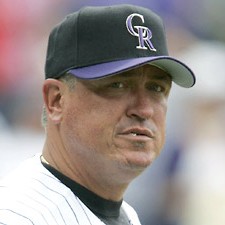
Clint Hurdle, the second manager fired this season, was a victim of his own success. However he inspired the Colorado Rockies at the end of the 2007 season, they won 13 of their last 14 games on the regular-season schedule, won a playoff game with San Diego for the wild-card spot in the National League playoffs, then swept the division and league championship series in the playoffs.

It was an unprecedented remarkable run of 21 victories in 22 games and even though the Rockies lost four straight to the Red Sox in the World Series, it raised expectations to a level Hurdle could not attain. In 2008 the Rockies reverted to mediocrity or worse, and they played on that level this season.

If the Rockies thought they would be a division contender last season or this, they were deluding themselves, their eyes and minds clouded by the run of a lifetime.


A JUDGE MORE IMPORTANT THAN JUDGE LANDIS

Wednesday, May 27th, 2009

The judge entered the courtroom at 15 minutes after 2 o’clock in the afternoon, took her seat at the bench and told the assembled lawyers and assorted other interested parties, including those from Major League Baseball, “I know nothing about this except what the common layperson reads in The New York Times.”

Frank Coonelly, who was one of the baseball lawyers at the hearing, laughed the other day when he was asked about the judge’s comment. “I do remember that,” he said. And did he remember what he thought, if anything? “I figured we were in trouble,” he said.

Coonelly figured right. Four days later, on March 31, 1995, Judge Sonia Sotomayor of federal district court told those in her Manhattan courtroom, “I know a lot more than I knew on Monday” and issued an injunction that induced baseball players to end their strike.

Judge Sotomayor became an instant hero to baseball fans. The labor dispute between the players and the owners had gone on for nearly eight months, had forced cancellation of the 1994 World Series and had become the longest work stoppage in United States professional sports history.

But Sotomayor’s decision had far greater impact than simply ending the strike. It saved the owners from themselves because it rendered needless their potentially catastrophic plan to use replacement players with the start of the season only two days away.

Judge Sotomayor, whom President Obama has nominated to fill a pending vacancy on the United States Supreme Court, most likely never heard as celebrated a case as the baseball dispute she settled with a stern and swift ruling less than half an hour after hearing the lawyers’ arguments.

As baseball’s first commissioner following the Black Sox scandal of 1919, Judge Kenesaw Mountain Landis is baseball’s best known judge. But Sotomayor, who will be the first Hispanic Supreme Court Justice, became the favorite judge of baseball fans.

By granting the National Labor Relations Board’s request for an injunction, Sotomayor, a Federal district judge in Manhattan, gave the players the reason they needed to end their strike and go back to work.

Union officials had said before the hearing that if the labor board got the injunction forcing owners to restore work rules from the expired collective bargaining agreement, the players would end their strike and start the season. Sotomayor ruled, and the players played.

Just as Sotomayor is a beneficiary of the presence of a Democratic president in the White House, the baseball union was the beneficiary of the presence of a Democratic president in the White House.

The National Labor Relations Board is a political animal. Its makeup is determined by the party in the White House, and its decisions are usually determined by the political views of its members. Had a Republican been president in 1995 and the labor board reflected his views, it would have been highly unlikely to have taken the baseball case to court.

As it was, the Republican members of the board tried diligently to keep the board out of court. The vote to authorize the general counsel to seek an injunction was 3-2, with the three Democrats voting yes and the two Republicans voting no. One of the Republicans, Charles Cohen, took a step rare for the board, writing a dissenting opinion in which he disagreed with the authorization and said the case had no merit.

When Cohen left the board, he went to work for Morgan Lewis & Bockius, the law firm that represented the owners. Chuck O’Connor, the clubs’ chief labor negotiator, who devised the implementation of work rules that Sotomayor would find illegal, was a Morgan Lewis lawyer.

Had the Republicans controlled the labor board, the strike would most likely have dragged on well into the 1995 season, if not beyond. Even with the strike ended after all, the players and owners didn’t reach an agreement on a new collective bargaining agreement until the fall of 1996.

A further indication of political impact on the board occurred subsequent to the baseball case. Republican administrations had long held a narrow reading on when to seek a 10J injunction. Under Fred Feinstein, general counsel for the Democratic-controlled board, the number of such cases rose significantly. As a result, the Republican-controlled Congress voted to cut the board budget by 30 percent.

In 1995, though, the Democrats were in control, and Dan Silverman, the board’s New York regional director, convinced Feinstein that seeking an injunction was the correct course.

In the absence of a new labor agreement, the owners had unilaterally imposed new work rules.  The labor board contended that the changes were unlawful. Sotomayor ordered the owners to reinstate salary arbitration, competitive bidding for free agents and the anti-collusion provision of the free-agency rules.

Recalling Sotomayor’s remark on Monday about what she knew of the case, Silverman said, “By Friday she knew everything about the case. She had read and digested the briefs in depth and she made a very critical decision demonstrative of the way she conducted cases.”

The owners, Silverman recalled in a telephone interview Wednesday, wanted to call witnesses but the judge “said there was no need for witnesses. I’ve read the briefs and there seems to be no disagreement on the facts of the case so we’ll just have oral arguments.”

Silverman, now an adjunct professor at Cardozo Law School, felt it was important to end the strike by the start of the season and adding witnesses to the hearing would have prolonged it.

“If the owners had started the season with replacements it would have been far more difficult to settle the strike,” Silverman said.

A day before the hearing, the owners voted, 26-2, to start the season with replacement players.  The first game was scheduled two days hence, and teams had to submit their 32-man rosters to the commissioner’s office by 6 p.m. opening night, Sunday.  The Baltimore Orioles, however, refused to put together a roster and were not prepared to play.

Their owner, Peter Angelos, said he was acting to protect Cal Ripken’s consecutive-game streak, but he was also protecting his standing with unions. He was reluctant to hire scab players because as a lawyer, he had become wealthy representing workers in asbestos cases and didn’t want to undercut his position with unions.

Beyond the problems the Orioles presented, the replacement plan would have triggered such animosity among the players that it would have torn the game asunder and created an irreparable fissure.  Using replacement players was an ill-conceived idea, one that most owners were delighted not to have to use.

Sotomayor, who later was elevated to the United States Court of Appeals for the Second Circuit, wasted no time making and issuing her ruling. After conducting a 98-minute hearing, she took only an 18-minute recess before reading her ruling from the bench. It was obvious that she had prepared most of her opinion before the hearing, having studied the lawyers’ briefs.

“This strike has placed the entire concept of collective bargaining on trial,” the judge said in the 47-minute reading of her decision. “It is critical, therefore, that the board assure and that I protect its assurance that the spirit and the letter of Federal labor law be scrupulously followed.”

As Silverman recalled, Sotomayor’s ruling was impressive for another reason. When judges get baseball cases, most get carried away and flavor their comments and rulings with baseball phrases. A Federal judge once ended his decision on a baseball labor case by saying, “Play ball.”

“She didn’t delve into jokes about baseball and didn’t use baseball metaphors,” Silverman said of the judge who grew up in the South Bronx and was said to be a lifelong Yankees fan. “I thought that showed a maturity about the case. She treated it as a legal case, and she decided it on legal grounds. She handled it very professionally.”


THE AGENT WHO SWITCHED SIDES

Sunday, May 24th, 2009

About 10 years ago a baseball reporter for a New Jersey newspaper, Moss Klein, was talking to a man in a blue suit on the field before a game in Milwaukee. When he finished his conversation, which had been observed by other reporters covering the Yankees, one of the younger reporters broke from the group and approached Klein.

“Who was that you were talking to?” he asked Klein.

“Bud Selig,” Klein replied.

Selig had been the Brewers’ owner for nearly 20 years. Any reporter, old or young, should have recognized him. Not so with many owners today.

The owners held their quarterly meetings in New York last week, and many of the faces in attendance were not readily identifiable. No George Steinbrenner (though son Hal was there), no Ted Turner, John McMullen, Walter (or Peter) O’Malley, Gussie Busch, Ray Kroc, John Fetzer, Ewing Kauffman, Calvin Griffith.

Which owners were at the meetings? Among others, Bob Nutting, Bob Casetllini, William Neukom, Stuart Sternberg, Mark Attanasio, Jim Pohlad (his father Carl died last January), Ed Rogers III his father Ted died last December).

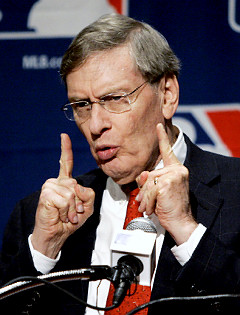
“I don’t think it’s much different than before,” said Selig, now the commissioner. “As franchise values have gone up, that’s what you have. Very rarely do you have one person owning the team.”

Here is one difference. Never before Jeff Moorad did Major League Baseball have an owner who began life in the game as an agent.

Agent to owner? That’s more unlikely than Rick Ankiel being unable to throw strikes across the plate as a pitcher and then throwing strikes to the plate as an outfielder.

Moorad, a part owner of the San Diego Padres, became an agent in 1983 and represented, among others, Manny Ramirez, Shawn Green, Eric Karros, Ivan Rodriguez, Matt Williams and Pat Burrell. He negotiated Ramirez’ eight-year, $160 million contract with the Boston Red Sox in December 2000.

Not long after Moorad went into the agent business, he and Leigh Steinberg became partners with Moorad primarily representing baseball players and Steinberg focusing on football players. They sold their sports agency in 1999.

“At that time,” Moorad said, “I began to romanticize about the possibility of owning a team, but I really didn’t think about it seriously for a number of years. I’d say in 2003 and early ‘04 I began asking some friends and confidants their views of the possibility.”

Moorad said he considered buying a number of franchises, including an N.B.A, and an N.H.L. franchise. As a step along the way, Moorad joined the Arizona Diamondbacks in August 2004 as a general partner and chief executive officer.

“The Diamondbacks opportunity stemmed from an effort a partner and I made to buy the Phoenix Suns,” Moorad related. “We actually had a deal with Jerry Colangelo for the Suns. The sale was conditional on working out something on the Diamondbacks side.

At the end of the day Jerry’s partners on the baseball side were not supportive of the deal and we chose not to go forward with it.”

However, that venture led to the next one.

“Jerry’s partners who learned of my interest through the Suns’ process circled back with me and told me they were going to walk away from Jerry and asked if I would run the club for them in Arizona,” Moorad said. “That’s how the Diamondbacks thing began.”

The Diamondbacks, though, were only another step along the way to Moorad’s ultimate goal. Scott Boras’ ultimate goal is to get the biggest contract from the team he is dealing with; Moorad’s was to get the team.

When Moorad attended last week’s owners meeting with the Padres, he had already been going to those quarterly meetings for three years, from the time he was approved as the c.e.o. and a general partner of the Diamondbacks. He had crossed the line successfully, though, a few of his new colleagues might have cast a wary eye, the fox in the hen house sort of thing.

“I think we crossed that hurdle long ago,” Selig said of Moorad’s acceptance by the owners.” When he came into the Diamondbacks, there was a certain sensitivity, but we’re past there.”

“I think I was received well,” Moorad said of his initial ownership experience. “Once I began attending meetings I never sensed anything but openness and support. As the business began to turn around in Arizona and the team on the field continued to improve, the feelings became totally supportive and offered assistance when necessary.”

How was his relationship with the commissioner? “Outstanding,” Moorad said. I have nothing but respect for Bud, who not only supported me in 2004 but backed the transaction that John Moores and I put together in the past several months. I’m solidly in the unwavering support of the commissioner’s column.”

The Moorad-Moores transaction is not the typical baseball deal. Moorad and his group of a dozen investors, including Troy Aikman, a former client and Hall of Fame quarterback, have purchased about a third of the Padres from Moores (above) and will assume control of the rest of the team in the next five years. Moorad owns about 40 percent of his group’s share.

The Padres became available when John and Becky Moores began divorce proceedings. Moores will continue as chairman for at least three years while Moorad, as c.e.o., will operate the team on a daily basis.

Moorad, who lives in Newport Beach, Calif., said the deal became possible through “my friendship with John Moores and my instinct that there might be a transition plan that could work for all concerned. I had a terrific platform in Phoenix and would have considered giving it up only for something as unique as returning to southern California. For that reason I made the inquiry initially and thankfully it worked out.”

Jan Moorad, Jeff’s wife, is pleased with the development. “The new opportunity in ownership is much better for our family than being an agent,” the mother of their three sons said. “When he was an agent he was all over the map.”

Moorad has made the transition from one side of the negotiating table to the other seamlessly.  He has even handled matters involving a former competitor, Boras (right).

“We were aggressive competitors,” Moorad said, adding candidly, “We really didn’t get along. I certainly had respect for Scott, but we competed regularly for clients.”

Like many agents, they snatched clients from each other. “It worked both ways,” he said. “I took Juan Gonzalez from him, he took Pudge Rodriguez from me. We regularly traded blows at all levels of the representation business.”

Most of their competition, Moorad said, came on the draft-choice level, and it’s conceivable that they could compete again. Stephen Strasburg, a San Diego State pitcher, is the top prospect in the June 9 draft, and his – or Boras’ – price tag could scare off the two teams that draft ahead of the Padres.

“I’m confident he’ll be on our draft board,” Moorad said. “I can’t comment on Strasburg on any level and won’t, but I’ve had a successful record of overseeing Boras draft picks starting with the signing of Stephen Drew. He was drafted before I was with Arizona, but I was involved in his signing.”

Moorad doesn’t figure to be involved in the signing of any of Boras’s high-priced free agents, but he won’t be able to avoid some of the agent’s amateur clients as he seeks to improve his new team.

DRAFT CHOICE ROLLBACK

Bud Selig has repeatedly cautioned clubs about the economy, and at the owners’ meeting last Thursday he told them he was doing something about it and sternly advised them to listen. The commissioner told the owners that his office planned to roll back the recommended signing bonuses for the June 9 amateur draft by 10 percent.

The rollback might be immaterial because most clubs ignore the numbers anyway, but Selig is trying. The clubs will mind the rollbacks only if they make it difficult to sign a draft choice. Agents of draft choices will be more bothered. Even if clubs exceed the slotted numbers, they will exceed them from a lower level.

The clubs will get their rolled back numbers this week. The slotting system is confidential, and clubs aren’t supposed to know what figures other clubs are allotted.

The idea of the system is for clubs not to exceed the numbers for each first-round selection, thereby keeping signing bonuses down. But clubs generally find that first-round draft choices – and their agents – want more than the slot numbers, and there’s nothing but Selig pressure preventing clubs from exceeding the slotted numbers.

Selig can’t order clubs to stick to the numbers because the slotting system has not been negotiated with the union. If Selig tried to impose the numbers on the clubs, the union would challenge the system and the owners might lose it altogether.

But clubs enrage Selig when they exceed their slotted numbers, and he lets them know his feelings. The system will come under immediate challenge this year because of Stephen Strasburg, a San Diego State pitcher, who will be the No. 1 pick in the draft unless the Washington Nationals decide they don’t want to pay him.

Boras, his representative, has said Strasburg should get $50 million. That figure would be slightly over slot.

Meanwhile, the owners had no business to conduct at their meetings last week, and Selig doesn’t anticipate any in three months so he has canceled the August meetings. One person who attended last Thursday’s meeting said the commissioner had to extend his speech by half an hour because he didn’t want the owners leaving at 11 o’clock.

COMEBACKS THAT DON’T MAKE IT BACK

Teams are so desperate that someone will sign Adam Eaton, a 31-year-old right-hander, who was released last Friday for the second time in less than three months. In fact, he has as many releases this year as victories.

Eaton’s attempted comeback with the Baltimore Orioles was short lived, lasting only eight starts from which he emerged with a 2-5 record and 8.56 earned run average. The Philadelphia Phillies, for whom he had a 14-18 record and 6.10 e.r.a. in two seasons, released him last Feb. 27. He had barely made it into spring training.

The Orioles, knowing the Phillies had to pay him the final year of his three-year, $24.15 million contract, signed him March 1. In his eight starts with them, Eaton (right) allowed four or more runs seven times and seven runs each of his last two starts.

Nevertheless there will be other Eaton comebacks to write about, just as there are other repeated comebacks to write about. Chris Carpenter, for example, is making yet another comeback, though from injury, not incompetence.

Carpenter has a 2-0 record in three starts for St. Louis. In the previous two years he was able to start only four games. In three years before that he collected 51 victories, and those years constituted a comeback because in 2004 he was not able to pitch.

Jeff Weaver didn’t pitch last year because he didn’t have a job, but in coming back with the Angels this year he has a 2-1 record in three starts.

Mike Hampton seems to be making a comeback every year, that is, if he is able to pitch. This season he is pitching for Houston and so far has stayed healthy with a 2-3 record and 5.23 e.r.a. in 8 starts. In the previous four seasons he made only four starts.

Kris Benson, who did not pitch the last two years, was making a comeback with Texas this year when he encountered an elbow problem and went on the disabled list. When he returned, he went to the bullpen. In two pre-injury starts he had a 1-1 record and 9.00 e.r.a.

The San Francisco Giants keep hoping that Barry Zito will make a comeback. In 7 seasons with Oakland before they signed him to an absurd 7-year, $126 million contract, the left-hander won 102 games and lost 63 for a handsome .618 winning percentage.

In his first year on the other side of the Bay, Zito had an 11-13 record and 5.53 e.r.a. He’ll pitch better after his team, league and geographical adjustment, the Giants figured, so the second year Zito had a 10-17 record and 5.15 e.r.a. Now comes this season, and Zito has a 1-4 record and 3.62 e.r.a.

If there’s hope for Zito and the Giants, it’s that in the last six of his eight starts, he has compiled a 2.21 e.r.a. The Giants won four of those games, though Zito got credit for only one win, and they lost a 2-1 decision.

As comebacks go, then, Zito’s has been relatively good. But he hasn’t done what Carl Pavano has done for Cleveland. After making a mockery of his 4-year, $39.95 million contract with the Yankees – 9-8 record in 26 starts and more injuries than he has body parts – he has rebounded with a 4-4 record in 9 starts for the Indians. And he has yet to be hurt.

WHO NEEDS HIM?

Maybe the Dodgers miss Manny Ramirez and maybe they don’t. Their record without Ramirez, through Friday, was an acceptable 8-6 (.571) compared with 21-8 (.724) before he was suspended for 50 games. But they had built their National League East lead by 2 games, from 6 ½ to 8 ½.

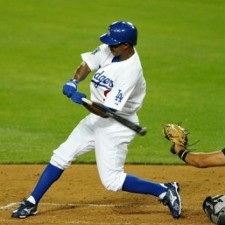
They certainly hadn’t missed Ramirez’s bat. Juan Pierre, who has replaced Ramirez and had been underused, was hitting .431 (28-for-58) in 14 games and had a .515 on-base percentage and .586 slugging percentage, a total of 1.101, not far off from Ramirez’s 1.133 (.492 and .641).


FIFTY YEARS LATER PERFECTION IS IMPERFECTION

When Fay Vincent was the baseball commissioner, he headed a committee that redefined a no-hitter. I didn’t agree with the new ground rules then and I still don’t.

Pitchers who had pitched fewer than nine innings or gave up a hit in an extra inning were deprived of their no-hitters. For example, Andy Hawkins, pitching for the Yankees in Chicago July 1, 1990, allowed the White Sox no hits in eight innings. But he didn’t get to pitch the ninth inning because the White Sox were winning, 4-0, and the game ended after eight and a half innings.

Hawkins initially was credited with a no-hitter, but he lost it when the Vincent committee changed the definition. The Elias Book of Baseball Records acknowledges such “no-hitters” in a separate section following the list of “legitimate” no-hitters.

There is yet one more list after that section: “no hits through nine innings, allowed hit in extra-inning.” Pedro Martinez, who pitched nine perfect innings in 1995 but allowed a hit in the 10th, is on that list. So is Jim Maloney, who allowed the Mets no hits for 10 innings but gave up two in the 11th, then nearly 10 weeks later pitched a nine-inning no-hitter against the Cubs.

That list is also where the best game ever pitched has been relegated. Fifty years ago Tuesday, May 26, 1959, Harvey Haddix pitched 12 perfect innings for Pittsburgh in Milwaukee, then the home of Henry Aaron and Eddie Mathews.

An error by third baseman Don Hoak ended the perfect game and a Joe Adcock home run ended the no-hitter and the game, except the hit didn’t count as a home run because Adcock passed Aaron on the bases after Aaron left the basepath.

No one has matched Haddix’s feat, but it was not a no-hitter or a perfect game. As a Pirates fan, I listened to that game on the radio. I have all the respect in the world for Fay Vincent, but he can’t convince me Haddix didn’t pitch a perfect game.