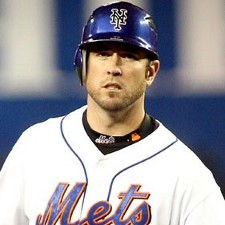
Ken Singleton almost seemed outraged. His Yankees’ broadcast partner, Michael Kay, had just mentioned that Jerry Manuel, the Mets’ manager, had refered to his right fielder, Ryan Church, as “that guy” rather than use his name after he incomprehensibly missed third base in the 11th inning the night before and was called out instead of scoring the tie-breaking run.
“There should be a little more respect involved,” Singleton said, his ire seemingly rising. “You wouldn’t want the player saying ‘that manager.'” Then he added, “I’m serious. There’s a certain amount of respect on a ball club that you should have. You’re in this together for six months.”
I was watching the Yankees game, and Singleton’s comments caught my attention. I had not heard Manuel’s “that guy” comment and, like the former player, didn’t think it was appropriate. Yes, he said it in the immediate aftermath of a tough loss to the Dodgers, but players can be excused for making dumb comments in the heat of the moment, not managers.
Managers are held to a higher standard because they are the responsible adult in the room. They are supposed to keep their heads when everyone else is losing theirs. They set the tone for their players.
Every good manager will tell you that when his team is playing badly, is in a long losing streak, is in the midst of blowing a 7-game lead with 17 games to play, it is imperative that he remain calm and maintain a cool exterior as a way of showing his players that all is not lost. Show panic or fear, and all will be lost.
Certainly a manager is entitled to erupt after a tough loss, and the Mets’ loss was very difficult for them. But react by overturning the food table in the clubhouse, as some managers have done, or tell the clubby to turn off the damn music. Go out and tell the reporters about the dumb mistake the player made and how it cost us the game. But use the player’s name; don’t call him “that guy.”
Which, it turns out, is not what Manuel did. A viewing of the video of Manuel’s post-game news conference shows that Manuel refered to “a guy,” not “that guy.” In the context in which he made his comment, Manuel cannot be faulted for saying “a guy” instead of refering to Church by name. Had Manuel actually said “that guy” in that context, he would have been speaking disparagingly of his player.
This was what Manuel said in response to a question: “We actually battled to score that tying run, and then, you know, have a chance in extra innings to go ahead, and a guy missed third base. It’s unbelievable. I can’t explain why or how or anything, but he actually missed, missed the base.”
Why did reporters hear “that guy?” I can’t say. When I watched the SNY video of Manuel’s news conference, I repeatedly reran it, trying hard to hear “that” and not “a.” The first few times I thought I heard “that,” most likely because I was primed to hear what I had read, but my executive producer, who had already watched the video, said, play it again. He didn’t call me Sam.
So I played it again and played it again and played it a few more times. Unmistakably Manuel said “a guy.” The best I can offer for the confusion is that before the word “a,” he uttered a guttural sound or two that some listeners merged with “a” to make “that.”
If you doubt that Manuel said “a guy,” listen for yourself. Go to SNY.tv, click on video at the top of the on the home page, then click on video archives at the bottom of the next page. Finally, on the archive list find the May 18 post-game reaction and click on watch, Then listen.
Why all this attention on exactly what Manuel said? It goes to Manuel’s relationship with Church, which he insists is fine, convincing no one, and his level of class as a manager. Had he said “that guy,” he wouldn’t have any.
Unless reporters haven’t heard Manuel correctly on a regular basis, the manager at the start of spring training responded to a reporter’s observation that Church was a good hitter by immediately countering that Murphy was a good hitter, too.
Around the same time Manuel said he thought that Church’s problems last year after coming back from a concussion went beyond the concussion. Manuel didn’t say what he thought it was but left reporters wondering how Church failed.
Early in the season someone said Church made a nice play, and Manuel responded that Murphy did, too. Manuel’s listeners feel he seems to go out of his way to be harsh about Church.
The manager has also been more tolerant of Murphy. In the eighth inning of the series finale in Los Angeles last Thursday night, the Mets had runners at second and third and one out in a 1-1 game. Manuel let the left-hand hitting Murphy hit against left-hander Brent Leach, and he grounded out. But Manuel used a pinch-hitter, Fernando Tatis, for the left-hand hitting Church, and Tatis grounded out.
A day earlier, before the second of the Mets’ three losses in Los Angeles, Manuel addressed his perceived dislike for Church, denying it, of course.
“I don’t have a problem with Ryan,” he said. “I like Ryan. We need Ryan Church. We need every guy in there, but Ryan Church is the guy that we feel has the potential. If he gets right, he can really carry us.”
Manuel acknowledged that he was angry after Church committed his fatal misstep in missing third base and losing the tie-breaking run. “You’re doggone right I was mad at him,” he said. “I could have strangled him. If it had been my son, I would have strangled him.”
Manuel had reason and the right to feel that way about Church. His was a natural and reasonable reaction. What he had no business doing was disparaging him by calling him “that guy.” And to his credit, he didn’t.
Posted in Uncategorized | Comments Off on METS’ MANAGER MERITS ‘A’ CREDIT
George Brett summed up his view of Zack Greinke’s 7-1 record and 0.60 earned run average this way: “You wouldn’t have thought it possible if you saw him pitch in spring training. He threw fastball/change, nothing else. He got hit around.”
Brett saw Greinke throw all those fastballs and changeups because he was in the Royals’ camp pitching batting practice and hitting fungoes. Greinke, it turned out, threw all of those changeups because he wanted to refine the pitch and he wanted to have a better change than fellow starter Kyle Davies.
“He and Davies would have a contest to see who was going to throw the best change,” Brett said. “He realized he doesn’t get paid for what he does in spring training so he worked on his change and got the feel for it.”
The Greinke that Brett saw once the season started was as different as the Greinke he sees now compared with the one he saw at the start of his Royals career.
“He lived with me and my wife and kids the first four months of his first year,” Brett said, referring to the 2004 season. “He didn’t say two words to us. He’d come and go without saying anything. Now he starts conversations. He’s matured a lot. Getting married in November helped. Emily is good for him.”
But even before he married Emily, Greinke had undergone a transformation. In 2006 Greinke had suffered from an anxiety problem and left the Royals, planning to quit baseball. But he returned in June and with two weeks left in the season was pitching for the Royals again.
“Zack got that under control,” Brett said. “He’s more outgoing, he has fun, he enjoys his time at the ball park where before he didn’t. Now he looks forward to going to the ball park. He’s opened up. Guys love being around him; he loves being around them. Before, he didn’t like his job.”
Greinke did not leap to success. He had a 7-7 record and 3.69 e.r.a. in 2007 and a 13-10 record and 3.47 e.r.a. in 2008. This season has been his leap to success.
He has won seven of his eight starts, losing his game against the Angels, 1-0, despite pitching a complete-game four-hitter. He has pitched three other complete games and has permitted a mere five runs (four earned) in 60 innings. Those numbers have rarely been seen a month and a half into the season.
After seeing Greinke throw nothing but fastballs and changeups during spring training, Brett said, “It’s amazing to see him throw sliders that start out in the middle in and wind up in the dirt. His slider is so wicked right now.”
American League batters would readily attest to how wicked Greinke has become.
TWO PITCHERS, ONE FINED $750, ONE $5,000
Major League Baseball demonstrated recently that words are more costly than baseballs thrown at batters at a velocity of about 95 miles an hour.
Bobby Jenks, the Chicago White Sox closer, was fined $750 for throwing a pitch behind Ian Kinsler of Texas. Jamie Walker, a Baltimore reliever, was fined $5,000 for comments that, the commissioner’s office said, impugned the integrity of an umpire.
The Jenks fine was standard. If a pitcher is deemed to have thrown at a batter, he is fined $750. The Walker fine was for these comments that appeared in the Baltimore Sun after he was called for a balk in a 7-5 loss to the Angels:
“No way in hell did I balk on that pitch. I don’t know if the guy has something against me or what, but no way in hell did I balk. It changed the whole damn game. I may get screwed in the long run, but that’s just unacceptable at this level. … I don’t know if he had money betting on the game or what, but that’s a horses- – call. I don’t even have a damn pickoff move. I think that might be my first career balk.”
If Walker wasn’t guilty of questioning the integrity of an umpire, he was guilty of gross exaggeration (the balk changed the game), though if that were a finable offense, players would be fined every day.
According to the letter notifying him of the fine, Walker’s “accusations are inflammatory” and “struck at the heart of public confidence” in the game.
If there’s any justification at all for the fine, it’s that Walker’s suggestion that the umpire had bet on the game could actually be believed by some fans. All sports leagues are sensitive to such charges because of the National Basketball Association’s experience with a crooked referee.
Walker has appealed his fine so Bob Watson, the baseball executive in charge of discipline, said he couldn’t talk about the case.
Speaking about the Jenks fine, Watson acknowledged that when he played (1966-84) and earlier, players settled “beanball” incidents themselves. That practice has changed and not because pitchers don’t bat in the American League.
“The rules have changed,” he said. “That came from ownership. Players were being hurt and they wanted it taken away.”
The owners’ concern grew in direct proportion to the average salary.
“When I came along the average salary was $100,000,” Watson said. “It went to 3 or 4 million. When you have that kind of money invested and the benches clear and you have 50 players on the field, that’s a lot of assets.”
Based on the Jenks fine, John Lackey can expect to be fined $750. Making his first start of the season last week, the Angels’ pitcher was ejected after throwing only two pitches. Lackey threw the first pitch behind the batter’s back and hit him with his second pitch. What links Lackey and Jenks, besides the fines, is that they threw at the same batter – Kinsler, the Rangers’ leadoff hitter. In Lackey’s case, Kinsler had hit two home runs against the Angels the night before.
TWO ROOKIES ARE NOT YOUNG
Chris Coste, the Philadelphia Phillies’ backup catcher, knows better than anyone how Bobby Scales and Matt Palmer feel. Coste played in the minor leagues so long that when he finally reached the major leagues he was 33 years old. Scales is a 31-year-old rookie with the Cubs, and Palmer is a 30-year-old rookie with the Angels.
Scales did not play in the majors until this season. Palmer started two games for the Giants last August 10 days apart.
Palmer has started four games for the Angels and won them all. Scales hasn’t played much, but his offensive production when he has played has been impressive. He has started three games at second base and two at third and has played in two other games.
He has 8 hits in 21 times at bat for a .381 batting average, and he has driven in 5 runs. Included in his 8 hits are a home run, a triple and a pair of doubles, giving him a .714 slugging percentage to go with his.435 on-base percentage.
WILL IT BE CUBS OR YET ANOTHER STAND-IN?
When last Wednesday’s games had been played, Milwaukee, Cincinnati and St. Louis were tied for first place in the National League Central and Chicago was half a game behind them. Twenty-four hours later Milwaukee and St. Louis each had one more victory and remained tied for first while the Cubs and idle Cincinnati were tied half a game back.
Less than a quarter of the season has been played so there’s plenty of time for the look of those standings to change and for stronger teams to stretch out division leads and shed hangers on. But who are the stronger teams? Are there any strong teams in the N.L. Central? The same questions can apply to the American League Central.
The answers to those questions depend on one’s point of view. Officials of the teams themselves will say that the divisions are strong and well balanced. They are not about to discount their levels of talent nor acknowledge that their divisions are weak. Officials of teams in other divisions, meanwhile, will say privately that those divisions are weak, and the teams are bunched at the top because of parity on the weak side.
Last season only two teams in the N.L. (the Phillies and the Cubs) and three teams in the A.L. (Angels, Rays and Red Sox) won more than 90 games. Two of those teams (Cubs and Angels, the teams with the best record in each league) did not last beyond the first round of the playoffs.
The Cubs were the N.L. favorite to reach the World Series last year, but they didn’t get there, extending their streak without a World Series championship to 101 years. To have a chance to get there this year they will have to get everyone healthy and hitting.
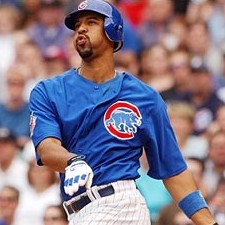
Carlos Zambrano, their best pitcher, and third baseman Aramis Ramirez, one of their most dangerous hitters, are on the disabled list. First baseman Derrek Lee (above) isn’t on the disabled list, but a bulging disk in his neck has limited his playing time and production.
Entering the Cubs’ Sunday game with Houston, Lee was hitting .198, and right fielder Milton Bradley was a few points worse at .194. Catcher Geovany Soto was hitting .202, which was 83 points below his average as a rookie last season.
The Brewers, the Reds and the Cardinals have been happy to fill the void created by the Cubs’ shortcomings.
“We’re just trying to prove people wrong,” Doug Melvin, the Brewers’ general manager, said. “Everybody made a big deal out of us losing CC Sabathia and Ben Sheets. We’re just trying to play good baseball and we have. Our younger guys have developed patience at the plate.”
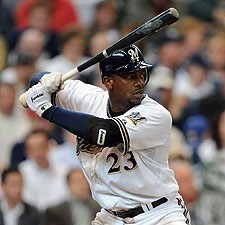
Ricky Weeks (at left) is one of those younger guys, and he is developing patience, hitting .274 this season after two seasons of .235 and .234. He also leads the team with 9 home runs and is third with 24 runs batted in behind Prince Fielder (32) and Ryan Braun (28).
“He’s just matured,” Melvin said. “People expected so much out of him. He was the second pick in the draft and got here fairly quickly. I compare him to Orlando Hudson and Brian Roberts and he’s ahead of where they were at his age. He’s more aggressive at the plate and has a lot more hits.”
Weeks has also benefited from having Willie Randolph as a coach.
“Willie has helped him defensively,” Melvin said. “He’s rated as the best second baseman in the majors. Willie made him feel like he doesn’t have to rush everything. He still has to be aggressive but he slowed his actions down, helped him defensively. Dale Sveum helped him hitting wise.”
(Editor’s Note: Subsequent to the posting of this column, the Brewers learned that Weeks would miss the rest of the season following surgery for a torn tendon sheath in his left wrist. Weeks had the same surgery on his right wrist in 2006.)
Weeks, though, is not the only player who has made an offensive transformation. Melvin pointed out that the Brewers have four players with .400 on-base percentages, and “the Brewers have never had a player in their history to walk 100 times in a year. The younger guys are learning to be more patient.”
As for the Brewers’ pitching, losing Sabathia is not easy to deal with, but the Brewers played virtually all of last season without Yovani Gallardo, who suffered two disabling knee injuries but is healthy, has a 4-1 record and 3.09 earned run average and could develop into another Sabathia. In addition they signed Braden Looper as a free agent, and he has a 3-2 record and 4.70 e.r.a.
Walt Jocketty, the Reds’ general manager, set out to build the Reds around the pitching staff, and early returns show his plan is working.
“The best thing we have going for us is our starting rotation,” Jocketty said of Aaron Harang, Edinson Volquez, Bronson Arroyo, Johnny Cueto and Micah Owings.
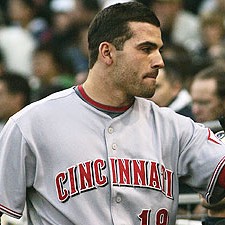
The general manager noted that the Reds have some other good things going for them – first baseman Joey Votto (at right) and right fielder Jay Bruce, in particular, and center fielder Willy “Taveras has picked it up as our leadoff guy.”
Based on early results, the division appears to be wide open with four teams having a chance to win. “I think it is,” Jocketty said. “I still think we have a number of teams that could win our division.”
Melvin said the Cubs cannot automatically be considered the team to beat. “The Cubs have a bunch of injuries and they don’t have the depth they’ve had in the past,” he said.
As for the strength of the division, he said, “I think people underestimate the division. The division is tougher than people give it credit for.” Melvin pointed out that four N.L. Central teams won 86 or more games last season, a result not matched in either of the other N.L. divisions. In fact, the N.L. West didn’t have even one team that won 86 games.
Posted in Uncategorized | Comments Off on GREINKE CHANGES LIFE AND RECORD
Roger Clemens wants us to believe him. He desperately wants us to believe him. He wants us to believe him so much that his newest public relations firm arranged for him to do a telephone interview on an ESPN morning show with Greeny and Goley on the day of publication of a new book detailing Clemens’ alleged use of illegal performance-enhancing substances.
But Clemens shattered his credibility with his own words. The seven-time Cy Young award winner has done that a lot in his attempt to shake the circumstantial evidence from his shoulders that he used performance-enhancing drugs.
In this instance he enlisted his family as a reason why he has never used that bad stuff, that is, steroids.
“Our family has a history of heart conditions,” Clemens said. “My brother had a heart attack in his late 40s. My stepdad died of a heart attack. It would be suicidal for me to even think about taking any of these dangerous drugs.”
Earth to Roger: sorry that your stepfather died of a heart attack, but he doesn’t count. If you went to a doctor and he asked for your family medical history and you told him that your stepfather died of a heart attack, he would not write it on your chart. You see, Roger, your stepfather was not a blood relative. He and his entire family could have had heart trouble and it would have nothing to do with you.
Your brother, yes. Your biological father, yes. Your mother, yes. Other siblings, even half siblings, yes. But stepsiblings, your stepfather’s children, no. And not your stepfather. Do you get it, Roger?
It’s not rocket science, and it’s not Rocket science.
It’s too bad that Mike Greenberg and Mike Golic, the hosts of “Mike and Mike in the Morning,” didn’t think of asking Roger about his inclusion of his stepfather in his family heart history. They might actually have had to be listening to Clemens’ comments to ask him about that and not just read questions from a list of questions prepared by their producer.
That’s what interviewing is about – asking questions, listening to the answers and then asking follow-up questions that might be prompted by the subject’s answers. What might Roger have said had Greeny or Goley, which is what the pitcher called them in his blatantly naked attempt to make them all sound like good ole boys, pointed out that his stepfather was not part of his family heart history.
“Uh, well,” Roger might have said, “he was just like my real dad so that counts for something.”
This was not the first time Clemens put his foot in his mouth. In fact he has become more adept at putting his foot in his mouth than on a pitching rubber.
He made his first mistake when his former trainer, Brian McNamee, initially said that he had injected Clemens with steroids. Instead of issuing a firm but low-key denial, Clemens climbed the highest mountain and shouted it for everyone to hear: He is lying. I never used steroids.
Clemens made so much noise that his voice reached Capitol Hill in Washington, D.C., prompting a Congressional committee to summon Clemens and McNamee for a hearing. The hearing led to a grand jury investigation, now underway, to determine who lied. Clemens’ yelping could result in perjury charges, a trial and possibly prison time.
Of course, Clemens could be telling the truth, but few seem to believe him. Were he telling the truth, it’s not likely that he would have had to invoke the memory of his stepfather and his heart problems. And then he would not have sounded so foolish.
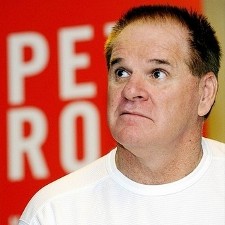
If he is guilty of having used performance-enhancing drugs, Clemens is too proud and too stubborn to admit it. He will very likely follow the misguided example of Pete Rose, who after being declared permanently ineligible in 1989 for gambling denied that he had bet on baseball games.
Evidence gathered in John Dowd’s investigation was overwhelming, but Rose denied the obvious for 15 years, finally and belatedly admitting it in 2004 in his book. By then he had missed his chance to become reinstated and possibly elected to the Hall of Fame.
He had no guarantee, but I have long believed that if he had admitted his wrongdoing immediately he eventually could have gained reinstatement. Fay Vincent, who was the deputy baseball commissioner at the time under Bart Giamatti, basically confirmed that view this week.
“I’m pretty sure if Giamatti had lived and Rose had been contrite and had done things to help baseball, Bart would have been willing to reinstate him,” Vincent said in a telephone interview this week.
What did Vincent have in mind “If he had traveled for three years at his own expense and talked to kids about the evils of gambling,” Vincent said, “if he had done that and was sincere about it, we would have figured out a way to let him come back.”
Vincent noted that no player on the permanently ineligible list had ever been reinstated, meaning there was no precedent for them to act on with Rose. “We wrestled with that,” Vincent said. “Would we be watering down the sanction? But yes, we probably would have reinstated him.”
Of course, Vincent added, their thinking was predicated on Rose’s “behaving himself.” “What were the odds that he would be contrite and apologetic and that he would counsel kids and do something positive for baseball?” Vincent asked. “It probably didn’t have a chance of happening.”
Clemens seems headed along the same path Rose took. Deny, deny, deny, and do it loudly, as if volume makes it more believable. Clemens has never tested positive for any banned substance, and the evidence against him has all been produced by McNamee.
Clemens is challenging the trainer’s credibility, but he has yet to explain satisfactorily why McNamee would be telling the truth about his substance link to Andy Pettitte and Chuck Knoblauch but be lying about Clemens. Pettitte and Knoblauch have confirmed McNamee’s information about their use of banned substances.
As he did at the Congressional hearing, Clemens said in the interview with Greeny and Goley that Pettitte “misremembered” a conversation Pettitte said they had about illegal drug use. Maybe it is Clemens who has misremembered his injection sessions with McNamee.
Editor’s Note:
Two days after his ESPN interview, Clemens issued a statement “explaining” what he meant by one of his comments. His p.r. people evidently saw that he was being pounded for the comment and figured they better add spin to cover his stupidity:
“During the short interview I mentioned my concern about the effect steroids could have on the heart, and I talked about my brother and stepfather. Because I mentioned my stepfather, many people have questioned my sincerity. The reality is that my stepfather was like a father to me, and watching him die from a sudden heart attack was one of the hardest things I have ever gone through. Those memories are vivid in my mind to this day.”
Posted in Uncategorized | Comments Off on CLEMENS … A ROSE BY ANY OTHER NAME

 Why all this attention on exactly what Manuel said? It goes to Manuel’s relationship with Church, which he insists is fine, convincing no one, and his level of class as a manager. Had he said “that guy,” he wouldn’t have any.