Archive for June, 2014

LATEST INSTALLMENT ON THE SELIG STALL

Sunday, June 29th, 2014

Shame on Bud Selig. With friends like him, who needs enemies?

With Selig’s alleged retirement less than seven months away, talk is growing about his legacy. His legacy is very important to the historically-minded commissioner.

You want legacy? I’ll give you legacy. No matter how well baseball has flourished during Selig’s 22-year tenure, no matter that Major League Baseball revenue has risen to the $9 billion neighborhood, for me Selig’s legacy will be the way he has shafted Lew Wolff.lew-wolff-225

Forget that Selig and Wolff were fraternity brothers at the University of Wisconsin 60 years ago. Ten years ago Selig lured Wolff into baseball, urging his wealthy real estate developer friend to buy the Oakland Athletics, a team in economic but not athletic distress.

Wolff, more familiar with luxury hotels than luxury baseball players, bought the A’s; induced the ultra-talented general manager Billy Beane to stay by giving him a small stake in the team (speculated to be 4 percent) and has enjoyed his team’s American League West titles the last two years.

The 78-year-old Wolff, on the other hand, has spent five frustrating years – actually more than five years – trying to gain Selig’s approval to move the A’s to San Jose in the economic and fan-rich Silicon Valley. Selig, though, appointed a three-man committee March 30, 2009 to study the matter, and more than five years later the study goes on and on and on as Selig says the committee has more work to do.

I say baloney and Wolff would, too, if he weren’t being so careful not to antagonize his so-called friend.

As if the commissioner’s inexplicable delay in making a decision weren’t bad enough, Selig, in my opinion, inflamed it last week with a patronizing statement commending Wolff and the Oakland coliseum authority for reaching agreement on a 10-year lease renewal:

“I commend the Oakland Athletics and the JPA for their efforts in reaching an extension for a lease at O.co Coliseum. The agreement on this extension is a crucial first step towards keeping Major League Baseball in Oakland.

“I continue to believe that the Athletics need a new facility and am fully supportive of the club’s view that the best site in Oakland is the Coliseum site. Contrary to what some have suggested, the committee that has studied this issue did not determine that the Howard Terminal site was the best location for a new facility in Oakland.”

Little wonder that Selig commended the A’s and the coliseum authority. The lease agreement gives the A’s a home park while his committee continues to “study” the Oakland-San Jose issue and gives the commissioner an excuse while he continues to procrastinate.

Details of the lease have not been released, but a person familiar with it said it gives the A’s an escape clause so they could leave if they were to get baseball’s OK to move to San Jose.

What isn’t clear is whether the escape clause is linked to the desire of the Oakland Raiders of the National Football League to build a new stadium on the site of the existing dilapidated coliseum. It apparently is clear that the A’s could breach their 10-year agreement, which begins in 2016, if the Raiders opted to build on the site.

The new lease, which must still be approved by various governmental bodies, does not change the desire of the A’s owner to move to San Jose, said the person with knowledge of the lease. However, the Selig stall could.

A June 10 report on the San Jose Mercury News web site by Mark Purdy said Wolff had now put San Jose and Oakland “on equal footing as potential locations, assuming that the A’s are ever allowed to pursue a South Bay move….”

Previously San Jose was Wolff’s clear-cut choice. The A’s owner, though, has to face reality. He negotiated a new Coliseum lease because the A’s will need a place to play after next season, and the longer Selig stalls the more difficult life will become for the A’s.

The commissioner has two legitimate excuses for his delaying tactics: the city of San Jose has filed an antitrust lawsuit against MLB, and the San Francisco Giants have territorial right to San Jose under major league rules.

Lew Wolff Bud Selig.jpgIf Selig were to tell his old friend to go and be well, the lawsuit would quickly go away. The Giants, on the other hand, aren’t going anywhere. They have threatened to sue to block an A’s move to San Jose, and that threat has apparently served as the biggest roadblock for Selig in his deliberations even though there is precedent for commissioners prevailing in owner or club lawsuits against them.

As shameful as Selig’s stall is, the Giants, through a succession of owners, managing partners and chief executives, share that shame.

The Giants are correct in their claim that San Jose is in their territory, but they debunk the story of how they acquired the territory, calling it “an urban myth.” Minutes of the owners’ meeting at which the territory was ceded to them and people who were there refute their denial.

The Giants and the A’s shared Santa Clara County, just as the Yankees and the Mets share territories in the New York area. When the Giants were struggling and considering moving to Santa Clara in 1990, they asked the A’s owner, Walter Haas Jr., if he objected.

Haas, unlike many owners a genuine gentleman of class, magnanimously agreed to let the Giants move into the shared territory and asked for nothing in return. Now the Giants reject the story of Haas’s unique gesture as urban myth and refuse to be as magnanimous as Haas was.

“Walter Haas was right up there; he was one of the great men in baseball,” said Fay Vincent, the commissioner at the time, who confirmed the Haas story. So has Selig, who attended that meeting as owner of the Milwaukee Brewers.

In defending their position, the Giants say Santa Clara County has become an important source of fans and sponsorships. A team in San Jose, however, could benefit baseball generally. That’s what Haas had in mind when he handed the Giants Santa Clara County. But then none of the Giants’ owners have had Haas’ stature or class.

Why won’t Selig make a decision? Maybe he has and just doesn’t want to break the bad news to his buddy Lew. More likely he’s stalling in the hopes that Wolff will work out something on his own. The Coliseum lease, for example. Then he can issue patronizing statements applauding the friend he lured into baseball, then shafted.

POLANCO COMES LATE, HITS EARLY

Has Gregory Polanco burst onto the National League scene because of the extra experience the Pirates forced on him the past month in the minor leagues, or could he have hit as productively had the Pirates called him up two or three or four weeks earlier?

I know what the Pirates brain trust would say without asking so I didn’t bother. President Frank Coonelly and General Manager Neal Huntington haven’t returned calls the past month to discuss their treatment of Polanco, but the rookie right fielder is speaking for himself.

Polanco, called up June 10 to play right field for the Pirates, hit safely in every one of his first 11 games, making him No. 5 in major league history for a hitting streak at the start of a career.Gregory Polanco HR

The only players ahead of him, according to Major League Baseball, were Juan Pierre (16 games, 2000, Rockies), Glenn Williams, (13, 2005, Twins), Rocco Baldelli (13, 2003, Devil Rays) and Ryan McGuire (12, 1997, Expos).

Until he failed to get a hit in 9 at-bats against the Mets Friday and Saturday, the 22-year-old Dominican native was hitting .338 in his first 16 games, 10 of which the Pirates won after they had a 30-33 record pre-Polanco.

The Pirates, of course, would say the extra time they kept Polanco in the minors fueled his fast start. I say all it did was insure that Polanco would not qualify for salary arbitration in 2017 and deprive the team of a chance for more victories and an earlier entry into the wild-card race.

In an interview with Coonelly, The New York Times uncharacteristically raised the salary arbitration issue.

“I’m glad that we’re asking questions that way as opposed to ‘man, he’s really struggling; you moved too quickly,’” Coonelly responded. “I’d much rather err on the side of ‘maybe we could have been a little quicker’ if it means that he’s locked in when he gets up here and he’s feeling comfortable.”

The Times, however, ignored or didn’t know of the Pirates’ clear and consistent pattern of player call-up dates. Polanco was one of seven players the Pirates called up in the period May 29-June 16 from 2009 through this season. Among the others were Andrew McCutchen, Gerrit Cole and Pedro Alvarez.

During the course of Polanco’s impressive extended debut, another delayed rookie, Andrew Heaney, made his pitching debut for the Marlins. On June 19 he held the Mets to 1 run in 6 innings. His second start wasn’t as good. The Phillies scored 5 runs in 5 innings.

It’s not likely that the Marlins delayed the call-up of Heaney, whom MLB.com rated the No. 1 left-handed pitching prospect. He began this season in Class AA of the minor leagues and was moved up to AAA May 20.

“We wanted him to have some turns at Tripe A,” Dan Jennings, the Marlins’ general manager, said in a telephone interview. “We wanted him to polish his changeup. We felt if we could get him some experience with it at Triple A we’d be in good shape. We were waiting for our development staff to tell us he was ready.”

The Marlins needed a starter because their ace, Jose Fernandez, had elbow transplant surgery May 16 and Randy Wolf and Jacob Turner didn’t work out as replacements.

“We figured it was time to try the kid,” Jennings said.

The Marlins have another rookie pitcher, a right-hander, Anthony DeSclafani, but he made his first start May 14. He has a 1-2 record with a 7.40 earned run average in 5 starts.

This past weekend it was the Red Sox who brought up a youngster, a 21-year-old second baseman, Mookie Betts. He was the organization’s offensive player of the year last season while playing for two Class A teams.

Playing second base and the outfield for AA and AAA teams this year, he batted .345, scored 70 runs and had 29 stolen bases in 77 games. With the American League’s least productive offense, the Red Sox are desperate for someone who might light the missing spark

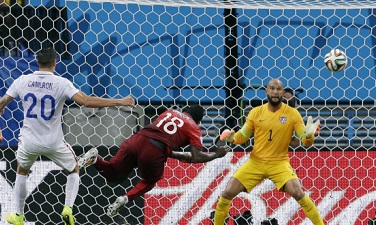
WORLD CUP BOOTS WORLD SERIES IN AND TO THE REAR

Thursday, June 26th, 2014

A long-time friend and even longer-time baseball fan called me the day after the United States and Portugal tied in their World Cup soccer match and asked if he had missed something. What’s going on, he wondered.

I laughed, instantly knowing what he meant. I am asking the same questions, I told him, and I don’t know that I have any answers.Clint Dempsey 225

Soccer was consuming American sports fans, and it was happening right in the middle of the baseball season. Major League Baseball had attained Commissioner Bud Selig’s goal of parity; more teams than ever were bunched near the top of the division and wild-card races.

Yet a game foreign to the homeland of America’s pastime was captivating fans in unprecedented numbers. How could this be happening?

I don’t have an answer to that question. I can guess and I can speculate, but you’ll excuse me if I am not among the soccer bandwagon jumpers.

My interest in watching soccer peaked 30 years ago with my son’s match in the championship game of the losers’ bracket of the Princeton intramural tournament. The good guys won on Mark’s three goals. He kicked in one, he headed in another and he scored the third on a throw-in that the goalie tried to catch but muffed and it slithered between his hands into the net.

In the interest of full disclosure I had the television in my office tuned into the USA games with Ghana (my grandson Jake, a high school soccer goalie, insisted I had to watch it) and Portugal. To say I was watching, though, would be an exaggeration. I had the games on as I might have background music.

Some people who are not baseball fans say the game is too slow, but if baseball is too slow, watching soccer is utterly a waste of time. Nothing happens for 90 minutes. Watching 20 men (not including the goalies) run up, down and across a field just doesn’t do it for me.

Plodding through 90 minutes, trying to keep my eyes open, to see one or two goals doesn’t intrigue me. I might be impressed by a cross-field kick that winds up precisely at the “receiver’s” big toe, but how many of those passes can I watch to want to see the entire game?

How many of those passes lead to goals? Not even 1 percent, I would think. Goals are so rare that scoring one triggers an orgy of exultation, with teammates pummeling the player who scored the goal. That happens in baseball only when a player drives in a game-winning or, excuse the expression, a walk-off home run.

Baseball too slow? Nothing happens for most of the game? Only an ignorant person would make such claims.

A regulation nine-inning game has 51 or 54 outs. According to Elias Sports Bureau, 71 percent of all outs this season, nine-inning and extra-inning games, resulted from batted balls, 0.3 percent from baserunning and 28.7 percent from strikeouts.

Basically, that means that the average game, in addition to 17 hits, produces 38 batted balls, or chances for additional hits among the 293 pitches per game. A miniscule number of kicks in soccer have a chance for producing goals.

To rationalize their interest in soccer, advocates resort to talking about the beauty and finesse of the game.

I would suggest that there is greater beauty in the way pitchers induce batters to swing at and miss pitches or take them for strike three. Seeing how badly batters are often fooled by changeups and breaking balls makes it worthwhile to watch games on television.

Brazil Soccer WCup US PortugalWatching soccer on television invites sleep. First, the ball goes in this direction and then it goes in the opposite direction, etc., etc., etc. There is a lot of wasted time as the ball is kicked back and forth in the middle half of the field with neither team getting anywhere.
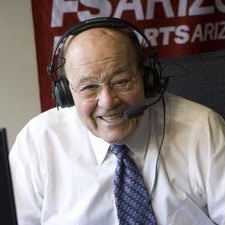
Once in a while someone might actually kick the ball in the direction of the net; that kick is supposed to pass for a shot. Even less often one of those kicks winds up in the net, and the announcer screams in over-the-top excitement, “G-O-O-O-O-O-O-A-A-A-A-A-A-L-L-L-L-L-L.” Viewers, however, don’t have to endure that silliness very often.

What they do have to endure, though, is not knowing how much time is left in the game. Football, basketball and hockey have clocks that run out and let fans know when the game is over. Baseball doesn’t have a clock, but the 27th out when the game isn’t tied serves the same purpose.

Soccer has a clock, but a match isn’t necessarily over when the game reaches the 90-minute mark. There’s something called stoppage time – some call it injury time – that the referee, at his sole discretion, can add to the game. This additional time accounts for in-game stoppages due to injuries or other reasons, but no one but the referee necessarily knows how much time he will add.

When the USA-Portugal game reached the 90-minute mark, USA led, 2-1. But the referee added five minutes of stoppage time, and Portugal scored the game-tying goal about 4½ minutes into that additional time.

Nevertheless despite that weird way of clock-keeping, despite the absence of scoring, despite the suffocating boredom of the back-and-forth play, soccer has penetrated the psyche of American fandom.

The 18.22 million who Nielsen said watched the USA tie with Portugal on ESPN – not including the additional 6.5 million who watched on Univision – exceeded the average television audience for eight of the last nine World Series, including last year’s 14.9 million. The soccer audience also eclipsed the television audience for this year’s National Basketball Association finals, which averaged 15.5 million.

The soccer viewership didn’t threaten the total of 111.5 million who watched the last Super Bowl, but that game also produces the largest outpouring of betting, the single biggest factor, I have always believed, in the success of the NFL.

SUICIDE BY DIP

Sunday, June 22nd, 2014

Rarely is an athlete paid the outpouring of tributes that erupted after Tony Gwynn died last week. Every word spoken about the Hall of Fame hitter was effusively positive. No one had a bad word to say about Gwynn. How could anyone? Excuse me, but I have a bad word to say about Gwynn.

He was dumb.Tony Gwynn 225

At the age of 54, which he was when he died June 16, would Gwynn have jumped off a bridge? Would he have sealed himself in a garage with the car motor running? Would he have placed a shotgun under his chin and pulled the trigger?

He would not have committed any of those suicidal acts. Gwynn killed himself nevertheless. The Hall of Famer’s method, however, was more benign and subtle than the ways people intent on killing themselves usually do it.

Gwynn killed himself with smokeless tobacco.

Maybe it’s unfair to talk about Gwynn killing himself; maybe it’s too severe to say that he was dumb.

“I’m on your side,” said Joe Garagiola Sr., for years an advocate against players’ use of smokeless tobacco when I told him my view of Gwynn’s fatal habit, “but it’s a deadly addictive habit.”

Garagiola dispelled any doubt that smokeless tobacco was the cause of Gwynn’s cancer.

According to Garagiola, “Tony said the doctor said he wasn’t sure tobacco caused it but Tony said ‘I know it was tobacco because it was exactly where the spot came up is where I put it.’”

A lawyer in his 40s whom I know and who has used dip at least half of his life offered his assessment of the addiction to smokeless tobacco. “Having quit smoking and drinking and trying to quit dipping,” he said, “the other two were so much easier.”

I don’t know how long Gwynn used smokeless tobacco or whether he ever quit or tried to quit using. Maybe he derived greater pleasure from his years of putting that junk between his lower lip and his gums than he would have from another method.

Maybe he even thought it helped him accumulate his 3,141 hits, 19 successive seasons of hitting better than .300, a .338 career batting average and eight National League batting championships. But smokeless tobacco killed him at the very young age of 54.

“Tony’s wife pulled me aside one day,” Garagiola related in a telephone interview, “and said, ‘Joe, would you mind talking to Tony to see if you could get him to stop using that stuff?’”

No one was ever able to get Gwynn to stop dipping. “It’s so addictive,” Garagiola said.

My lawyer friend said he quit twice, neither time permanently. “It’s insane to do it,” he said. “There’s no justification. The couple times I had some success I’d use nicotine gum combined with mint leaves.

“I don’t know why I started again after I quit. There’s never a good reason. Part of it is habit, but there’s a huge powerful physical and mental addictive component. If I set a date to stop, two, three days before I’d freak out.”

Joe Garagiola 225Garagiola, who used to visit spring training camps, meeting with players in an attempt to get them to throw away their tins of dip, told a similar story of dip recidivism.

“When I was going to clubhouses,” the former catcher recalled, “a player came up to me and said ‘I’m a dipper and I’m not going to do it anymore.’ Four days later I went back to the clubhouse and saw him. He said ‘I threw it away. The same night I started dipping again.’”

Players did not always appreciate Garagiola’s presence.

“Players would come up to me,” he related, “and say ‘why don’t you keep your friggin’ mouth closed.’”

In some of his clubhouse visits Garagiola did show-and-tell for the players. He brought with him a former major league outfielder, Bill Tuttle, who played for three American League teams in the 1950s and ‘60s. Cancer from his use of smokeless tobacco had eaten away much of Tuttle’s face.

“A girl who saw him said ‘I thought I was looking at a monster,’” the 88-year-old Garagiola said. Tuttle died in 1998 at the age of 69.

People make a fuss over the use of steroids in baseball, but to my knowledge steroids have never killed a baseball player. They might have affected a player’s health, but there is no clear-cut evidence of any deaths linked to steroids. There is, on the other hand, demonstrative evidence that smokeless tobacco has killed players.

Like steroids and major league players’ use of them, it also has an effect on young athletes, particularly baseball players.

“High school and college kids think it’s a badge of honor,” Garagiola said. “They’re like the big leaguers.”

“It’s like it’s part of the game,” a high school athlete told me. “Big leaguers do it. A freshman comes in and sees a senior, a leader of the team, dipping, and you say OK, and you do it. Dip is almost viewed as part of the game.”

This athlete, a varsity baseball and football player, acknowledged that he has dipped, though he said he didn’t know why he started, and he provided a fairly detailed picture of dipping’s use as he has seen it.

“It varies from class to class,” he said. “In my senior class it’s not as big in football as it is in baseball. It’s probably 60 percent in baseball, more than half the team, maybe two-thirds.

“I think the big reason it’s so common in athletes is you realize you can’t smoke cigarettes and you can’t smoke weed or drink alcohol and perform at a high level. I’ve never smoked a cigarette in my life, but if I smoked I’d do it playing football.”

He paused and asked if he had to be politically correct. Told he didn’t, he continued:

“Dipping is much more white than black. Tobacco is more a white thing than a black thing. I have hundreds of black friends and not one dips. In baseball, especially in the northeast, you don’t see black kids dip. And it’s not in the culture of football.”

It would be nice to think that football players are more intelligent than baseball players where smokeless tobacco is concerned, but it probably wouldn’t be a good idea for a football player to block and tackle and be blocked and tackled with a foreign substance in your mouth. But then, it’s not too bright of any high school or college kid to put a foreign substance in his mouth.Smokeless Tobacco

“It’s stupid, very stupid,” the high school athlete said. “If you ask a high school athlete why he dips, he couldn’t tell you.” But, he added, “Even though you know the dangers – and I think kids are fully aware – I don’t think you worry about it.”

Nor is any user lured into using by thinking it will help performance. “It’s definitely not a performance enhancer,” my high schooler said.

What does it do? “When you first start dipping,’ he said, “you get a buzz from the nicotine.” He added, “I don’t think the athletes are addicted.”

Maybe not in high school. But Gwynn didn’t want to or was unable to quit.

The baseball commissioner, Bud Selig, would like all players to quit and has gained some leverage in his quest.

A few years ago Selig was at Memorial Sloan Kettering hospital in New York getting his annual checkup for skin cancer and had an interesting conversation with his doctor on the subject of smokeless tobacco.

“I see these people chewing,” Selig said his doctor told him. “You understand how dangerous it is. I operate on people all day long who do this.”

“I worry about the health of the players,” the commissioner said. “I do feel strongly about it. My doctor told me you have over 50 percent chance of getting cancer. That’s stunning.”

I have mixed feelings about it. While I don’t like players serving as models for kids who want to do what Tony did, I don’t like the idea of Major League Baseball telling adults that they can’t use products that are legal.

If the Tony Gwynns of the baseball world want to be stupid and kill themselves, that should be their prerogative. If they can be convinced that long life is better than premature death, all the better.

Selig said Rob Manfred, his chief operating officer, and Tony Clark, the union’s executive director, “are going to have to sit down” and work out a solution. “We’ve banned it in the minors,” Selig said. “It reminds me of steroids.

Garagiola mentioned frequent talk of Selig’s legacy as he prepares to retire in January and said, “What a legacy it would be if he banned it.”

Bud Selig Retire 225Selig, however, can’t ban smokeless tobacco in the majors any more than he could unilaterally institute steroids penalties. He was able to take action on steroids and smokeless tobacco in the minors because the union doesn’t represent minor league players. The union would have to approve any steps taken on smokeless tobacco, just as it had to approve testing and penalties for use of steroids. The union didn’t have to endorse a ban on steroids because steroids are illegal in the United States without a prescription.
The union and the commissioner’s office were able to agree on some restrictions on the use of smokeless tobacco in their negotiations for the current collective bargaining agreement.

Included in the 2011 labor contract as Attachment 28, the smokeless tobacco policy calls for an educational program, a list of professionals and organizations that aid players who want to quit using and annual oral exams of players.

Clubhouse personnel can no longer supply tobacco tins in the clubhouse as they had for decades. Players, though, can bring containers into the clubhouse themselves.

The attachment bans use of the substance during televised interviews and player appearances on behalf of the clubs. Players cannot carry tobacco tins or packages in their uniforms. That provision eliminates the once prevalent familiar outline of a cylindrical tobacco tin in the back pocket of a player’s uniform.

The agreement calls for warnings for the first two violations and fines of $1,000, $2,500 and $5,000 for the next three violations, which will be cumulative over a player’s career.

Obviously the penalties are minor compared with penalties for positive tests for use of performance-enhancing substances, but they represent a first in baseball.

Clark, the union’s leader, reacting uncharacteristically of his predecessors over nearly half a century, did not return a telephone call seeking comment on the union’s view on a possible future ban on the use of smokeless tobacco.

Garagiola, on the other hand, said, “If Tony Gwynn’s death lights a fire to get this thing solved so that no one is using it, we’ll never forget Tony Gwynn.”

CATCHER GOES WAY OF PITCHERS

Pitchers can’t hog the elbow surgery market all to themselves. The Tommy John operation that is the rage this year has to include some players who play other positions.Matt Wieters 225

Matt Wieters, the Orioles’ catcher, is the most prominent non-pitcher who has had the operation this year. Dr. James Andrews – who else? – performed the elbow ligament transplant last Tuesday. Barring complications, the 24-year-old catcher is expected to be ready for next season.

“I’m told the players can come back a little bit sooner than pitchers, eight or nine months as opposed to one year,” Dan Duquette, the Baltimore general manager, said.

Wieters went on the disabled list May 11 and waited five weeks to have the transplant. “He gave it some time to rest and he was trying to see if he could continue to play,” Duquette said. “He found out it was still bothering him when he threw.”

The injury was apparently three weeks in the making. “He said he had an issue in Boston in a Sunday night game in April. He tried to throw from his knees and that aggravated it.”

Depending on how long a torn ulnar collateral ligament takes to develop, the ailment could stem from pitching. “He pitched in college,” Duquette said. “He caught and closed.”

Wieters last pitched at Georgia Tech in 2007.

Among other current non–pitchers who have had Tommy John surgery are Carl Crawford, Rafael Furcal, Shin-Soo Choo, Matt Holliday, Carlos Quentin. Kelly Johnson and Xavier Nady (twice).

Among players who are retired but had the transplant during their careers were Paul Molitor, Jose Canseco, Luis Gonzalez, Rusty Greer and Rocco Baldelli.

ROSE OFF BASE YET AGAIN

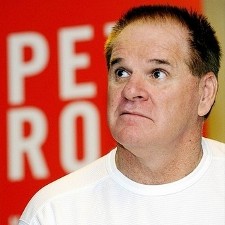
Pete Rose last week made one of his periodic appearances in the news media, doing an interview with ESPN.com. Banned from Major League Baseball the last 25 years, the all-time hits leader said he would like a second chance to work in baseball.

pete-rose5The man doesn’t get it, never has, apparently never will. He had 15 years of second chances but squandered them all. For 15 years he lied. He lied to baseball, he lied to the news media, he lied to the fans.

For 15 years he continued to contend that he didn’t bet on baseball. Not until he published a book in 2004 did he admit that he bet on baseball. But even then he continued to lie, saying he never placed bets on baseball from his manager’s office. John Dowd, the Washington. D.C., who investigated Rose’s gambling for MLB, produced voluminous evidence that showed Rose placed baseball bets from his office.

I have no evidence of my own to prove this view, but I believe if Rose, sometime early in that 15-year, post-ban period, had admitted what he had done and acknowledged he was wrong for having done it, his application for reinstatement would have been approved.

It was then that he should have sought a second chance and gone about it in the right way. Rose last applied for reinstatement in 1997. I asked Commissioner Bud Selig the other day about the status of the application.

“It’s under review,” he said, saying what he has said for 17 years. This time, though, he added, “It’s a sensitive matter.”