There is no way getting away from it or around it. Before you waste any more time trying, resign yourself to the reality that this year will be all A-Rod all the time. It is incredible how this happens with Alex Rodriguez.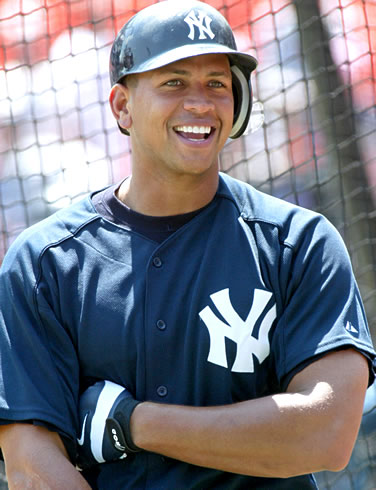
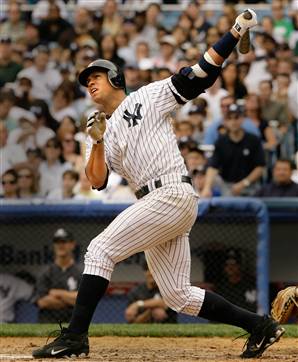
In only two months of this calendar year, he has required more coverage than a Geico office full of policyholders.
He was the focus of pre-publication passages in Joe Torre’s wrong-headed book.
He was outed as a steroids user by a reporter whose impending book on him will surely create more focus.
He did a soft-soap television interview in which he admitted to having used steroids.
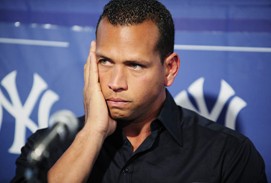
He was criticized for not admitting enough so in a subsequent news conference he admitted more and was still criticized and his credence questioned.
He was instantly convicted of guilt by association with a Dominican trainer banned by Major League Baseball, who has also worked with every other Dominican superstar.
He developed a hip ailment and became the subject of an instant debate over whether he should have surgery immediately or try to play the season with the injury and have surgery later, or if he opted for surgery, how extensive it should be. Now that he has had the operation, the debate will continue over whether he should have had the surgery and if so, did he have the correct surgery.
This recitation doesn’t include any of Rodriguez’s escapades with Madonna or other female acquaintances, his divorce or his recent laudatory comment about Jose Reyes that the news media turned into an expression of disrespect for his teammates Johnny Damon and Derek Jeter.
Rodriguez is such a hot button for the news media that he can’t say or do anything without it having consequences for himself or others.
In the winter between the 2004 and 2005 seasons, for example, Rodriguez made a comment extolling his winter workouts over the off-season efforts of other players. One or two Red Sox players took exception to his remark, giving reporters an excuse to ask every Boston player in spring training what he thought of Rodriguez. No matter what the players said – the comments were mostly benign – reporters turned it into a criticism of A-Rod.
Moving forward to this spring training, Rodriguez was working out with the Dominican Republic team for the World Baseball Classic and asked about Reyes, a temporary teammate, said, “I wish he was leading off on our team.”
Reporters immediately ran to Damon, the Yankees’ leadoff hitter, and Jeter, their shortstop, and asked how they felt about their teammate’s remark.
“Comment disses Derek, Damon” read part of one tabloid headline. Another said Rodriguez “stirs controversy with comments.”
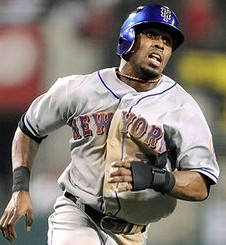 Rodriguez certainly wasn’t being critical of Damon and Jeter; he was saying something complimentary about Reyes. But reporters didn’t miss a beat in trying to turn it into another A-Rod controversy.
When it comes to writing about Rodriguez, reporters dislike him so much that they always take the most critical approach. If there are two ways of looking at a Rodriguez issue, they will take the more negative view. He never gets the benefit of the doubt. With the news media, there is no doubt. It’s always one-sided against Rodriguez.
The worst has been the coverage of the steroids phase of Rodriguez’s spring. Try as he might, he has been unable to do or say enough that is right.
Rodriguez could have refused to acknowledge that he used steroids, and if he had, he would have been rightfully skewered by the news media. But he admitted that he used them, even saying when it was that he used them. But that information wasn’t enough for the frenzied pack of reporters and columnists.
What steroids did he use and how did he use them, by mouth or injection? And if injections, did he inject himself or did someone do it for him?
The latter reminded me of the incident many years ago when a reporter asked a player who was talking about his baby’s feeding how he was fed, breast or bottle? The answer these many years later is unimportant and so are the answers to many of the questions reporters had for Rodriguez.
Even when Rodriguez answered questions at a subsequent news conference, the news media weren’t satisfied. They scoffed at the idea that his cousin injected him with steroids, demanding to know his name, and they were skeptical that the cousin bought the steroids over the counter in the Dominican.
Their skepticism turned to charges of lying when Dominican drug officials were quoted as saying that steroids couldn’t be bought over the counter on the island.
However, a reporter from the Long Island newspaper Newsday was in the Dominican with his family on vacation, and he wrote an account of his experience.
“Here’s how easy it is to buy anabolic steroids in the Dominican Republic: Walk into the local pharmacy and ask for them,” Gregg Sarra wrote.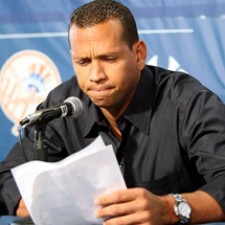
“That’s exactly what happened when I visited the island on a family vacation last week. I did not break the law. Nor did I attempt to bring them back into the United States. Steroids that are illegal in the United States are legal in the Dominican Republic.”
Or at least they are easy to obtain, contrary to the A-Rod skeptics.
Dr. Don Catlin, a noted steroids researcher, was quoted as saying that he had never heard of “boli.” However, a Dominican drug official said “boli” was the street name for Primobolan. Maybe Dr. Catlin should get out of the lab more and onto the street.
ESPN.com seemed to express the greatest skepticism and raise the silliest questions. Where did Rodriguez hear about the steroid he said he used, and where did his cousin, who Rodriguez said injected him but the news media didn’t believe, learn about it?
If boli, an ESPN.com writer wrote, referred to Primobolan, “it can’t be purchased over the counter in the Dominican Republic. So how did they get it? The black market?”
Now there’s an outrageous thought. Rodriguez and his cousin used an illegal means to get an illegal drug to use illegally.
Had Rodriguez seen his test, and would he make it available? I seriously doubt that any player who has tested positive or negative has seen or been interested in seeing his test. Why would he be? You have a blood test for cholesterol and your doctor tells you it’s 220. What’s to see?
And if he had the test result, did the media have the right to demand that he show it to them? Did they want to make sure he tested positive, or was he lying to them and he really tested negative?
There were many other accusations of omissions, as if the media were entitled to everything that could conceivably be disclosed about Rodriguez’s use of performance-enhancing drugs.
Instead of badgering Rodriguez and asking him to show them the exact spots where he was injected (and, by the way, does it really matter if it was his cousin who injected him, or if it was someone else, say, his girlfriend or a trainer?), why don’t the self-appointed media sleuths find the reclusive Mark McGwire and ask him what he did?
Why don’t they find Sammy Sosa and Rafael Palmeiro and ask them what they did and when and with whom and why they did it? Why don’t they do the Feds’ work for them and get Barry Bonds and Roger Clemens to admit what they did?
Rodriguez was accused of changing his story from the Peter Gammons interview on ESPN to his news conference eight days later. How did he change it? Two examples: In the interview he didn’t identify anyone who helped him and he said he didn’t know “exactly what substance I was guilty of using.” At the news conference he said his cousin aided him and what they used was called boli.
How is that changing his story? At the news conference he provided additional information. Isn’t that what everyone wanted? Would the media have liked it more if he had maintained his silence on who helped him and what they used?
Rodriguez was additionally criticized for failing to disclose his relationship with an allegedly notorious Dominican trainer, Angel Presinal, whom Major League Baseball has banned from its facilities. Presinal has been linked to steroids, and the media apparently wanted to establish that it was Presinal, and not the cousin, who provided the steroids Rodriguez used and injected him.
But Rodriguez admitted he used steroids. Does it matter who plunged the needle into his buttocks? Would the illegal use of the illegal steroids have been made more illegal had it been Presinal and not the cousin holding and filling the syringe with a substance he acquired?
T he news media dislike Rodriguez so intensely and so routinely that an admission and an apology did not satisfy them. They gave Rodriguez no credit for saying, “Look, for a week here I’ve been looking at people to blame and I keep looking at myself at the end of the day.”
Is that what Rafael Palmeiro said, or did he run over Miguel Tejada with a bus?
A more reasonable person might ask a different question of members of the news media. Why was the Presinal focus solely on Rodriguez when the trainer has worked with every elite Dominican player for nearly a decade? Some of the players, including David Ortiz and Robinson Cano, have acknowledged that Presinal worked with them and praised his work.
ESPN.com questioned Rodriguez’s failure to tell and tell all about his relationship with Presinal, but it also ran a list of 25 current and former players with whom Presinal “says he had worked and/or consulted.”
The latest episode in the life and times of the highest-paid player in history involved his hip injury. Jeter could have had a hip injury, Mark Teixeira could have had a hip injury, but it was Rodriguez who had a hip injury. Until he recovers and rehabilitates the hip and begins playing, presumably in May, Rodriguez will be the subject of unnecessary stories.
But how many times can the media speculate on what he will do the rest of the season? The speculation will quickly become repetitious and meaningless, and readers and viewers will yearn for the media to choose another subject.
During the fortunately brief debate over whether or not Rodriguez should have surgery, two Rodriguez elements merged in the comment of a doctor who was interviewed by the New York Daily News. The News interviewed five doctors, and one, Dr. Lewis Maharam, the medical director of the New York Road Runners Club, said:
“Because A-Rod kept changing his story about his steroid use, it made us skeptical about his hip issue, thinking it could be steroid-related. It is not.”
But A-Rod did not change his story. He never gave different explanations of his steroids use. First he gave no explanation other than admitting he used them, and then he said his cousin injected him.
If anyone wants to fault him for making a misleading statement, here’s one that everyone overlooked in the zeal to find fault in everything else Rodriguez said or didn’t say.
In his statement before he answered questions at his news conference, he talked about how much he had been tested since his positive test in 2003.
“Since that time, I’ve been tested regularly,” he said. “I’ve taken urine tests consistent with Major League Baseball and blood tests for the World Baseball Classic. Before I walked here today, I took a test as part of my physical, and I’ll take another blood test next week for the classic.”
The classic, however, did not administer blood tests to players in 2006 or this year. They had urine tests only, just like the one that caught Rodriguez in 2003.