Davey Johnson, the only person to manage for Marge Schott and Peter Angelos, will manage Team USA in the World Baseball Classic next month, but before getting to that assignment he had some other business to attend to.
“I’m here with our daughter, who had twins about five weeks ago, a boy and a girl,” Johnson said last week, talking by telephone from Winter Park, Fla. “I’m the yard man, the maid, the cook, the washer. I try to avoid feeding the babies with a bottle because that’s how I hurt my back with the Orioles.”
Johnson, who was handling those domestic chores because his wife was on a clothes-buying trip to Las Vegas for her store in Florida, was refering to a back ailment he suffered when he was Baltimore’s second baseman 42 years ago.
“In spring training in 1967,” he related, “I’d feed the baby for about an hour. One day I got up and my back went out and I hit the floor.”
As the manager of the Cincinnati Reds from 1993 through 1995 and the Orioles in ’96 and ’97, Johnson had more headaches than backaches. His teams finished first three times and won the wild card once, but those achievements weren’t enough to please the owners, Schott and Angelos.
Schott was the owner who once fired her scouts because, she said, all they did was sit in the stands and watch baseball games. Angelos was the owner who objected to being compared with George Steinbrenner but turned out to be more Steinbrenner than the original.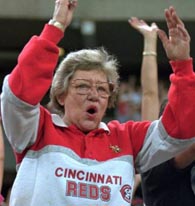
“I thought going from a major market to Schott and Angelos would be easy, but I was wrong,” the 66-year-old Johnson said, alluding to his 6 ½-year tenure with the Mets, whom he managed to the World Series championship in 1986.
Speaking of his experience with Schott, Johnson said, “We basically won two titles. I could have won the World Series and Ray Knight was going to be the manager the next year.”
Schott liked Knight and wanted to make him the Reds manager. She did that for the 1996 season, but that was the only season Knight managed them. They finished with a .500 record and haven’t finished first since.
In Baltimore, Johnson said, “We did well, but I couldn’t quite make Mr. Angelos happy. My first year we won a wild card. My second year we won the division; we went wire to wire and beat the Yankees. Both times we got eliminated in the league championship series. We were headed in the right direction, but as much as I tried I couldn’t get on Mr. Angelos’ good side.”
It seemed clear that Angelos would fire Johnson, but he delayed the move. Convinced that he was out and concerned that Angelos would wait until all of the managerial vacancies were filled, Johnson resigned.
“He wouldn’t fire me so I resigned and a year later Gillick left,” he said refering to general manager Pat Gillick. The timing of Johnson’s resignation was exquisite. It occurred on the same day Johnson was named American League manager of the year.
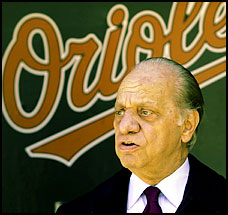 “I was at a press conference to acknowledge the award,” Johnson said, “and at the same time Mr. Angelos accepted my resignation.”
The Orioles have had five managers but no more division titles since Johnson’s departure. Nor have they even had a winning season under any of them. The Orioles have followed Johnson’s division championship with 11 successive losing seasons. Last year was the fourth of those seasons in which the Orioles didn’t win even 70 games.
Through the year of Johnson’s division title, the Orioles finished first nine times and had 25 winning seasons in 32 years. Of the seven losing seasons in that stretch, six came in the 10 years before Johnson became the manager. As Johnson said, the Orioles were headed in the right direction. But then under Angelos’ destructive operation, they took a drastically different turn.
I doubt that Angelos allows himself to think or admit what he hath wrought, but for three decades the Orioles were the classiest organization in baseball and now they are among the most glaring garbage-heap teams.
Johnson, meanwhile, went west and managed the Dodgers for two years, 1999 and 2000. The venture was not successful.
“That organization was in a big rebuilding process,” Johnson said, recalling the team under general manager Kevin Malone. “Their farm system was just a shadow of what it used to be. The team was put together not very well to compete in that division against Arizona and the Giants. Basically they had no left-handed batters, no left-handed pitchers, no speed.
“After what I had been through, then not having much impact in putting that team together, I was burned out. I gave it everything I had, but I couldn’t enjoy it. That was it for me.”
With a .564 winning percentage and 11 winning seasons, his 14-year managerial career was over, but his problems weren’t. His daughter died in 2001.
“My daughter was a world class surfer,” Johnson related. “She won a lot of competitions here in Florida and went to New Zealand and surfed over there. She got sick at about age 20. She was hearing voices, and we went through some tough times with her trying to get her well.”
Then things seemed to improve. “She was going to go with her mother to Texas,” Johnson said. “We thought she was doing better. Then she had a rough night, went to the hospital and died of a septic infection from the drugs she was taking. She was 30. She was Davey’s little surfer girl. That was real rough. I still have her ashes in my office. I know she’s happy where she’s at.”
Johnson has been working for USA Baseball since 2004, he manages a team in the Florida summer collegiate league in June and July and most immediate he will manage Team USA in the World Baseball Classic next month.
Johnson, who was a coach for Team USA in the inaugural WBC in 2006, got the managing assignment after Team USA failed to reach the semifinals under Buck Martinez. It’s not only the major leagues where managers get fired.
“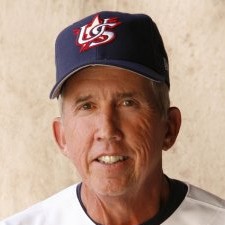 I didn’t really want to manage in ‘06,” Johnson said, “because I felt the way they were going about it it would be a fiasco.”
Why did Team USA do so badly?
“The word was out that we weren’t prepared, we didn’t take it seriously,” Johnson said in a conference call Thursday. “Competition around the world is a lot tougher than we thought. A lot of our guys weren’t ready to play, but that won’t be an issue this time. What happened last time sticks in the minds of a lot of guys and that won’t happen. They’re pumped up.”
Johnson doesn’t expect to return to his major league career. “I love baseball,” he said. “I guess since 2000 you can consider me a dinosaur. I’d be glad to talk about it if someone wanted to, but I don’t see that happening. I’m enjoying what I’m doing. I think USA Baseball likes me, and I like what I’m doing.”
“I’ve got my wife working,” he added, “I get to see my kids and I don’t have to work 12 months out of the year. And I’m still in baseball.”
Johnson has his wife working because, he said, in 2001 he told her she had to get a hobby.
“I said you’ve been going around the big leagues shopping. I’ve had to pay the bills so I know you’re good. She opened a small dress store and now it’s probably the No. 1 women’s boutique in the southeast.”
The boutique, in their hometown of Winter Park, has led to a new type of recognition for Johnson. “She usually goes to New York seven, eight times a year to buy clothes for the store, and I go with her,” Johnson said. “We stay at the Marriott Marquis in Times Square. I’m more well known in the garment district than at Yankee Stadium and Shea Stadium. These designers know me better than the scouts.”
