The four-man pitching rotation became extinct a long time ago. Teams began adding a fifth starter to their rotations in the late ’60s and early ’70s, and the four-man rotation was basically gone by the ’80s. Three decades later even the occasional pitcher starting on three days of rest instead of four has become virtually extinct.
According to research by Elias Sports Bureau, less than one percent of last season’s games were started by pitchers on fewer than four days of rest. Elias traced the decline:
In 1973, the first year of the designated hitter, the percentage of major league games started by pitchers with rest shorter than four days was 39.6.
Since then the percentage has dropped steadily to 21.3 in 1978, 11.1 in 1983, 5.6 in 1988, 1.1 in 1998 and 0.9 last season. That last percentage means that pitchers started only 22 of last season’s 2,428 games on fewer than four days of rest.
The trend has resulted from an industry-wide change in pitching philosophy. Four-man rotations have changed to five, starting pitchers are limited to 100 pitches, bullpens have added setup men to precede closers and a pitching staff generally is more pampered than a nursery full of babies.
As late as the ’50s and ’60s, teams carried nine pitchers. Today’s staffs number 12 and 13. Teams complain they don’t have enough pitching, but they won’t revert to past practices, which would reduce the need for as many pitchers as they use.
Tom Seaver, who began his career with the Mets in 1967, said recently he didn’t recall pitching with three days of rest in his Hall of Fame career, but he did – eight times in 1967, four times in ’68 and eight in ’69, Elias records show. But he was also part of the beginning of the transformation from the four-man to the five-man rotation.
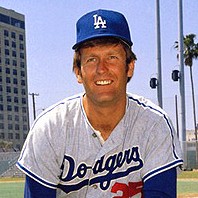 “Essentially, when Gil came over he put us on a five-man rotation,” Seaver said of the Mets’ manager, Gil Hodges. Tommy John, who would pitch against the Mets for the Los Angeles Dodgers, recalled Rube Walker, the pitching coach under Hodges. “Rube was big on giving the pitchers an extra day’s rest so they started using a 5-man,” John said.
We were all power pitchers – Gentry, Ryan, Koosman, myself,” Seaver said. “Over the course of the season you’d probably pitch more effective innings. If you could get guys pitching on the fifth day you’d probably have a higher percentage of good innings.”
Seaver said he never pitched 300 innings in a season but said, “You may give up innings, but you may pitch a higher percentage of effective innings.”
Ferguson Jenkins, whose career began in 1965 and ended in 1983, pitched more than 300 innings five times. Robin Roberts, who pitched from 1948 through 1966, did that six times. Jenkins made 35 or more starts in a season 10 times, Roberts nine times. Pitching in a five-man rotation doesn’t allow that many starts.
“You have 13 pitchers on a staff,” Jenkins said. “When I came in, there were nine, four starters, five in the bullpen. Now they have five starters, eight in the bullpen.”
Pitchers, Jenkins noted, do not have the opportunity to pitch with three days of rest. “That’s unfortunate,” he said. “There are some guys who are capable of doing it – Carlos Zambrano, Josh Beckett, for example. But management doesn’t want to get into a problem of them not doing well their next start, which is something that happens.”
Management is also concerned about overusing pitchers. With all of the starts he made and innings he pitched, was Jenkins ever injured? “Never,” he said. “In my 21 years of playing I never had a sore arm.”
Did Roberts ever have a sore arm? “My last 11 years I didn’t throw like I did early,” he said. “My arm bent up a little bit and I didn’t quite have that little extra.”
The problem, however, developed for a reason other than starting every fourth day.
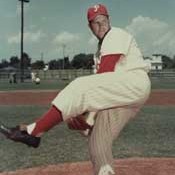 “I pitched, then I came in in relief,” Roberts said. “That’s silly. I shouldn’t have done that. It didn’t work out. That is a dumb thing, to have a starter relieving. I would start and then I’d relieve the middle days. I was a closer. I had about 25 saves in my career.”
“We pitched probably too many and they don’t pitch enough now,” he added. “In our case, we pitched in a three-day rotation and sometimes we pitched on two days.” That pattern of starting, Roberts said, didn’t hurt his career, “but when I had four days’ rest I had better stuff. That extra little rest gave your fast ball a little more zip to it. It didn’t help your control.”
Only four teams in the expansion era – beginning in 1961 – have had four pitchers make at least 35 starts each, according to Elias: 1966 Dodgers (Sandy Koufax, Don Drysdale, Claude Osteen, Don Sutton); 1972 Orioles (Mike Cuellar, Pat Dobson, Dave McNally, Jim Palmer); 1984 Blue Jays (Doyle Alexander, Jim Clancy, Luis Leal, Dave Stieb); 1993 Braves (Steve Avery, Tom Glavine, Greg Maddux, John Smoltz).
In 1971, the Orioles regularly started four pitchers on three days of rest, and they each became a 20-game winner: Dave McNally (21) and Mike Cuellar, Pat Dobson and Jim Palmer (20 each).
“George Bamberger took over as the Orioles’ pitching coach,” recalled John, who was pitching for the Chicago White Sox at the time, “and with his Staten Island accent, he said they have to throw more, they’ll pitch better. He dropped a starter and went with four.”
While other teams were switching to five-man rotations, the Orioles stayed with four as long as Bamberger remained Earl Weaver’s pitching coach. In 10 years with Weaver, Bamberger developed 18 20-game winners, at least one each season.
“He did the same thing when he managed the Brewers,” John said, meaning a four-man rotation, though Bamberger added two more 20-game winners. “It could be done now. But whatever manager or general manager allows it, they’re going to have the wrath of an agent on them if anybody gets hurt.”
With good pitching in short supply, this would seem to be a good time for teams to revert to four starters, eliminating the need for one starter.
“I’m a proponent of a 4-man staff,” John said. “Most major league staffs have three quality starters. Pitchers four and five are the 5-inning guys.” But, he added, “Two things keep them from doing it – the amount of money they have invested in them, and if somebody went to a 4-man and a guy hurt his arm he’d have the biggest lawsuit in the world.”
Seaver said pitching mentality is extremely different today. “I just don’t understand the mentality of saying ‘I’ve thrown 90 pitches and 6 innings and I’m out of the game.’ In our day the minimum of pitching was seven innings. I’m talking about the mental approach. The objective was to get 21 outs, to get to the eighth at a minimum.
“Today you look for reasons to take pitchers out rather than leave them in. Certain pitchers will look to come out of a game. I pray for the day when the manager goes out and says, ‘You’re pitching great, kid. I’m not coming back.'”
Did Barry Do In A-Rod?
As I have written, I suspect that Alex Rodriguez’s positive steroids test was leaked by a government agent or representative. Others have told me they hold a similar view. In connection with that idea, the most intriguing theory I have heard is that the leak was linked to the Barry Bonds’ case.
 On Feb. 5, Judge Susan Illston of United States District Court in San Francisco indicated that she would throw out critical pieces of the government’s evidence in its case against Bonds in his upcoming perjury trial. That evidence included positive test results for Bonds and doping calendars on which his trainer, Greg Anderson, allegedly kept a record of his injection of Bonds. Two days later Rodriguez was outed on SI.com.
One of the Sports Illustrated reporters, Selena Roberts, had been writing a book on Rodriguez and presumably had been in contact with one or more Federal agents seeking information on Rodriguez.
With the judge about to toss out damaging evidence against Bonds, the theory goes, a government agent or other employee with access to the seized 2003 test results leaked Rodriguez’s name as a way of letting prospective jurors in the Bonds case know that this steroids business was an important case because it involved the biggest-name players.
The theory is by no means far fetched. That sort of underhanded behavior is not beneath the government, especially when it wants to nail somebody, and the government’s lengthy and costly pursuit has made it obvious it wants to get Bonds.
Meanwhile, as a result of the illegal leak, Rodriguez is the only one of 104 positive testers who has been identified from a 2003 test that was supposed to be anonymous and confidential.
Just about every day last week New York newspapers reported about an impending meeting between Rodriguez and investigators for Major League Baseball. The meeting would be in the next few days; the meeting would take place between Wednesday and Friday; the meeting would occur before Rodriguez left the Yankees’ camp to join the Dominican Republic team’s workouts for the World Baseball Classic.
By week’s end and the third baseman’s departure from the Yankees’ camp, however, no meeting had been held. One, though, was scheduled for Sunday. Lawyers on the players’ side of the issue acknowledged that Rodriguez might have been able to successfully challenge baseball’s demand that he meet with investigators.
However, he doesn’t face disciplinary action, and one lawyer said, “I don’t think he has to meet with them, but there are better times to pick a fight.”
Manny Saga Keeps Going
If Manny Ramirez wanted out of Boston last year and Scott Boras, as he has maintained, had nothing to do with the scheme Ramirez followed to get his wish, Boras has not effectively represented the enigmatic slugger. In other words, if Ramirez succeeded in escaping Boston on his own, who needed Boras as an agent?
Ramirez has not found his foray into free agency this winter a rewarding experience. No one has offered him the kind of contract he and Boras were looking for – five years at perhaps $25 million a year – and with the exhibition schedule in full bloom and March upon us, Ramirez, like so many hundreds of thousands of lesser known people throughout the country, remains jobless.
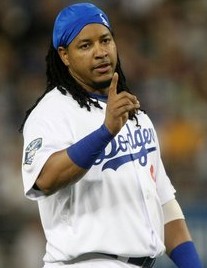 One team and only one has made him an offer. Actually the Dodgers have made him four different offers in the last four months. He has rejected them all, most recently a one-year deal for $25 million plus a second year at his option for $20 million. His repeated rejections have not discouraged the Dodgers.
“It’s been one of our priorities all winter long to sign Manny back and it continues to be our goal,” general manager Ned Colletti said Friday after Ramirez’s latest rejection and a counteroffer from Boras followed by a second counteroffer.
A report on SI.com, which should know because the Web site’s Jon Heyman is joined with Boras at the hip, said the agent responded to the Dodgers’ latest offer with a proposal of two years for $45 million with nothing defered. However, a person not in the Boras camp said the proposal was for $55 million.
When the Dodgers rejected that proposal, the person said, Boras lowered his asking price but not low enough to induce the Dodgers to say yes.
Boras doesn’t want to accept the $45 million offer because it’s only $5 million more than Ramirez could have earned had he not alienated the Red Sox and let them exercise the two option years in his contract at $20 million a year.
If he secured only $5 million more for Ramirez, what will the agent have done for his client? This is what a superstar agent gets for his No. 1 client? Will Boras collect his commission on the $5 million or on the entire $45 million? He didn’t negotiate the Red Sox contract so why should he derive a fee or a commission from that $40 million?
The Dodgers, who last November made a similar $45 million offer but with the second year at their option, don’t want to raise their offer because they would be bidding against themselves. Clubs look foolish when they do that, which many have with free agents.
Boras often introduces a mystery team into his negotiations, making his target team think someone else will get the player, but he has said nothing about a mystery team here. He has not told the Dodgers they have a competitor.
The Dodgers, a baseball man said, are competing not against a team but against expectations — Ramirez’s expectations and Boras’ expectations for Ramirez.
Last year Boras miscalculated on the interest in Alex Rodriguez when he opted Rodriguez out of the last three years of his contract with the Yankees. When it became clear that they had made a bad mistake, Rodriguez scrambled back to the Yankees, getting advice from Warren Buffett, the stock market genius, and having Boras sit out the talks between the third baseman and the team that resulted in a $275 million contract.
New Wrinkle Goes Unused
Reliever Juan Cruz signed with the Kansas City Royals Saturday, eliminating the possible use of a new wrinkle in free agency.
Cruz was one of three unsigned Type A free agents, the kind that require draft-choice compensation if a new team signs them. Manny Ramirez and Ben Sheets are the other unsigned Type A’s.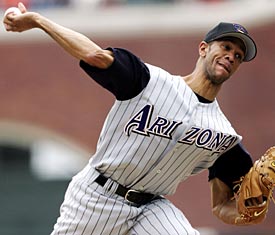
The commissioner’s office and the Players Association rarely change their collective bargaining agreement during its term. In recent years, they agreed during the life of an existing labor contract to a couple of changes in the program to test players for performance-enhancing drugs. But that was the extent of their changes.
Recently, however, they came up with another possible change having nothing to do with steroids. This change is about June 15. That’s the date in their agreement before which a signed free agent cannot be traded without his permission.
Using Cruz as an example, the Minnesota Twins were thinking of signing him but didn’t want to relinquish a draft choice as compensation for him. Had Cruz consented, his agent, Barry Praver, could have gone to his old team, the Diamondbacks, and told them he knew the Twins were interested in Cruz and would be willing to discuss a trade if Arizona signed him.
The Twins could not have spoken directly to the Diamondbacks, That would be considered collusion because two clubs would be acting in concert in violation of the basic agreement. But under guidelines emerging from discussions last month between the union and the commissioner’s office, Praver could have served as a broker between the clubs and Cruz could have waived his June 15 right in anticipation of a trade agreement between the two teams.
The agent could have told the Diamondbacks, “I’ve talked to the Twins and they will give you this player or two of this group of five players for Cruz, who will waive his right not to be traded.”
But Praver and the Twins did not agree on a contract so Cruz signed instead with the Royals, who plan to keep the 30-year-old right-hander, who last season led National League relievers with 12.37 strikeouts per nine innings.
The union’s main concern in its discussions with the commissioner’s office was that there be no hint of collusion. The union didn’t care about the loss of compensation for Arizona because it would be happy to be rid of compensation for any free agent. The commissioner’s office doesn’t want to give up compensation but was willing to waive it for a club to get a player it wanted.
The sign and trade wrinkle could occur in future free-agent markets but only on a case by case basis.
No Blood Test for A-Rod
In pointing out recently that Alex Rodriguez had passed all of his tests for performance-enhancing drugs the past five years, I added that he had also passed a blood test before the 2006 World Baseball Classic. I have been advised that there was no blood test, only the same type of urine test that baseball uses.