A rare timeout seems to have settled over the Alex Rodriguez circus – three rings at least, maybe more – so this might be a good time to explore the bizarre circumstances that have erupted and the individuals whose number has proliferated in becoming part of them. A scorecard definitely is needed to follow it all.
The core circumstance is Rodriguez’s appeal of the unprecedented 211-game suspension Commissioner Bud Selig has levied on the New York Yankees’ $275 million superstar for allegedly violating the agreement Major League Baseball has with the Players Association on illegal performance-enhancing substances.
M.L.B. has not nabbed Rodriguez with a positive test or two or three, but officials and investigators claim to have a multitude of evidence that they say demonstrates Rodriguez’s guilt, A-Rod, however, denies it all and has filed a grievance challenging the suspension.
Going into the hearing before baseball’s impartial arbitrator, Frederic Horowitz, which began earlier this month and is scheduled to resume next month, I had two theories:
- Selig imposed the lengthy suspension figuring that no matter what Horowitz might rule in Rodriguez’s favor he, the commissioner, could tell the public that he tried to impose what he believed was a fitting punishment but the arbitrator undermined his good intentions.
- Horowitz will not overrule the suspension completely but will drastically reduce its length to bring it more in line with the longest suspensions that other players have received to date. Arbitrators have a history of avoiding precedent-setting decisions, preferring to stick close to previous rulings in similar cases.
However, given the farce Rodriguez might have turned his appeal into, I’m less certain about how successful his legal team might be.
When Joseph Tacopina, a New York criminal lawyer, joined that legal team several weeks ago and made a lot of noise in television and newspaper interviews, I thought that might be his primary purpose, making A-Rod’ case to the public.
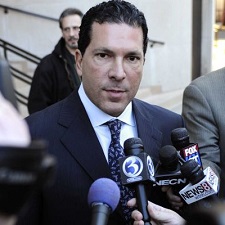 That strategy, however, wouldn’t help the case before the arbitrator. A grievance hearing before an arbitrator is different from a trial before a judge and a jury. A defense lawyer like Tacopina might not understand that difference.
In what was probably the most misunderstood and costly difference between an arbitration and a trial, in 1975, the owners’ legal advisors, led by Commissioner Bowie Kuhn chief lawyer Lou Hoynes, told the owners not to worry if arbitrator Peter Seitz ruled against them in the Messersmith-McNally free-agency case; they could appeal and win in Federal court.
What they didn’t understand was judges generally don’t overturn arbitrators’ rulings. In this instance, the difference is that a grievance hearing requires a different sort of case, not the kind that Tacopina might make in court.
Tacopina did not return telephone calls seeking comment on his role and his familiarity with grievance arbitration, but two other lawyers said he has basically served as the lead lawyer for Rodriguez in the hearing, which has been adjourned until Nov. 18. Ian Penny has been the chief union lawyer in the hearing.
Tacopina at least is visible. An unseen member of the A-Rod team is the rapper turned entrepreneur and player agent Jay-Z.
“When it comes to financing and power, the guy who is behind the defense is Jay-Z,” said a lawyer connected to baseball who has knowledge of all aspects of the game and the business.
Added a baseball official, “He’s very involved. His Roc Nation group is involved. All the people are associated with Roc Nation.”
Roc Nation is Jay-Z’s entertainment venture that has expanded into sports in partnership with the established agency, Creative Artists. Earlier this year, Jay-Z made a big splash by luring Robinson Cano away from Scott Boras.
Two lawyers from the law firm that represents Jay-Z are also part of A-Rod’s legal team. The firm is Reed Smith, and the lawyers are Jordan Siev and James McCarroll. The team has one other New York lawyer, David Cornwell.
Yet another link between Rodriguez and Jay-Z is their New York publicist, Ron Berkowitz. His mutual representation of the two stars prompted speculation that Jay-Z paid for a recent full-page advertisement in The New York Times harshly critical of MLB and Selig, asking “Who Is Public Enemy No. 1 in Baseball?”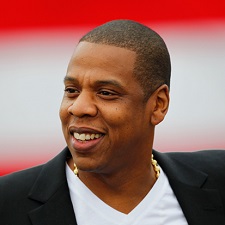
A baseball official said the ad cost $100,000. Another person said the organization that placed the ad, Hispanics Across America (HAA), didn’t have that kind of money.
Berkowitz denied the Jay-Z speculation. “Jay had nothing to do with it other than they’re friends,” Berkowitz said. “It’s 100 percent false. I wasn’t aware of it before it ran. Someone called me from the Daily News.”
A baseball official who commented on the ad wasn’t so certain that it was not connected to the A-Rod team.
“It reads like the lawsuit,” the official said, referring to a lawsuit Rodriguez filed in Federal court against MLB and Selig. “They sound like the facts. It’s all an effort to create distraction. They want this to be a public trial.”
“What you don’t see,” the official added, is Rodriguez saying “I didn’t use performance-enhancing drugs.”
“This,” the official added, “has become a show around the process.” But that show, I suggested, couldn’t possibly influence the arbitrator.
“I don’t even think they’re playing to the arbitrator,” the official said. “They don’t know the case going on. Any point they make in arbitration they go out and make it publicly.”
The official referred to the protesters who have demonstrated outside MLB headquarters on Park Avenue in Manhattan each day the arbitrator has conducted the grievance hearing.
“Alex has nothing to do with the people who are outside or the ad in the Times,” Berkowitz said. “They’re in there to support him. He has nothing to do with that.”
The man who has readily acknowledges his role in the ad and the Park Avenue protests is Fernando Mateo, president of Hispanics Across America.
In the ad, Mateo accuses MLB of using and abusing young Latin players, “selling them a dream of baseball riches.” A double standard, the ad continues, applies to “players of Hispanic heritage. Bud Selig is a disgrace to the game, to the players and our children. He turned a blind eye on issues involving HGH and steroids… Willful blindness should be punishable and Bud Selig and his executives have not been punished. Why?”
That, Mateo said, is why the organization is “fighting for justice” for Rodriguez.”
Mateo has used the Times ad and the protests, he said in a telephone interview, because of MLB’s “hypocrisy in the way they have spin the stories and not told people the whole truth.” He also criticized the news media, saying “they write what they want to write and nobody gets to hear the other side of the story.”
Speaking of the Rodriguez suspension, Mateo said, “Bud Selig pulled a number out of a hat. Who benefits from that?” Answering his own question, he said Randy Levine, president of the Yankees, who would save many millions of dollars if A-Rod were suspended for a season or a season and a half.
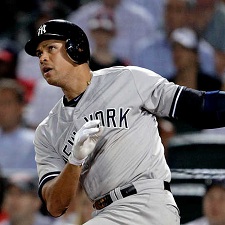 “If you’re going to suspend him,” Mateo said, “suspend him like anyone else. If he’s guilty, suspend him for 60-65 games. Do it but don’t suspend him for 211 games because he’s A-Rod. No one has ever been found guilty and suspended for 211 games.
“You can’t punch someone and get life in prison. That’s what they’re doing with A-Rod. They’re talking it to a level where they’ve never gone. We’re not saying don’t punish him.”
Mateo also was concerned about MLB’s possible intimidation of the arbitrator. “The last arbitrator, in the Braun case, MLB had fired,” he said, “because he sided with the union. He was fired the next day.”
By viewing Ryan Braun’s successful appeal that way, though, Mateo showed a lack of understanding of how the arbitration system works. Either side can fire the arbitrators, who know they are at the mercy of both the owners and the players.
Rob Manfred, baseball’s chief operating officer, was the man Mateo alluded to; he fired Shyam Das, the arbitrator who overturned Braun’s 50-game suspension. Braun subsequently accepted a 65-game suspension for another matter and served it last season.
Manfred is not impressed with the tactics Rodriguez’s representatives have used.
“Everything they have done publicly,” Manfred said, “is intended to deflect attention from whether he used p.e.d.’s and violated the basic agreement in obstructing the investigation.”
Part of Rodriguez’s 211-game suspension stems from charges that he obstructed baseball’s investigation into his connection with a south Florida anti-aging clinic and his acquisition and use of banned drugs from the clinic.
Rodriguez apparently decided to hire his own lawyers to fight his suspension because he was dissatisfied with the union’s representation. One objection he had was a disclosure made last August by Michael Weiner on a radio interview about advising players who might be guilty of the commissioner’s charges to accept suspensions if they were at a certain unspecified number of games.
When I heard about Weiner’s comments in the interview, I was surprised, but I was also certain that he never would have said what he said if he were not afflicted with a deadly brain tumor.
At least Rodriguez didn’t sue Weiner and the union. He has sued just about everybody else.
ADAMS SLIPS INTO MAJORS
Slippery Rock, Pa., used to be the equivalent of a punch line for a joke. When I was in college and working in the sports department of the school newspaper, we ran a college football game of the weak (that’s weAk, in case you missed it), and Slipper Rock State College was often our pick.
Now all grown up as Slippery Rock University, the school, about 50 miles north of Pittsburgh, has taken on a new and attractive reputation. It is the breeding ground of the first baseman and cleanup hitter for the World Series St. Louis Cardinals.
Matt Adams attended Slippery Rock from 2007 until the Cardinals made him the 699th pick in the 2009 draft.
“That was too low; he should’ve been drafted higher,” Jeff Messer, Adams’ college coach, said. “But Matt was happy to be drafted. Since I’ve been here, we’ve had about 30 players sign contracts, but no one had made the major leagues.”
Slippery Rock is a Division II school, and Messer thinks Adams might have been overlooked coming out of high school in Phillipsburg, PA. Adams’ high school coach, who had played for Messer, alerted him to Adams, and nothing more needed to be done.
“I saw one at-bat and I liked him,” Messer said in a telephone interview. “We wanted to get him on campus before anyone came along. We were excited. We knew he was a very good hitter.”
In the summer of his sophomore season, Messer said, Adams went to New England with his son to play in a summer league
“He played for Dan Duquette’s team,” Messer said, referring to the former Boston general manager who is now the Baltimore general manager. “Dan I grew up together in Berkshire County.”
Adams that summer, Messer said, “ended up being the m.v.p. and opened some eyes. The biggest question scouts had was would he be a catcher or a first baseman.”
As a rookie this season, Adams started 63 games at first base and played 74, gaining increased playing time after Allen Craig suffered a foot injury.
Messer, a passionate Red Sox fan from his youth, went to Boston for Game 2 of the World Series, which the Cardinals won.
“Last night,” he said, “I was recognized as being from Slippery Rock and an Adams fan. We’re excited for Matt.”