A couple of weeks ago the Players Association, a.k.a. the union, filed a grievance against four teams – Marlins, Rays, Pirates, Athletics – accusing them of being revenue-sharing cheats. They were not, the union charged, using the money they received under the revenue-sharing plan of the basic agreement for the purpose stipulated in the agreement, that is, improving their team.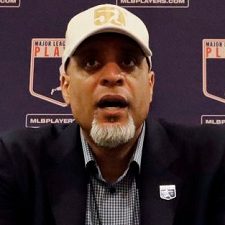
In filing that grievance, the union eschewed another one, the one called collusion, the violation of the agreement that cost the clubs $280 million in the latter half of the 1980s.
Given the peculiar way the clubs have or have not pursued free agents this off-season, the union would have surprised no one had it opted to have accused the clubs of improper treatment of free agents. The weekend before spring training began 90 of 167 free agents – 54 percent — were unsigned, including the most noted names on the roster:
Alex Cobb, Jake Arrieta, J.D. Martinez, Mike Moustakas, Eric Hosmer, Wade Davis, Lorenzo Cain, Carlos Santana, John Lackey, Carlos Gonzalez, Jonathan Lucroy, Andre Ethier, Lance Lynn, Matt Cain, Brandon Morrow, Greg Holland, Jake McGee.
As spring training proceeded, Martinez, Moustakas, Hosmer and some of the others reached agreement on contracts; just last Saturday Lynn reportedly agreed to a contract with Minnesota. But Arrieta, the National League Cy Young award winner in 2015, and Cobb, a solid winning pitcher with Tampa Bay, were unsigned at the start of the week as were about 40 other free agents, or close to a quarter of the players who became free agents after last season.
What’s going on here? Are the owners engaging in another attempt to undermine the free-agents market? Union officials and lawyers scrutinized the clubs’ behavior in their dealings with free agents and evidently didn’t come up with the smoking gun they needed for a successful grievance. They may, however, want to look again.
The clubs have been up to something. It was more than coincidence that all of those free agents remained unsigned after spring training began. The way clubs began signing free agents after spring training began suggests that the start of spring training was the stipulated signal saying it’s OK to sign free agents now.
By waiting, clubs gained a signing edge on players, who begin getting nervous when baseballs are being thrown and hit and they aren’t part of it.
By inducing a nervous feeling in the unsigned players, clubs feel they can get the upper hand in contract negotiations. Players want to sign and join their new – or old – teammates on the green grass in Florida and Arizona.
Clubs will do anything to keep salaries down. That’s why players don’t like salary arbitration. They have to sit in the room listening to the worst things general managers can say about them.
Whatever scheme they concocted for this off-season, the owners were far more clever than they were in the mid-‘80s. Nothing needed to be said in 1985 after George Steinbrenner let free-agent Jack Morris leave the owner’s Tampa hotel without a contract. It was probably the most agonizing act Steinbrenner ever had to commit.
Steinbrenner’s good pal, Jerry Reinsdorf, chairman of the Chicago White Sox, was instrumental in any questionable act the owners committed. Reinsdorf has been determined for years to take control of payrolls, however it has to be done. When the owners were caught cheating in 1985, ’86 and ’87, he remarked to a newcomer, “We did it better the first time.”
He alluded to a successful collusion in the early ‘80s that the union never caught wind of. Reinsdorf, at 82 and nearing 40 years in baseball, would like nothing more than to bring payrolls down as he wobbles out the door.
Management officials, of course, deny being responsible for the slow pace of signings. They blame Scott Boras, the agent, who this year represented Hosmer, Moustakas, Martinez, Arrieta and Holland.
Boras is noted for his slow pace of negotiations, refusing to play the owners’ game of holding down salaries. He was not accessible for comment last week. Neither was Tony Clark, executive director of the union.