The vultures are circling overhead. They smell blood. Well, I don’t know enough about vultures to know if they can actually smell blood, but they smell or sense something that tells them someone is dying. Anyway, in this instance it’s not the literal birds of prey who are circling but human vultures.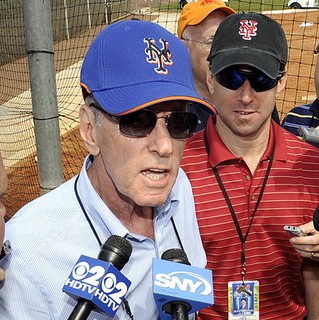
They smell Fred Wilpon’s blood, and they are drooling at the prospect of picking at his bones. These human vultures sense a disaster in waiting. Like every other owner of a professional sports team, Wilpon faces uncertainty because of the decaying economy. But Wilpon’s problems go beyond the state of the national economy.
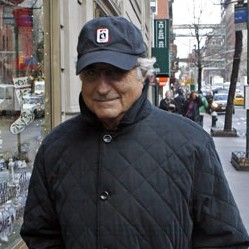
He has a Bernie Madoff problem, that is, he gave a lot of money to the prince of investing, and Madoff made off with it.
Madoff himself has told authorities that he squandered $50 billion of investors’ money. It’s a mind-boggling number. It’s an incomprehensible number. All 30 major league teams combined are not worth $50 billion.
Madoff is accused of running what authorities say would be the biggest Ponzi scheme in the nearly 100-year history of Ponzi schemes. The name comes from Charles Ponzi, who in the 1920s ran a postage stamp speculation scheme that duped investors. The idea behind the scheme is for its operator to pay off investors with money from new investors. The operator has to generate new investments constantly, or the scheme collapses.
Once Wilpon began investing his and Sterling Equities money, he and Madoff became close friends. It was a natural relationship. Both were successful businessmen, and both had become prominent Jews in the New York business world.
Madoff was among the guests last Sept. 27 at the Wilpons’ 50th wedding anniversary party at their home on Long Island. When Wilpon mentioned Madoff to other friends, the real estate entrepreneur/baseball owner refered to the investment whiz as a genius, as in “You have to invest money with him. He’s a genius.”
Wilpon was not an accessory to Madoff’s scheme any more than any other victim. Madoff duped him like he did all of the others – individuals, academic and charitable institutions, investment firms. Wilpon has acknowledged losing money, but he hasn’t said how much. Estimates in baseball circles are $400 million to $500 million.
It’s those numbers that prompt people to speculate that Wilpon will have trouble financing the Mets’ lavish expenditures. It’s those numbers that have the vultures salivating, ready to pounce with offers to take the Mets off Wilpon’s hands.
But Wilpon didn’t invest Mets money; he invested Wilpon and Sterling Equities money. If the Mets were Wilpon’s only enterprise, he might have a problem because it would have been Mets money he invested.
 Wilpon has not spoken publicly on the matter. He has spoken to Commissioner Bud Selig, and a baseball official said Selig is satisfied that Wilpon will not have a problem. And at a news conference the other day, Jeff Wilpon, the team’s chief operating officer, told reporters neither the Mets nor a part of the Mets is for sale.
“We have no reason to sell,” he said.
That was encouraging news for baseball. Two teams are on the market, and that’s enough at any one time. Tribune Company, whose primary assets but not its baseball team, are in bankruptcy, is selling the Cubs, and John Moores, owner of the San Diego Padres, has hired an investment firm – not Bernie Madoff’s – to find a buyer.
Here are some figures that show why Wilpon doesn’t have to sell the Mets. This year the Mets’ total payroll for its entire 40-man roster, which is the way the commissioner’s office computes payrolls now, was $143 million, third in the majors behind the Yankees ($222 million) and the Red Sox ($146 million).
The Mets expect their 2009 payroll to be similar. The Mets are moving to a new park. Its capacity will be 45,000, meaning if they sell out every game, total attendance will be 3.6 million.
This year’s average ticket price was $36.58. If the average ticket price rises as much proportionately as it did this year, the 2009 average will be about $46, though it figures to be higher because seats at Citi Field will be more expensive. Making the math easy, let’s use $50. That average would produce $180 million in ticket revenue, more than the payroll.
The Mets will also receive all of the revenue from concessions and most of it from parking, and they have a share of SNY, their cable network. In addition, their revenue sharing payment will be reduced by a portion of their expenses in building Citi Field.
Many of the individuals and organizations that Madoff conned are far worse off than Wilpon. Some foundations have announced that they have to close. Yeshiva University stands to lose as much as $125 million. The Carl and Ruth Shapiro Family Foundation expects to lose $145 million. How about the Fairfield Greenwich Group, a feeder financial fund, which is said to be in for $7.5 billion?
These and other victims should have the “sidelight” that Wilpon has. As long as he didn’t invest David Wright and Jose Reyes with Madoff, the Mets will be all right.