Commissioner Bud Selig likes Mark McGwire. He has always liked Mark McGwire. There’s nothing wrong with that. I like Mark McGwire. So do a lot of people.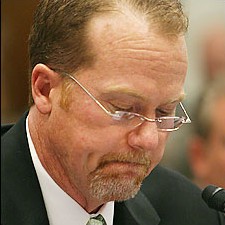
Selig’s feeling for McGwire, though, blurred the commissioner’s vision and deterred him from acting against questionable performance-enhancing substances before Congress pushed him and the players union to do something about them.
Selig has said that he didn’t know players were using steroids, and I believe him. However, he knew that McGwire was using androstenedione and even though he must have at least wondered about its purity he chose to ignore it.
Late in the 1998 season, as McGwire was in the process of shattering baseball’s single-season home run record and after he acknowledged using andro, a legal steroids precursor, I asked Selig about McGwire and andro. Not that McGwire was doing anything illegal, but there were questions about the supplement, which was later banned.
“I’m not going to do anything to tarnish Mark’s accomplishment,” Selig told me.
For Selig to have said that, he must have had a question in his mind about the legitimacy of the supplement. Otherwise, why even think in terms of tarnishing McGwire’s accomplishment?
If Selig had done something at the time, whatever that could have been under the existing circumstances, the commissioner might have spared the man he liked so much the agony and the humiliation he endured for five years as a result of his refusal to “speak about the past” to a Congressional committee in March 2005.
McGwire ended his silence this week, though most likely too late to salvage his chances of gaining election to the Hall of Fame. Had Selig ordered an instant study of andro in 1998, he would very likely have already presided over McGwire’s induction into the Hall of Fame.
By his own admission, McGwire had already used steroids by the time he and andro became an item. But players were not being tested for steroids. In other words, McGwire would have faced no threat of punishment.
So Selig didn’t do his friend any favors by withholding action on andro so as not to “tarnish Mark’s accomplishment.”
 When I reminded Selig last year of his comment, he didn’t deny it but he declined to discuss it. Nor did he mention it in his statement Monday reacting to McGwire’s admission. He did not say “I had a suspicion, or at least a feeling, in 1998 that Mark was doing something wrong, but if he was I didn’t want to tarnish what he was doing or know anything about it then.”
Now that he has admitted his use of steroids, McGwire needs a dose of reality that would allow him to acknowledge that the steroids he used just might have helped him hit his many mammoth home runs.
In his hour-long interview with Bob Costas on the MLB network, he denied any link between steroids and home runs. He attributed his home runs to his shortened swing and his enhanced knowledge of pitchers and hitting. In other words, he did it all himself with his “God-given talent;” the steroids, he said, were for health reasons, not for hitting purposes.
But the important thing is McGwire admitted having used steroids. He had never denied it; he simply refused to address the subject, as in telling Congress, “I’m not here to talk about the past.”
Confession is said to be good for the soul, but it never seems to be good enough for some of my colleagues. Alex Rodriguez confessed last winter to having used steroids, and members of the news media ridiculed him for not telling the truth or at least the entire truth.
McGwire confessed this week to having used steroids and again it wasn’t enough for the media observers. They were not satisfied with the extent of McGwire’s admission. Not enough details, they complained. A headline on ESPN.com said, “Mark McGwire finally said he used steroids, and while his confession lacked a lot of details, he did seem remorseful.”
I think those critics miss the point, which is not the details but the admission. It is only a prurient interest that prompts reporters to want more details. I don’t think it’s necessary for us to say all right, interesting admission, now keep going and tell us what, when, where, with whom.
Maybe I’m missing something, but for McGwire to admit that he used steroids for years is enough, even with his failure to understand that they helped him hit home runs.
McGwire takes his place in the lineup of steroids stars who have confessed: Jason Giambi, Andy Pettitte, Rodriguez, McGwire.
Barry Bonds, Roger Clemens and Sammy Sosa remain the most recalcitrant holdouts. They believe as long as they offer no confessions, they can’t be labeled steroids cheats, though in the case of Bonds and Clemens, if they admit to having used steroids, they face the threat of prosecution for perjury.
Denial never seems to outlast the crime. Pete Rose learned that fact the hard way. For 15 years he denied that he bet on baseball games despite hard evidence uncovered by John Dowd, the Washington, D.C., lawyer, who conducted baseball’s investigation of Rose.
Rose denied betting on baseball the day he was suspended in 1989 and continued to deny, deny, deny until the day in 2004 his book was published. Then he admitted it, but it was too late. By then, he had lost his credibility and his chance to enter the Hall of Fame.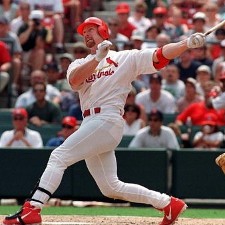
Will McGwire’s admission have an impact on his chances to be elected to the Hall? In four years on the writers’ ballot, McGwire has yet to receive 25 percent of the vote in an election where players need 75 percent to be successful.
McGwire, as well as others in his position, face a predicament. Some writers say they won’t vote for a player as long as he lies and denies having used steroids. Then he admits having used, and they say how can I vote for a guy who admits to using steroids?
If the voters take their role seriously, which I believe most do, deciding how to view players in the steroids era, particularly those who are known or seriously suspected to have been users, is an extremely difficult task.
I’m sure there are plenty of fans who would be delighted to take the writers’ places and vote for the Hall, but it’s one thing to say “this is what I would do if I were voting” and another to take pen in hand and mark the ballot. It’s like sitting in the stands at a game and saying “this is what I would do if I were managing” and sitting in the dugout and having to make the managerial decisions. It’s not the same, and it’s not easy.