John Smoltz and Brad Penny began last season as pitchers for the Red Sox, Smoltz on the disabled list, Penny on the active roster. Both veterans pitched for the Red Sox during the season, and both were released by the Red Sox during the season.
Smoltz, 11 years older than Penny, is not playing this year. He is analyzing. Penny is pitching, and he is pitching well. Not that 10 days make a season, but better to give up one earned run in two starts and 14 innings than 11 earned runs in 9 innings, which is what Penny did in his first two starts for the Red Sox.
In 24 starts overall for the Red Sox Penny had a 7-8 record and a 5.61 earned run average, and then they released him. The Giants signed the right-hander four days later, and he made six starts for them, compiling a 4-1 record and 2.59 e.r.a.
Smoltz had a similar experience, pitching poorly for Boston but faring more effectively for his second team, the Cardinals. But it was Penny whom the Cardinals chose to sign, paying him $7.5 million for this season with the potential to earn an additional $1.5 million if he pitches 204 innings.
John Mozeliak, the Cardinals’ general manager, cited two reasons for their signing Penny:
“One, Dave Duncan had always had interest in him and that’s something that weighs into the decision-making. The other thing was he did underperform in Boston at times but ended up throwing well in San Francisco. We figured getting him out of the A.L. East might help.”
Duncan is the legendary St. Louis pitching coach who has a history of rejuvenating pitchers. Penny seems like a classic subject for his magic.
Penny has plenty of company in pitchers who are returning from injuries or trying to come back from poor performances and have started this season impressively.
Ben Sheets didn’t pitch at all last season following mid-winter elbow surgery, but he has already demonstrated that he hasn’t forgotten how pitch. In his first three starts for Oakland he had a 1-0 record and a 2.65 e.r.a.
The Athletics, who signed Sheets to an uncharacteristic $10 million contract, had reason to wonder about their expenditure when in a mid-March exhibition game he faced only 10 batters and all of them reached base and scored. But since the season started he has had three strong starts, including his most recent in which he pitched six shutout innings against the Orioles.
Justin Duchscherer of Oakland is another pitcher who is back after missing all of last season. He had elbow surgery and just to make matters worse he suffered from clinical depression.
But he has started two games this season and has won one, shutting out Seattle on two hits for 7 1/3 innings.
 Shaun Marcum of Toronto is in that comeback group, and the Blue Jays liked what they saw right off the bat. Gaining status as the team’s No. 1 starter, Marcum began opening day with 6 1/3 hitless innings against Texas. A walk, Vladimir Guerrero’s single and a Nelson Cruz home run quickly wiped out that start and a 3-0 lead.
However, in that start and two starts since (0-1, 4.05) Marcum has demonstrated that his right elbow is sound following his recovery from Tommy John surgery. Speaking of which, if I may digress, I once told John that if he received royalties every time the surgery is mentioned he would be wealthier than some of the pitchers who have had the operation that Dr. Frank Jobe pioneered with John’s elbow in 1974.
Not all pitchers who are attempting comebacks are coming back from injuries. Some pitched so ineffectively they might as well not have pitched. Two pitchers who labored in that category were two 26-year-olds who have never matched early-career performances.
As a rookie in 2006, Francisco Liriano had a 12-3 record for the Twins, and the next season Fausto Carmona had a 19-8 record for the Indians in his first full season as a starter.
Late in his rookie season, Liriano suffered an elbow injury and required – what else? – Tommy John surgery. He missed the 2007 season but came back to become the Twins’ starting pitcher in the 2009 season opener. However, his record for the season was 5-13.
A hip ailment undermined Carmona’s 2008 season, and last season was divided by a seven-week visit to the minor leagues in June and July. His 5-12 Cleveland record was similar to Liriano’s 5-13 with the Twins, both in 24 starts.
Both, however, have started this season in a more promising way, if their teams are looking for positive signs. Each has a win in two starts, Liriano with a 2.08 e.r.a., Carmona 3.21.
Perhaps the most closely watched comeback pitcher will be Dontrelle Willis, who won 22 games for the Marlins in 2005 and 23 the next four seasons for the Marlins and the Tigers. With Detroit the last two seasons, Willis had a 1-6 record and an 8.27 e.r.a.
In two starts this season, Willis has no decisions and a 4.91 e.r.a.
Can Barry Zito be considered a comeback pitcher? Yes, the way he has pitched for the Giants. In three years with them, Zito, a 23-game and Cy Young award winner for the Athletics in 2002, has a 31-43 record and 4.56 e.r.a.
The left-hander has begun this season in a more promising manner. In each of his first three seasons in San Francisco, Zito lost his first two starts. This season he has won his first two starts.
THEY’RE BACK, TOO
This is a different group of pitchers: Jake Peavy, Carl Pavano, Freddy Garcia.
All three have endured injuries in recent seasons, but all were healthy and pitched all or part of last season. The trick for them this season is to show they are prepared to match or exceed what they did in their comeback season.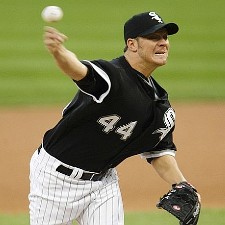
Peavy had a 6-6 record and 3.97 e.r.a. in 13 starts for the Padres before injuring an ankle. Before he was ready to pitch again, the Padres traded him to the White Sox. Before he was ready to pitch for the White Sox, Peavy was hit on the elbow by a batted ball in a rehabilitation start.
Once he was ready to pitch for the White Sox, he breezed to a 3-0 record with a 1.35 e.r.a. in three starts.
Peavy has not pitched as well in three 2010 starts. He has no decisions but a 6.00 e.r.a.
Pavano became notorious for being constantly hurt after signing a four-year, $39.95 million contract with the Yankees. But free of physical mishaps and the Yankees, he actually pitched decently last season. He compiled a 9-8 record in 21 starts with the Indians, then was traded to Minnesota, where he had a 5-4 record in 12 starts.
He has started twice this season and has been even better, winning both games and posting a 1.35 e.r.a.
Garcia basically lost two seasons, 2007 and 2008, with arm trouble but worked his way back last season, making nine starts with the White Sox and producing a 3-4 record and 4.34 e.r.a. He showed enough to earn a spot in their rotation this year (and held onto it despite a horrid finish to spring training).
But if his first two starts this month are any indication, he may not hold the spot for long. Garcia lost both games and emerged from them with an 8.10 e.r.a. He allowed only two runs and three hits in seven innings against Minnesota, but Toronto battered him for seven runs and eight hits in three innings.
CHARLIE AND THE FUTURE JUSTICE
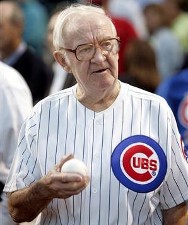 The announcement that John Paul Stevens was retiring as a justice of the United States Supreme Court prompted Marvin Miller to recall a meeting he had in 1967 with Stevens (pictured at Wrigley Field in 2005). Stevens, a Chicago lawyer at the time, represented Charles O. Finley, who owned the Kansas City Athletics.
It seems the Oakland players had been a rowdy bunch on a team flight, and when Finley received a letter from the airline about the incident he was incensed. He was incensed because he was in the process of trying to move the team to Oakland and was afraid Commissioner Spike Eckert would not allow him to because of the bad publicity the players had generated.
Finley acted swiftly, firing manager Alvin Dark, releasing his first baseman, Ken Harrelson, and suspending other players.
The union, which was in its infancy, filed an unfair labor practice against Finley. Eckert, Miller said in a telephone interview on his 93rd birthday April 14, asked him to meet with Finley in the commissioner’s office. So Miller and his general counsel, Richard Moss, met with Finley and Stevens.
“We met all night,” Miller recalled. He also recalled that Finley would periodically leave the office to go to the bathroom and when he came back he was noticeably calmer.
“I asked Stevens what was going on,” Miller related, “and he said Finley was taking some medication. It helped.”
“Stevens was mostly helpful,” Miller added.
The matter was resolved, Eckert was pleased and Finley was allowed to move the team.