What to make of the Ron Washington affair, scandal, bizarre development? Label it as you wish. Just please explain it to me.
A 57-year-old man decides to try cocaine for – he says – the first time – and days later his number comes up in the random testing program of Major League Baseball, in time for the cocaine to still be in his system. Oops, positive test.
“Horrible luck,” a baseball official, as skeptical as I am about the first-time business, chortled facetiously.
If that had been Alex Rodriguez or Mark McGwire saying they tested positive after using steroids for the first and only time, the news media and fans would have laughed him off the stage. Neither used that excuse and still met with scorn for what they did confess.
Given MLB’s policy on drugs of abuse, Washington would never have been identified as a drug abuser if not for an excellent job of reporting by Jon Heyman of SI.com. When I was a reporter, I always enjoyed making announcements of developments that teams or leagues or people didn’t want announced, and I appreciate such announcements from other reporters. This was one announcement MLB, Washington and the Texas Rangers didn’t want to be made, and Heyman made it for them.
I have mixed feelings about the discovery of Washington’s cocaine use. I’m not a fan of baseball’s drug policies, either its unilaterally implemented policy on drugs of abuse or its negotiated policy on performance-enhancing drugs. But I especially don’t like the double standard baseball has created with its dual policies.
Under the performance-enhancing program, baseball identifies players, major and minor league, whom it disciplines for positive tests. With rare, if any, exception, it does not identify first-time abusers of recreational drugs. If someone tests positive a first time for using drugs, the commissioner decides if the player should be identified.
As far as I know, Bud Selig has made no such identifications. Instead, positive tests call for treatment and counseling. That was the extent of Washington’s requirement.
I am told that Washington is not the only person who has tested positive for recreational drugs in recent years. Some players have tested positive, an official told me. However, no one else has been identified. Until the SI.com report, this was a better kept secret than the list of players who tested positive for steroids in 2003.
Under the commissioner’s plan for drugs of abuse, major league players can be tested only for cause, but all non-playing personnel and all minor league players are tested because the union doesn’t represent them.
But the fact that the union doesn’t represent them means the commissioner can identify abusers at his discretion. Managers have no protection. If Selig had announced that Washington tested positive for cocaine last July and was being suspended, it would have sent a message loud and clear to others. If a manager can get caught and be suspended, beware.
But managers and coaches who test positive for cocaine are not identified. Players who test positive for steroid use are, and they are suspended.
 “There’s a difference between drugs of abuse and performance-enhancing drugs,” said Rob Manfred, baseball’s chief labor executive. “Drugs of abuse are generally substances where there is an element of disease, a disease that needs to be treated, and performance-enhancing drugs are not addictive. They are more of a threat to the integrity of the game because they are taken to affect the playing of the game.”
But there is a difference with a manager who tests positive for cocaine. Because the drug is illegal, it involves a criminal element. A criminal element can lead to problems of integrity, a manager putting himself in position to provide information to bookies and other gamblers, perhaps being forced to make moves during games that will affect the outcome of the games.
Who, then, is a greater threat to the game, the manager who uses cocaine or the 17-year-old kid in the Dominican summer league who uses steroids? I wanted to ask Selig that question, but he didn’t call back. I myself have no problem answering that question.
“There are differences between players and field managers,” Manfred said. “That can cut in either direction. The manager has responsibility for running the team, but a player can be in a more dangerous position. A player can pitch while under the influence of drugs.”
That event purportedly happened if you believe Dock Ellis, a free spirit of a pitcher, who has long maintained that he pitched a no-hitter for Pittsburgh against San Diego in 1970 when he was under the influence of LSD.
Washington, however, has made no such grandiose claims. He used cocaine only one time, he said. There’s no risk in his getting caught up with the wrong crowd using cocaine only one time. And Pete Rose denied betting on baseball games for 15 years until he admitted that he bet on baseball games.
Maybe Washington is being truthful about his cocaine use. But reporters and fans didn’t believe Rodriguez and they didn’t believe McGwire about their admitted use of steroids. Doesn’t Washington deserve at least the same degree of skepticism? Does he have a more honest face than the others? Does he get a pass because he said he called the commissioner’s office after he was tested to alert officials to the likelihood of a positive result?
It has been noted, perhaps by Washington himself, that he hasn’t tested positive since that one instance around last year’s All-Star break. That makes sense. If he had been using cocaine more than that one time, he stopped once he was caught. It would be far more revealing to know how many times he might have tested positive before that one instance.
Washington declined to talk to Heyman about the reasons that he tried cocaine “because he didn’t want his family to hear about it in the media.” Why didn’t he inform his family and then explain it publicly? I assume by now he has told his family, but I am not aware that he has said anything further publicly about his cocaine use.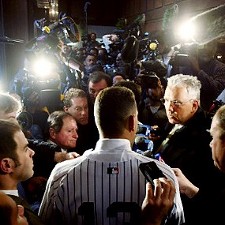
It would be more instructive to learn why a 57-year-old man with a lifetime career in baseball would use cocaine than hearing Rose admit that he bet on baseball games. It would be more instructive than knowing who injected steroids in A-Rod’s butt, which reporters insisted he tell them.
I can understand why Washington would say he used cocaine only once; he was safe in saying it because baseball had no evidence to the contrary. But how can he expect us to believe that tale? He used it one time, and it just happened that his use coincided with the only time he was tested? Let the VORP guys calculate the odds of that happening.
While Washington hasn’t explained his cocaine use, he has told other interviewers that he used amphetamines and marijuana when he played. There’s nothing exciting in those admissions. What players didn’t do those things?
Baseball had not yet made amphetamines illegal when Washington played. They were the pill of choice for players for decades, and club owners knew they were abundant in their clubhouses. That would include Selig when he owned the Milwaukee Brewers, but he didn’t act to have them banned until Congress made him do it.
It was George Mitchell’s report of his steroids investigation that prompted Selig to institute testing for drugs of abuse for everyone but major league players.
“Ron’s situation was addressed appropriately from a treatment perspective and additional testing,” Manfred said.
But there’s still the matter of publicizing positive tests for performance-enhancing drugs by Dominican and Venezuelan teen-agers. Just last Thursday Selig’s office issued this news release:
“The Office of the Commissioner of Baseball announced today that two Minor League players have been suspended for violations of the Minor League Drug Prevention and Treatment Program.
“Cleveland Indians Minor League pitcher Jeffry Cleto has received a 50-game suspension after testing positive for metabolites of Stanozolol, a performance-enhancing substance. The suspension of Cleto, who is currently on the club’s Dominican Summer League roster, will be effective at the start of the 2010 season.
“Chicago Cubs Minor League outfielder Gregorio Robles has received a 100-game suspension after testing positive for metabolites of Stanozolol, a performance-enhancing substance. Robles has now tested positive twice for a banned performance-enhancing substance. The suspension of Robles, who is currently on the club’s Dominican Summer League roster, will be effective at the start of the 2010 season.
Despite appearances, Manfred disagreed with my view of a double standard.
“We have one standard,” he said about the policy on drug abuse. “We have a program in the minor leagues that was not collectively bargained that has exactly the same provision. Making a double standard when we have one policy for everyone is creating your own double standard.”
But there are two substance-abuse plans, and they have different ramifications. Identifying cocaine-using managers would not generate for baseball the positive publicity it seeks from showing how tough its steroids program is.
COCAINE REVISITED
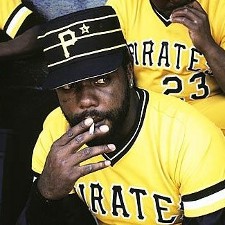 With debate and controversy over steroids dominating baseball’s drug talk in recent years, who would’ve thought that cocaine could make a comeback?
It was 25 years ago that cocaine was the topic of the day. The issue reached a climax with two trials in Pittsburgh in which two men were convicted of selling cocaine to major league players.
Among the players who took the witness stand, first having been granted immunity, were Dale Berra, Lonnie Smith, Keith Hernandez, Dave Parker, Jeff Leonard, Enos Cabell and John Milner. Those players and others who were involved with cocaine, a total of 21, were disciplined by Commissioner Peter Ueberroth.
The players had their choice of paying part of their salaries (5 or 10 percent, depending on the seriousness of their cases) and serving community service or being suspended. No one opted for suspension.
Ueberroth, however, disregarded testimony by Berra and Parker that they got amphetamines from Willie Stargell and Bill Madlock. He said he didn’t believe their testimony, though he believed other parts of what they said under oath.
Milner testified that when he played with Willie Mays, Mays had bottles of “red juice,” which was a liquid form of amphetamines. Ueberroth didn’t have to pass judgment on Milner’s testimony because Mays was retired.
The Federal district judge in each trial had some interesting comments when they sentenced the convicted distributors.
Judge Gustave Diamond criticized Shea Stadium fans for applauding Hernandez when he returned to the Mets after testifying.
Judge Maurice Cohill Jr. criticized officials of major league teams, saying their “blindness” to the drug problem had done incalculable damage to the game.
WILLIE DAVIS REMEMBERED
The recent death of Willie Davis, the Dodgers’ fine center fielder, brought back a memory of a spring day in 1967, the first year I covered spring training for the Associated Press. As part of a tour of camps, I walked innocently into the Dodgers’ camp in Vero Beach, Fla., and left with an incendiary article.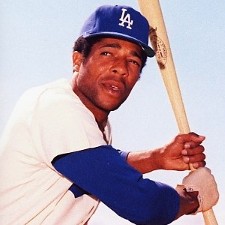
The Dodgers had won the National League pennant the previous two years, and that winter they traded their captain and shortstop, Maury Wills, to the Pirates.
It was raining when I reached the Dodgers’ clubhouse, and the players were either standing around or sitting at their lockers. I had never met or talked to Davis, but he was a veteran member of the team and seemed to be the appropriate person to address the question to: How much will the Dodgers miss Wills?
“Losing Maury is no big loss,” Davis said. “It might even help us more. He wasn’t a bad guy, but a lot of the guys on the team didn’t like him and I was one of them.
“I think Maury got a little too big for his pants. He was always trying to exert more power than he should have. In a way we might be hurting, but in other ways we might not be as bad. I might be saying these things because I don’t like him. I never did.
“I imagine a lot of the other fellows felt the same way. It is just that nobody else has said it. He knows I didn’t like him. I told him so. I am not knocking him as a ball player. You got to give the guy credit. He made himself a major leaguer. But as a person I couldn’t see him.”
All right, Willie, what do you really think of Wills?
I had no idea and never learned why Davis popped off about Wills. I suppose no one had asked him the question, he was relaxed waiting for the rain to stop and he said what was on his mind. I do know that the Los Angeles writers who covered the Dodgers were irate, as they should have been. Beat writers hate being scooped by an out-of-town writer on a story that affects the team they cover.
Why would he make those comments to me, a young kid from the A.P. whom he didn’t know, and not them? I guess they didn’t ask him.