Since last winter Bud Selig has been preaching economic restraint for all of Major League Baseball in light of the state of the nation’s economy, and the Atlanta Braves have become the latest team to drink the commissioner’s KoolAid.
I’m not suggesting that Selig is wrong for being concerned about the economy, but did the Braves, long one of the classiest organizations in the game, really have to use his warnings to justify one of the most classless moves in recent years?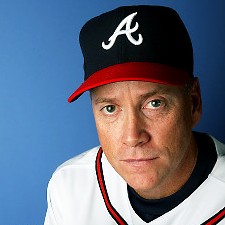
The Braves released Tom Glavine this week to save themselves a couple of million dollars. In the context of the real world and the millions of workers who are losing their jobs, a couple of million would represent a lifetime of earnings. In baseball, however, the amount barely reaches the average player salary.
The Braves nevertheless have treated Glavine as just another worker. Forget what he did for them for many years, a decade and a half; forget that when he goes into the Hall of Fame five or six years from now he will wear a Braves cap; forget what a resource he could be to the team’s young pitchers; forget that he is an upstanding, model citizen of the Atlanta area who chose to finish his career at home.
None of that mattered to the Braves. They saw a chance to save a few dollars, and they grabbed it. Although they have acted like so many other employers in the country, blatantly and brutally shedding employees, they offered Glavine no severance package, no buyout.
They have treated Glavine the way they treated John Smoltz last winter. Like Glavine, Smoltz was an integral part of the Braves’ 14-year run of division titles, but they invited the free-agent pitcher to leave by making an offer they knew he would refuse.
While Smoltz went to Boston, Glavine accepted the Braves’ meager offer because he wanted to play and finish his career in Atlanta. His contract called for a $1 million guaranteed salary, and he will get that. He will not get the bonuses for time on the Braves’ active 25-man roster: $1 million on the first day on the roster and $1.25 million each for 30 days and 90 days on the roster. The money from those last two bonuses would have been deferred without interest so the cost to the Braves would have been less than $1.25 million each.
Glavine, recovering from elbow surgery and an ensuing shoulder ailment, made three minor league rehabilitation starts and apparently expected to join the Braves soon. But they had reached a different conclusion. His minor league statistics, which included shutout efforts in two of the starts (six innings as recently as Tuesday night), did not impress the Braves.
“We had hoped over the course of his rehab,” general manager Frank Wren said, “coming back from surgery and the setback he had in April that he would be able to return to what we thought was the ability to get major league hitters out. But the evaluation of his rehab starts didn’t reflect that. We didn’t have a single person who saw him pitch who thought that was possible.”
Six or seven Braves personnel watched Glavine in three rehab starts, Wren said, and were unanimous in their assessment of the 43-year-old left-hander.
“We were hoping it would improve but nothing changed,” Wren said. “He didn’t show any improvement.”
“It’s unfortunate,” Wren added. “It’s not the type of decision you look forward to making as general manager.”
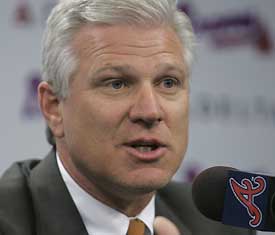 I asked Wren in the telephone interview if money played a part in the team’s decision to jettison Glavine. “Obviously the money always plays a factor,” he said. “But that was a secondary factor. If we thought he could help our club, that would not be a factor. When you have seven people watch him and they don’t think he can help, money does become a factor.”
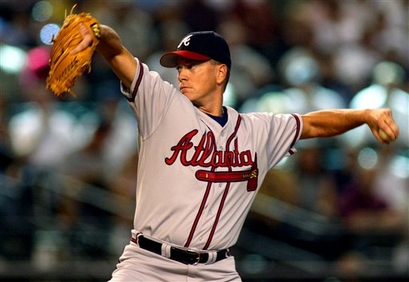
Should the Braves have given Glavine two or three starts to show unequivocally whether he could still get major league hitters out? It’s easy for us to say yes, but the Braves are playing for a playoff spot and feel they can get more help from a younger, though inexperienced, pitcher.
They have scheduled Tommy Hanson, a 22-year-old right-hander, to start against Milwaukee this weekend. Think Hanson will feel extra pressure beyond making his major league debut as the kid who replaced Tom Glavine?
Pressure will be on Wren, too. If Hanson pitches well, the general manager will look good. If he pitches poorly, Wren will be criticized in Atlanta for not giving Glavine a chance.
Meanwhile, what will the Braves do with the money they saved by releasing Glavine?
Well, they can use it to help pay Nate McLouth, the outfielder they acquired from Pittsburgh the same day they released Glavine. McLouth signed a three-year, $15.75 million contract with the Pirates last February, and the Braves stand to owe $13.6 million of that.
“The McLouth contract is not a huge amount of money we’re taking on,” Wren said. “It’s not much of a factor at all. When we made the decision on Tommy, we didn’t know if we would be making the trade.”
Glavine and his agent, Gregg Clifton, did not return telephone calls seeking comment on the Braves’ decision and on the pitcher’s plans for the future, but mlb.com quoted Chipper Jones as saying, “He feels he can still pitch. He feels he can still get people out. And he’s probably got a little bit of a sour taste in his mouth and wants to go pitch somewhere.”
And at least initially Glavine was thinking of pitching somewhere. Wren said he gave Glavine the option of retiring or being released, and he chose release.
What Glavine does is none of my business, but now that the Braves have shut their door to him, I’m not sure Glavine, with 305 career victories, has anything left to prove. He could, however, create a dream scenario for fans everywhere.
If he retires, he will go on the Hall of Fame ballot in 2013 with Greg Maddux, his teammate with the Braves for 10 years, 9 division championships, 1 World Series title, 4 Cy Young awards and a combined 347 victories. And if Smoltz should not make it back with the Red Sox later this season, he could make it a trifecta – the three Atlanta amigos marching into the Hall of Fame arm in arm.