Major League Baseball has undergone such a huge change in club ownership in recent years that less than a handful of owners remain from what was perhaps the darkest days in the game’s history.
If you think I refer to the 1919 so-called Black Sox scandal, you would say of course the men who owned teams at that time no longer own teams, or anything else, for that matter. They are no longer with us.
But I’m talking about a more recent time, 1985 through 1987, the collusion era. That time, to me, was baseball’s darkest days, a time when not just one team cheated but when all of the teams cheated, not to mention the commissioner, Peter Ueberroth, and other baseball officials and all of their lawyers.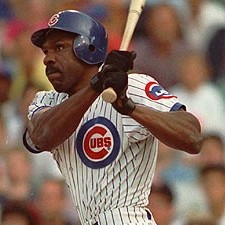
When several members of the White Sox conspired to throw the 1919 World Series, baseball had no commissioner. The action of those players was what prompted the owners to hire a commissioner.
The current commissioner, Bud Selig, was one of the owners, in fact a leading owner in labor relations, but he has never acknowledged that the owners conspired and colluded against free agents in three successive winters.
Selig has apparently adopted the stance of a predecessor, A. Bartlett Giamatti, who when asked about collusion said he had seen the same set of facts that the arbitrators saw and he didn’t see collusion.
It’s possible that I have missed somebody, but the only management people I know of who have acknowledged collusion are Fay Vincent, the former commissioner, and Richard Ravitch, a former chief labor negotiator for the owners and now lieutenant governor of New York State.
Because current ownership is mostly post-collusion, I would like to offer the owners a seminar on collusion – at no charge — explain what it was all about, the details of how and why it happened, how the owners reached agreement with the players on a new labor contract after a brief strike, then violated the contract only three months later with their conspiracy of collusion.
Besides having the owners at the seminar, I would invite Selig and I would extend a special invitation to officials at the Hall of Fame because their publication prompted me to think again about the dark days of collusion and also prompted this column.
In this year’s induction issue of the Hall’s bi-monthly magazine “Memories and Dreams,” an article about Andre Dawson discussed his signing with the Chicago Cubs as a free agent in March 1987.
“But after 10 full seasons on artificial turf with the Expos, Dawson’s knees were failing,” the article said. “So in the winter of 1987, he signed a blank contract with the Cubs – turning down more money elsewhere so he could play on the grass at Wrigley Field.”
This is revisionist history or plain old fiction at its finest.
First, Dawson did not sign in the winter of 1987. That mistake is critical because of the circumstances surrounding the signing.
Second, Dawson’s knees were not a factor in his signing with the Cubs.
Third, Dawson did not turn down “more money elsewhere” to sign with the Cubs.
Fourth, the article omitted the most critical factor in Dawson’s decision to sign with the Cubs – collusion.
Dawson filed for free agency Nov. 12, 1986. Sensing that the Cubs’ general manager, Dallas Green, was interested in Dawson, the outfielder’s agent, Richard Moss, arranged to meet with Green in December at a hotel near O’Hare Airport. The meeting, however, produced no offer.
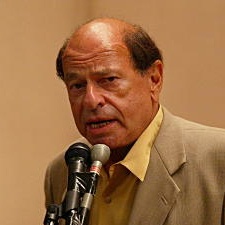 “It was clear he was licking his chops,” Moss said in a telephone interview last week. “But he said ‘I can’t do anything; you know I can’t do anything.’ I said maybe we could find a way. He said ‘I don’t know. They have pressure on everybody.’”
The Cubs were not the only team to shun Dawson, who was on his way to the Hall of Fame. No one, Moss said, made Dawson an offer, not even the team he had played for so brilliantly for 11 years, the Montreal Expos. The Expos had made an offer before he became a free agent not after.
“Nobody was interested in him” Moss said. “Everybody had an excuse.”
Fast forward to March 9, 1987. Facing an inexplicable freezeout, Moss and Dawson concocted an unusual strategy. They showed up at the Cubs’ spring training camp in Mesa, Ariz., and asked to see Green.
When they met, Moss handed the general manager a contract, a blank contract except for Dawson’s signature. No amount of money was written in on the line in section 2 (“Payment”) of the contract that notes how much money “the Club will pay the Player.”
Green faced a predicament. If he filled in the blank line and signed the contract, Dawson would belong to the Cubs in direct defiance of the owners’ plan to force players to remain with their teams at smaller salaries than they would get in a free and open market. But if he opted not to write in a figure, he would provide the players union with Exhibit A as evidence of a conspiracy. In addition Green thirsted for Dawson.
“He knew there was no way he could turn that down without looking like a damn fool,” Moss said of the blank contract.
Green filled in the blank, writing the figure $500,000, which was less than half of the $1.1 million Dawson had earned the previous season in the last year of a bad six-year contract a previous agent had negotiated.
Dawson was later awarded $2,017,100 in damages as part of the owners’ $280 million settlement of the three guilty verdicts two arbitrators issued.
None of this information, except mention of a blank contract without explanation, can be found in the Hall of Fame magazine. Like the commissioner and the owners, the Hall of Fame doesn’t acknowledge collusion. Rather it prefers to tell a fairy tale. It declares its independence from Major League Baseball, but when it comes to collusion it is in lockstep with the other deniers.
Craig Muder, the Hall’s communications director, said information for the Dawson article came from the Hall’s files of contemporary newspaper reports, including one from The New York Times.
But the research was obviously selective because my own quick research of articles and columns I did for the Times found half a dozen pieces about the blank-contract business and what precipitated it. You couldn’t miss it. But the Hall of Fame did and on the occasion of Dawson’s induction, the crowning moment of his glorious career, it ignored the episode that held the most significance for his link to baseball.
It sort of makes you wonder whether this is the way the Hall of Fame treats history in other matters in its library and museum.
Meanwhile, collusion is not a dead, out-of-date subject. Many player agents believe that clubs have colluded against free agents the past two winters. The agents have urged the union to pursue a grievance, but the union has moved cautiously. Last winter Michael Weiner, the union’s executive director, said nothing would be decided until the end of the free agent-signing period, but there is still no decision.
“I have a lot of thoughts at this point but no conclusions,” Weiner said last week. “There’s not much I can say about that at this point other than the issue is still an open issue.”
OWNERS COME, MOSTLY GO
How much of a change has M.L.B. ownership had since the collusion era? The only owners who owned their teams during collusion are Jerry Reinsdorf and Eddie Einhorn of the Chicago White Sox and Fred Wilpon of the New York Mets.
Bud Selig, who was an owner, is now the commissioner.
Dave Montgomery, who is the Philadelphia Phillies’ managing partner, was an executive vice president with the team then. Chuck Armstrong of Seattle was the club president then and is now. Jerry Bell of Minnesota became the Twins president in 1987 and remains in that position. Larry Lucchino, chief Boston Red Sox executive, was an executive with Baltimore.
Jim Pohlad, the Twins’ chief executive officer, was a member of the team’s executive board.
ELVIS HAS NOT LEFT THE BUILDING
Elvis Andrus, the Texas shortstop, was slighted in this space last week, and I want to make up for it this week.
In my listing of players who had the most at-bats without having hit a home run, I omitted Andrus. When I received an e-mail from Eric Nadel, the Rangers’ long-time radio play-by-play announcer asking “what about Elvis,” I checked and discovered that I had indeed omitted him.
So correcting and updating the leaders (before Sunday’s games):
- Elvis Andrus, Texas 438 at-bats
- Jason Kendall, Kansas City 396 at-bats
- Nyjer Morgan, Washington 394 at-bats
FARNSWORTH FAILS IN ATLANTA, NOT N.Y.
It’s a baseball cliché, but there is often truth to it: sometimes the best trade is one you don’t make.
As the trading deadline approached July 31, the Mets were looking to bolster their bullpen by acquiring Kyle Farnsworth from Kansas City for Jeff Francoeur. But the Royals instead traded Farnsworth to Atlanta, where he has not bolstered the Braves’ bullpen.
Pitching for his fourth team in three seasons, the 34-year-old right-hander has relieved in five games, allowing five runs, four hits and four walks in 3 2/3 innings. He has one loss and a 12.27 earned run average, and Braves’ opponents have hit .308 against him.
GOODBYE, MR. HICKS
 Without talking to him about the sale of the Texas Rangers from Tom Hicks to a group headed by Chuck Greenberg and Nolan Ryan, I get the distinct feeling that Bud Selig is delighted to have Hicks gone from Major League Baseball.
If there were any doubts, they were dispelled by the commissioner’s statement about the sale to Greenberg and Ryan, whom he has made no secret of liking.
In his statement, Selig couldn’t say enough good things about the new owners, concluding “the entire ownership group will serve as dedicated stewards of this club by building a long-term, stable franchise which values its standing in the Dallas-Fort Worth communities. I am glad that the Rangers’ great season on the field will get the attention it deserves during the pennant race.”
It would not be a stretch to read some unspoken criticism of Hicks and the way he operated the Rangers. But the telltale sign of Selig’s view of Hicks is in something else he didn’t say. The statement doesn’t mention Hicks.
In this kind of sale statement, Selig has always mentioned and lauded the outgoing owner. For example, in the commissioner’s statement on the last sale, the sale of the Cubs to the Ricketts family last October, Selig said, “All of us at Major League Baseball are grateful to the Tribune Company for their years of stewardship of this proud and historic franchise.”
Selig expressed no such gratitude to Hicks. Rather he most likely muttered under his breath, “Thank goodness, he’s gone.”