When you woke up today, you very likely had no thought of celebrating anything, unless you’re the kind of person who gives thanks just for being able to wake up every day. But when I woke up today, I had an extra special reason to celebrate, and I invite everyone to join me.
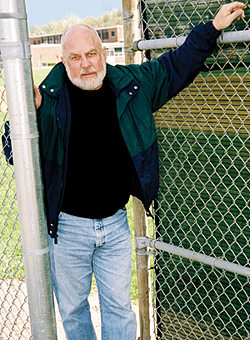
Today marks the 15th anniversary of the operation that freed my head from the potential ravages of a malignant brain tumor. I don’t know what, if anything, occupies the space that the tumor held, but it’s a lot better, a lot more welcome than the tumor.
Brain tumors don’t wait for an invitation. They show up unannounced at their own initiative. It’s not known why brain tumors afflicted some people and not others. It’s not known either why some people who get brain tumors get one kind and others get other kinds, why some brain tumors are malignant, others benign.
Then there is the variety of brain tumors within each category. I had one type, hemangiopericytoma. I was fortunate. It was malignant but not fatal.
Senator John McCain of Arizona is dying of the kind of brain tumor that has proved to be irreversibly deadly. It killed Senator Ted Kennedy in 2009. Its ugly name is glioblastoma. It is familiar to baseball fans because it has killed an inexplicably high number of baseball players: Ken Brett, Johnny Oates, Dick Howser, Dan Quisenberry, Tug McGraw, John Vukovich, Bobby Murcer, Gary Carter, Darren Daulton. Glioblastomas also killed Michael Weiner, the former Executive Director of the MLB Players Association, and Jeanine Duncan, the wife of former Cardinals’ pitching coach Dave Duncan. The Duncan’s son, Chris, a member of the 2006 World Series champion Cardinals, recently took a leave of absence from his ESPN Radio host role to focus on his ongoing battle with a glioblastoma that was first operated on in the fall of 2012.
It is suspected that some other players who died of brain cancer had glioblastoma, but such detailed records were not kept.
While I have been able to overcome the cancer, the early struggle was not easy. Following Dr. Chandranath Sen’s operation at Beth Israel North Hospital in upper Manhattan, I was transferred to New York University Hospital downtown. It seems that sometime during or immediately after the 11-hour operation, I had a heart attack, and I had to be moved because Beth Israel wasn’t equipped to treat heart attack patients.
It turned out to be a fortuitous move because I met and came under the care of Dr. John Golfinos, who is now the head of neurosurgery at NYU Langone.
But that development is only incidental to this story. In fact, when I related my 2003 experience to Bobby Murcer not long before he died in 2008, he couldn’t help but laugh in amazement. I enjoyed his laughter. At that time he didn’t have much to laugh about.
After changing hospitals, I encountered a series of medical issues. I had a stroke, for one, which in retrospect gave me an incredible medical trifecta : cancer, heart attack, stroke. And that doesn’t include MRSA, a gall bladder operation, the insertion of a filter in my leg to prevent blood clots, the insertion of a shunt to drain fluid from behind my eyes and 33 doses of radiation.
Six weeks in intensive care, three months in the hospital and then home.
MRSA was the most interesting of these developments. Only in the hospital could I have contracted MRSA, a staph infection that can do bad things to your health. In my case the infection was in my head, and the doctors feared the MRSA could reach my brain (no, it had not been removed).
How to deal with that and prevent that from happening? Simple. Put the patient in an intensive care unit for six weeks and don’t let anyone but a nurse or two – and his wife – see him and speak to him.
My wife. I haven’t mentioned my wife, the primary reason I came out of this physically and mentally intact. Early on, I made a decision. I would concentrate on getting better, and I would let my wife deal with the doctors and the nurses. I knew that plan would work because I was confident Ellen was up to the assignment. Something one of my doctors said told me that.
“I wish my students asked the kind of questions your wife asks,” he remarked.
I wish I could attribute my wife’s ability to ask revealing and penetrating questions to her 45 years with a hard-hitting newspaper reporter, but in all honesty and candor I cannot. She was asking questions about health and medical science. Those are not my areas of expertise, not even close. I made the right decision.
I believe I also made the right decision in refraining from telling everyone the tumor was malignant. We had – note, that’s had, not have – a friend who stopped being a friend when she found out that the tumor had been cancerous and we hadn’t told her.
I didn’t think anyone outside our immediate family needed to know, and we kept it quiet for a long time. Now everyone knows, if anyone cares. My family and I care. A friend who cares said he was going to have an ice cream cone to celebrate the occasion, the 15th consecutive tumor-less June 5. I like that idea. In fact, have two scoops.