If the Players Association decides to file a grievance against the owners accusing them of collusion in their treatment of free agents, the first witness the owners will call in their defense is the man who makes more money than anyone connected to the union.
That person would be Scott Boras, the most prominent agent in the business. Boras expressed his views on baseball’s economy last week, and the owners couldn’t have asked for stronger support for their defense. In comments to reporters at the general managers’ meetings in Chicago, Boras predicted that this winter’s free-agent market will be vibrant. The best free agents, he said, will receive huge contracts despite forecasts from Major League Baseball that spending will be down because of the shaky economy.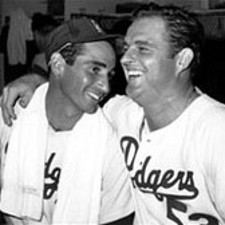
“We hear this every year,” Boras was quoted as saying. “Based upon their bad economic forecasts of last year, I won’t invest in their stocks of choice.”
The owners were wrong in their forecast a year ago, the agent suggested, because the best players available got handsome contracts. One of those free agents was a Boras client, Mark Teixeira, who signed with the Yankees for $180 million.
“Last year we had one club that went out and made a commitment to a franchise player and they won a world championship,” Boras said, refering to Teixeira and the Yankees, then added about another client, “I think Matt Holliday is another player like that in this marketplace.”
Boras is not one of the agents who suspect collusion in every free-agent corner. It is agents who have generated much of the collusion talk and want the union to file a grievance against the owners on the grounds that they have violated the free-agency rules of the labor agreement.
Clubs shall not act in concert with other clubs, the primary rule says. The other half of the rule says that players shall not act in concert with other players. The irony of the rule is that it exists because the clubs pushed for it when free agency was negotiated in 1976. The joint 1966 holdout of Sandy Koufax and Don Drysdale was the reason the clubs wanted the rule.
But no players have colluded in free agency’s 33 years while the clubs have been found guilty of colluding three different times – after the seasons of 1985, ‘86 and ‘87 – and the violations cost them $280 million, actually a bargain in relation to what they very likely would have paid had they played the free-agent game straight in those three years.
The aim of the owners’ game was to force the free agents to remain with their teams by withholding offers to go elsewhere or to make offers that were unattractive enough that the free agents would remain with their teams.
The most telling sign that the owners were colluding that I personally witnessed involved Jack Morris and the Yankees after the 1986 season. In December of that year Morris and his agent, Richard Moss, traveled to Tampa, Fla., to meet with George Steinbrenner at his Bay Harbor Inn hotel.
I was among several reporters from New York newspapers who were there to cover what we expected to be Steinbrenner’s signing of Morris. That seemed to be a foregone conclusion. When the Yankees’ owner let Morris leave the hotel without having signed him, it was obvious that something funny was going on.
The same agent also showed up at the Chicago Cubs’ spring training complex in Mesa, Ariz., in 1987 with another client, Andre Dawson, who had been unable to find a job that winter despite the talent he had displayed for years. Nobody wanted Andre Dawson, potentially a future Hall of Famer? Preposterous.
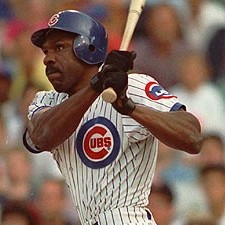 With Dawson in tow, Moss handed Dallas Green, the Cubs’ president, a contract that Dawson had signed and told him to fill in the blank where the salary went. Green, who secretly wanted Dawson, appeared to be embarrassed and should have been with the number he wrote in the blank space – $650,000, with only $500,000 of it guaranteed.
Morris, who was forced to remain with Detroit, and Dawson both received additional money as their part of the $280 million settlement, which grew with interest added to $434 million. The last payments were paid 18 years after the case began.
Yet the owners never admitted their crime. To my knowledge only two management people ever acknowledged that the owners had colluded, and neither Fay Vincent nor Richard Ravitch participated in the dirty game.
Even Bart Giamatti, the commissioner at the time the arbitrators found the owners guilty, denied the existence of collusion. He saw the same facts that the arbitrators did, Giamatti said at a news conference, and he didn’t see collusion.
Vincent, however, was Giamatti’s deputy, and after he became commissioner following Giamatti’s sudden death in 1989, he said he saw the same facts and he saw collusion. His honesty and candor did not endear him to his employers, who subsequently ousted him.
Ravitch was the clubs’ chief negotiator during the 1994 strike, and he didn’t deny that the owners had colluded. One of his predecessors, Barry Rona, denied the collusive activities while they were occurring and afterward. Any time I used the word collusion in print or in questions to him about the matter he scoffed, laughed and said don’t be silly.
The last laugh, though, was on the owners, and their scorn for the free-agent rules poisoned their relations with the players for years and was in great part responsible for the contentious negotiations that produced the 1994 strike.
The $280 million collusion award also prompted a provision in subsequent labor agreements that called for treble damages if the clubs colluded again. However, talk and suspicion of collusion have never been far from players’ minds.
Players’ agents suspected that it had returned a year ago when they saw clubs making similar offers to the same players. It was as if the clubs were either acting jointly or they had resurrected the information bank that an arbitrator had found to be illegal about 20 years earlier.
The clubs liked the bank idea so much that they proposed it during the 2002 negotiations, but the union rejected it. The clubs might have had other ideas last year.
A prominent, veteran agent, who spoke on the condition of anonymity, said a general manager, whom he did not identify, told him early this year that the owners “‘at a meeting decided to flood the market with free agents and see what happens.’”
Presumably the flood would occur when the clubs did not tender contracts to players by the Dec. 12 deadline. However, that flood never hit. Forty-two players were not tendered contracts last December, according to the Associated Press, compared with 43 a year earlier.
In recent years the talk leading up to the tender deadline is that many more players will not be tendered contracts, thus making them free agents, than the year before. In the most recent example of that forecasting, ESPN.com, saying it talked with many general managers, reported that dozens of arbitration-eligible players would be non-tendered next month.
But similar forecasts have been made the last few years, and they haven’t panned out. The A.P.’s record-keeping shows that in the last 10 Decembers, beginning in 1999, players not receiving contract offers numbered 28, 27, 34, 46, 58, 41, 50, 28, 43, 42.
Union lawyers have not filed a grievance accusing the clubs of collusion last winter, but their thinking on the issue is active. They have an agreement with the commissioner’s office to do nothing until after this winter’s free-agent activity.
“I’m not going to address that,” said Michael Weiner, the union’s general counsel, who next month will succeed Donald Fehr as the executive director, when he was asked why he agreed to wait. “It’s a standstill agreement as to the claims from last year’s market. It was a standstill or interim agreement where players’ claims are preserved and clubs have acknowledged no wrong doing.”
Rob Manfred, the owners’ chief labor executive, also declined to comment on the matter but addressing the issue of collusion he said “the din of collusion is tiresome.” As if to show how foolish it is to accuse the owners of holding down players’ salaries, he offered an economic statistic.
In 2008, Manfred said, players’ salaries accounted for 51.1 percent of the clubs’ revenue. Though this year’s calculations aren’t complete, he said, current figures show that percentage rose to 51.5 percent. Both figures, he said, were higher than the percentages in 2007 and 2006.
While clubs aren’t permitted under the rules to talk to other clubs about offers for free agents, the union is concerned that they can disclose such information through the news media and achieve the same purpose as talking directly to each other.
Weiner offered two examples of public comments by club officials about free agents, one with which he doesn’t have a problem and one that he does.
“Writing ‘based on my discussions, this is what this player will be offered’ is different from saying ‘it will be a weak market,’” Weiner said, explaining that in the first instance he thinks it is intended to try to influence the market but the second is not.
“The other side saying it’s going to be a weak market because of the economy isn’t collusion,” he said. “Commenting on what players will get and using the press is more of a concern.”
Weiner also questioned the reason for a general manager to announce publicly that he isn’t interested in a particular free agent, especially when he says the player is too expensive for his club when he doesn’t know what the player would accept.
“I’m not accusing anyone at this point of engaging in collusion,” he said. “If a club official is saying about an arbitration player ‘I predict this will be what the guy gets,’ if he says that about a free agent, he’s trying to influence the market. I saw this happening with increasing frequency this year and decided to say something about it.”
Some people believe agents are pushing the union to file a grievance, but Weiner would not address that possibility. “I’m not going to say anything more about a potential grievance from last year’s market,” he said.
However, the union has gathered relevant information from agents and if they didn’t think they had evidence of collusion they wouldn’t be continuing to consider a grievance.
As for whether comments by Boras would help or hurt the union’s case, Weiner said, “I don’t think it has an impact either way. Scott saying that is just countering the other side’s comments.”
MARKET LACKS GOOD PITCHERS
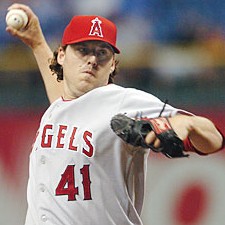 John Lackey is clearly the No. 1 starting pitcher available in the free-agent market, but every team that wants him won’t be able to sign him. His status will make him a very wealthy man. He will be the CC Sabathia of this off-season, though he won’t get a $161 million contract as Sabathia did last winter.
A 31-year-old right-hander, Lackey has played for the Angels for his entire eight-year career. Except for his first season, 2002, when he won nine games, Lackey has gained double-digit victories every season, compiling a 102-71 career record with a 3.81 earned run average. His best season was 2007 when he had a 19-9 record and 3.01 e.r.a. Last season he had an 11-8 record and 3.83 e.r.a.
The Angels would like to retain Lackey but will have competition from the Mets, the Red Sox, the Brewers, maybe even the Yankees, among others.
After Lackey the list of starting pitchers is thin. It includes Jason Marquis, Randy Wolfe, Jarrod Washburn, Joel Pineiro, Pedro Martinez, Rich Harden, who ended his season 10 days early because of shoulder fatigue, and Erik Bedard, who had shoulder surgery in August and was found to have a torn labrum.
“There’s Lackey, and there’s everyone else,” a general manager remarked.
Marquis will tempt some teams, but the knock against him is he fades in the last third of the season. In the past six seasons he has had a 58-39 record in the first four months but fell to 22-29 in the final two months.
His late season problems have led to an unusual development for him. He has helped the teams he has played for reach the post-season the last six seasons, but since he started the final game of the 2004 World Series for St. Louis, he has not started a post-season game, in some instances being left off the post-season roster altogether.
GIVE THAT MAN A JOB
Donald Fehr, who will step down next month 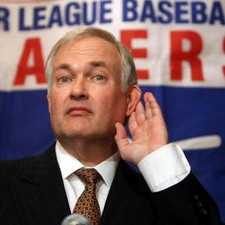 as head of the union after more than a quarter of a century, has agreed to help the embattled National Hockey League Players Association find an executive director. The hockey union sorely needs a leader who can bring stability and unity to the divided membership.
The hockey union’s executive board voted to ask Fehr to assist them in the players’ time of need. This, however, could turn into a situation where the board can’t come up with a suitable candidate and turns to Fehr, saying, “We think we know who the best candidate is.”
“Who?” Fehr asks.
“You,” the board says.
“I wouldn’t concern yourself with that if I were you,” Fehr remarked when that scenario was presented to him. “I told them I’d help them find somebody.”
And that, he said, will be the extent of his involvement.