Lest there be any doubt that Major League Baseball has joined the National Basketball Association in a revolutionary effort to create legal gambling on sports events, check the statement baseball issued last week regarding proposed West Virginia legislation: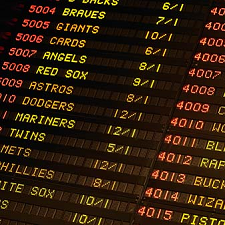
“Any sports betting legislation must include clear, robust and enforceable protections to mitigate any possible risks to our game. The law quickly advancing in West Virginia unfortunately falls short of meeting those critical standards. We are hopeful the legislature will complete a significant overhaul of the law and bolster the protections. We would be happy to work with legislators and the Lottery Commission to improve the current language.”
MLB’s position is somewhat curious. Several weeks ago, when the NBA stepped in front on the gambling issue, urging passage of a New York State law on legal betting, MLB was silent. Now, however, not only has MLB become openly aggressive on the issue, it has clearly joined the NBA in leading the charge up the 1 percent hill.
The NBA was the first league to come out for legalized gambling on its games, proposing a 1 percent share of gambling revenue.
Speaking on condition of anonymity, a baseball official said MLB “has stood with the NBA on the 1 percent fee from the very beginning as states have taken various steps on the issue of sports betting. That aspect is not a new development.”
If you listen to critics of the 1 percent plan, on the other hand, you might find the 1 percent so-called “integrity fee” being significantly more than a mere 1 percent. Whatever the proposed percentage share is, though, the NBA and MLB have obviously worked together on the issue. It is no coincidence that they both have proposed a 1 percent share of betting revenue. Why, though, was MLB Commissioner Rob Manfred silent on legal betting when the NBA first proposed it, letting Commissioner Adam Silver sprint out front?
Who, on the other hand, knows why Manfred does a lot of things he does? At the moment, for example, he seems to be obsessed with pace of game, as if three or five minutes are going to make a difference to fans sitting in the stands at the ball park or at home in front of their television sets.
If Manfred is serious about pace of game, let him start post-season games earlier so young fans and old fans alike can watch more of the games, maybe even the entire game.
Of course, there’s a difference between length of game and pace of games, but speed up one and the other will surely follow.
Manfred plans to enhance interest in the game, too, by inviting fans to bet a couple bucks on the games they are watching. But Arnie Wexler, a recovering gambling addict, will tell you bettors don’t stop at a couple bucks.
If a gambler bets and loses a couple bucks, he will double his bet on the next game because how else can he catch up and get ahead?
MLB and the NBA want betting on games to be made legal because gamblers are betting millions – billions – on games and it’s foolish to let the illegal bookies get it all.
The movement is spreading. The leagues have hired lobbyists in New York, West Virginia, Iowa, Indiana and Illinois.
MLB and the NBA have proposed that their leagues get 1 percent of the money wagered. The NFL has made no proposal and, in fact, would be expected to lobby for more than 1 percent. The NFL eventually will join MLB and the NBA because the money will be there and someone is going to get it.
However, an on-line industry publication, SportsHandle.com, claims that the 1 percent the leagues are asking for is actually 20 percent because the sportsbooks retain only a small percentage of the total handle.
The fee, the article says, is “on all wagers, which equates to about a 20% cut of a typical sportsbook revenue. That 1% would represent approximately $1.5 billion annually divvied up between the sports leagues if every state uniformly accepted this (bogus) fee — instead of revenue for states and licensed operators.
“This would make an already low-margin business lower margin at a time when the leagues purportedly want to make the legal market competitive in order to eliminate the illegal market — for the ‘integrity of the game.’ In other words, taking 20% of their revenue in this way would be like saying they want a new, regulated line of cars to compete against the unlicensed carmaker but hey, go ahead and compete while we take 20% revenue out of your pocket so we can make sure that everything looks right in the shop and on the roads. So basically the sportsbooks would be losing money every year.”
If anyone wants my opinion, I would say follow Arnie Wexler’s advice and not bet.
Legal sports betting has become a new popular topic because the United States Supreme Court is on the verge of deciding a case it heard in December in which the state of New Jersey challenged a Federal law that limits legal sports betting to a handful of states, most notably Nevada.
The law has prevented New Jersey from conducting sports betting at its casinos. New Jersey and Connecticut are two states that could desperately use gambling revenue to ease enormous state debt, and that’s why former Gov. Chris Christie took the Federal law to the Supreme Court.
While New Jersey, Connecticut and other states could benefit from legal sports betting, not everyone favors legal sports betting, besides Arnie Wexler, the activist recovering gambling addict.
As much as MLB and the NBA want to see sports betting legalized, they want it done their way.
The MLB lobbyist last week in West Virginia did not rail against the evils of gambling. Instead, he wholeheartedly embraced the idea – as long as the law is written the way MLB and the NBA want.
By the time the bill is ready for a final vote, you can be sure all of the words will be right, and they will be in the right place. West Virginia state legislators are hardly a match for big league lobbyists.
Because most gambling is done illegally with no records kept, it is difficult, if not impossible, to determine or know how much money is wagered in any particular period. However, one company, Eilers & Krecjik Gaming, offered this estimated handle for 2017: annual betting handle of $150 billion to $250 billion. Eilers then estimated per team revenue of $2 billion annually.
Just in case you wondered why leagues and teams are eager to bring legal betting to their sports.