We have not seen the last of the names from the notorious 2003 list of players who tested positive for performance-enhancing substances. In fact, the judicial decision the other day that government agents violated the rights of baseball players and others by seizing results of their tests will very likely only trigger the release of more names.
How’s that, you ask.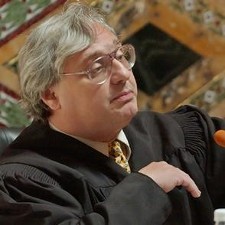
Although the 9-2 decision by the United States Court of Appeals for the Ninth Circuit says the government cannot retain or use the names to question players who tested positive for steroids in a survey that was supposed to remain anonymous and confidential, the person or persons who have leaked names from the list may very well feel the need to leak even more names because that will be the only way to make the players look bad.
That is the purpose of the leaks. One or more lawyers and/or government agents have an agenda they believe to be more important than the law of the land. It doesn’t matter to that person or those people that three federal district courts and an appellate court that is one rung below the United States Supreme Court have ruled that the government didn’t have the right to seize the test results. The leakers know better.
If the only way to teach those players a thing or two is to leak their names and disclose that they used steroids in 2003, they are going to do it, the courts be damned. It matters not at all to them that the players agreed to be tested that year because they were promised confidentiality and anonymity. It didn’t matter to the government. Why should it matter to them?
Who are the leakers? Only the reporters to whom they leaked – Selena Roberts of Sports Illustrated and Michael Schmidt of The New York Times – know for sure.
The most common suspicion has been that it was one or more government lawyers or agents who became disgruntled because they wouldn’t be able to use the names. More recently, however, a rumor spread that it was a junior attorney at a law firm used by the baseball players union. I suppose that’s possible – leakers feel proud when they see secret information out in public and know they are responsible – but that’s a dangerous and career-threatening game for a junior attorney to play, or anyone for that matter.
But if the reporters who have reported the names are to be believed, they received their information from more than one leaker. In her report on SI.com, Roberts said she and a colleague had four sources. I find that difficult to believe because given the nature of the business that’s an awful lot of people whispering the name Alex Rodriguez in a reporter’s ear.
In the two articles that have appeared in the Times Schmidt has cited lawyers plural. Again I have trouble with the plural because how likely is it that after a name has never been mentioned suddenly more than one person is giving a reporter a player’s name. It’s possible that a reporter gets a name from one person and goes to another person who confirms it, but the way the Times articles were written it seemed that more than one source disclosed the name rather than one disclosing it and others confirming it.
I spent most of my working life as a reporter, and I relied on people telling me things they weren’t supposed to tell me. But all of those many reports that I developed for the Times were different from the steroids revelations. I don’t recall ever being involved in an illegal act, but the reporters who have had the most sensational steroids stories were part of illegal acts, whether or not they themselves were guilty of anything.
Consider the Balco case. Two San Francisco Chronicle reporters were shown transcripts of grand jury testimony and reported that Jason Giambi, among others, told the grand jury that he had used steroids. All of the Balco defendants pleaded guilty, and no trial was held.
If the defense lawyer, who later went to prison for the crime of leaking grand jury transcripts, had not leaked the transcripts, Giambi would never have been revealed as a steroids user. Life would have been a lot easier for him.
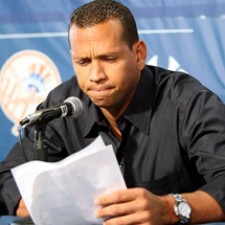 If the leakers of the 2003 names had respected the court seal on the names, as well as the confidentiality and anonymity of the tests, and not leaked names, Rodriguez, Sammy Sosa, Manny Ramirez and David Ortiz would not have been singled out and, in some eyes, disgraced.
Now some people will say cheaters deserve to be disgraced and they may be right, but not in the manner in which it happened, especially the 2003 guys, who were betrayed by the federal government.
“All three judges below expressed grave dissatisfaction with the government’s handling of the investigation, some going so far as to accuse the government of manipulation and misrepresentation,” Alex Kozinski, chief judge of the Ninth Circuit, wrote in his opinion seizing the 2003 results from the government’s grasp.
All three district judges found that the government “callously disregarded” the Fourth Amendment rights against illegal search and seizure of hundreds of players and civilians whose test results the government had not initially sought.
Rather than follow proscribed guidelines for such searches, Judge Kozinski wrote, “the case agent immediately rooted out information pertaining to all professional baseball players and used it to generate additional warrants and subpoenas to advance the investigation.”
“The risk to the players associated with disclosure,” he wrote, “and with that the ability of the Players Association to obtain voluntary compliance with drug testing from its members in the future, is very high. Indeed, some players appear to have already suffered this very harm as a result of the government’s seizure.”
In this fight between the baseball union and the federal government, the judiciary clobbered the government. Three lower courts ruled against the government and the circuit court, sitting en banc, did the same after a three-judge panel had ruled in the government’s favor, two to one.
“It is not surprising, then, that all three of the district judges below were severely troubled by the government’s conduct in this case,” Judge Kozinski wrote. “Judge Mahan, for example, asked ‘what ever happened to the Fourth Amendment? Was it . . . repealed somehow?’
“Judge Cooper referred to ‘the image of quickly and skillfully moving the cup so no one can find the pea.’ And Judge Illston regarded the government’s tactics as ‘unreasonable’ and found that they constituted ‘harassment.”
Now it remains to be seen what will become of the list of names. The government could appeal the decision to the Supreme Court, but the chances of the court’s accepting the case would seem to be remote. Remember that the current administration is different from the one that was in power when the case began.
But it would be interesting if the case did go to the Supreme Court because one of the justices who would hear the case, Sonia Sotomayor, was the federal judge whose 1995 ruling in favor of the National Labor Relations Board and by extension the players union enabled the players to end their strike. How many Supreme Court Justices get a chance to go 2-for-2 in baseball cases?
The circuit court’s decision could have an impact on the Barry Bonds case. Bonds is awaiting trial on perjury charges, but the primary agent in his case, Jeff Novitzky, was the chief agent in the illegal search and seizure of the test results. His credibility is not too high right now.
In the meantime, watch for the leaks. Even though the names will remain under seal until the government makes its decision, the leakers still have their copies of the list. The voyeurs who have waited breathlessly for more names are hoping they won’t lose their nerve now that the names could disappear into oblivion.
The government’s loss may be the voyeurs’ gain.
