C.J. Henry, J.B. Cox, Jonathan Poterson, Jeff Marquez, Brett Smith, Brandon Weedon, John-Ford Griffin, Jon Skaggs, Bronson Sardinha. There is no reason that any of these names should be familiar to the ordinary baseball fan. They and many like them, however, have played a role in the last decade of baseball history.
Until the last decade or so of baseball history, owners and players had filled it with angry, contentious relations. In the beginning of their formal labor relationship, whatever the players wanted the owners refused to give them. Then the momentum switched and whatever the owners demanded the players said no way.
Now, however, in a sea change unparalleled in sports labor history, the two sides have become so harmonious that they have taken the fun and entertainment out of their off-field matters.
All right so labor negotiations were never fun, and they weren’t entertaining to most people, this writer being a rare exception. But in the older days of salary arbitration, there were dates that produced at least mild drama and intrigue. Now even those dates and their significance are gone.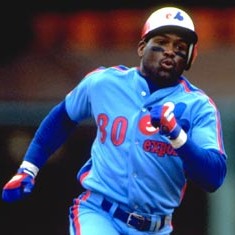
The old salary arbitration dates were Dec. 7, Dec. 19, Jan. 8 and May 1, and they meant a lot. The new dates are Dec. 1 and Dec. 7, and they mean very little.
Under the old system clubs had until Dec. 7 to offer their free agents salary arbitration. If a club did not offer arbitration, it lost rights to the player until May 1 the next year.
Players who were offered arbitration had until Dec. 19 to accept or reject the offer. If a player accepted, he was a signed player. If he declined, his club had until Jan. 8 to negotiate with him and sign a contract or lose rights to him until the next May 1.
Thus, the dates Jan. 8 and May 1 were significant.
In 1987, for example, a flurry of players and clubs went down to the deadline, reaching agreement on Jan. 8: Tommy John and Willie Randolph with the Yankees, Brian Downing and Doug DeCinces with the Angels, Ernie Whitt with the Blue Jays.
Some clubs and players didn’t make it and had to wait until May 1 to conclude their negotiations: Ron Guidry with the Yankees, Rich Gedman with the Red Sox, Bob Boone with the Angels, Tim Raines with the Expos.
The return of Raines was eye-opening. The day after he signed a three-year, $5 million contract, he beat the Mets with a grand slam after he had already rapped two singles and a triple. The next day he beat the Mets again with a home run.
Spring training? Who needs spring training?
The dramatic return of the 1986 National League batting champion, though, would not have been possible without those dates. Of course, it would not have been possible without collusion either, but that’s another story.
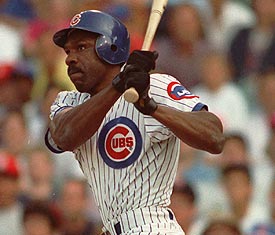 Yes, that was the second of the three groups of free agents who were cheated by the owners’ collusive activities. Raines’ teammate with the Expos, Andre Dawson, was able to subvert the scheme and change teams, moving to the Chicago Cubs, only because he walked into the Cubs’ spring training camp with his agent, Richard Moss, and handed general manager Dallas Green a blank, signed contract for him to fill in the salary. Green wrote in $500,000, a meager amount even at that time, and that’s what Dawson played for in 1987.
He was subsequently awarded an additional $2.43 million in damages and interest out of the $280 million the owners agreed to pay for their transgressions.
But those were the good old days when the owners cheated and their adversaries caught them. Today the two sides agree on everything, whether it’s testing for steroids and amphetamines or changes in salary arbitration.
“It makes the market operate more efficiently,” Michael Weiner, the union’s general counsel, said, discussing the elimination of some of the elements in the arbitration procedure.
A club no longer has to offer arbitration to retain rights to a free agent. It continues to have rights until the player signs with another team. Players still have a deadline (Dec. 7) by which they have to accept or reject arbitration offers, but their decisions have no effect on their status unless they accept arbitration and therefore are considered to be signed.
The arbitration offer now concerns only compensation. If a club doesn’t offer arbitration, it does not receive draft choices if a ranking free agent goes elsewhere. A ranking free agent is a Type A or Type B player as determined by the ranking statistics compiled by Elias Sports Bureau based on two years of statistics.
Why wouldn’t a team make the offer and therefore guarantee the compensation? Because a player could accept the offer and wind up with a bigger salary through arbitration than the club wants to pay.
The Yankees, for example, want to re-sign Andy Pettitte and offered him a $10 million salary. They did not want to pay him the $16 million he earned this year, or potentially more. Pettitte had a 14-14 won-lost record this year and a 4.54 earned run average, his highest in nine seasons.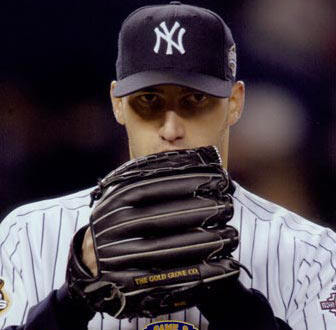
If the Yankees and Pettitte took their differences before an arbitration panel, the Yankees could make a good case for a pay cut, but in 36 years of salary arbitration, clubs have never educated arbitrators in the practice of cutting salaries. Rarely have clubs submitted proposed cuts for players so arbitrators don’t know that if a player has a bad year, his salary could actually be cut.
Pettitte is a Type A free agent. He has said he wants to play for the Yankees, but if he signs with another team, say, the Dodgers, to whom he has allegedly spoken, the Yankees would not get the Dodgers’ first pick in next June’s draft and a sandwich pick between the first and second rounds.
The Yankees decided they would rather forgo the draft choices than take a chance on paying Pettitte too much. Anyway draft choices are overrated. They are only as valuable as a team’s scouting system is good.
The Yankees did well with their sandwich selection of Joba Chamberlain (for the loss of Tom Gordon) in 2006. Ian Kennedy was their other pick for Gordon, and two years earlier they selected Phil Hughes after losing Pettitte. Hughes and Kennedy could become productive major leaguers, but they could also join the Yankees’ corps of failed compensation picks since 2000:
C.J. Henry 2005, an infielder-outfielder traded to the Phillies as part of the four-player package for Bobby Abreu and Cory Lidle in 2006, then signed as a free agent a year ago. He has not played above Class A in four minor league seasons.
J.B. Cox 2005, a relief pitcher who missed the 2007 season after elbow surgery and had a 5-4 record and 4.75 earned run average in 28 games for AAA Scranton/Wilkes-Barre this year.
Jonathan Poterson 2004, an outfielder who never played above Class A and was released in March 2007.
Jeff Marquez 2004, starting pitcher whom the Yankees wouldn’t trade a year ago in a package for Johan Santana but traded last month in a package for Nick Swisher.
Brett Smith 2004, starting pitcher who spent most of three seasons at Class A, then missed this year after surgery.
Brandon Weedon 2002, pitcher who was in the 2003 trade with the Dodgers for Kevin Brown. He also pitched in the Kansas City minor league system, but he never pitched above Class A, finishing his career in 2006.
John-Ford Griffin 2001, outfielder who was in the 2002 trade for Jeff Weaver, played in a combined 13 games for the Blue Jays in 2005 and 07 and played in the Dodgers’ system this year.
Jon Skaggs 2001, pitcher who started one game in his first two years in the organization, played three more years in Class A, then one year in the Astros’ system.
Bronson Sardinha 2001, outfielder who played in 10 games (3 for 9) in September 2007, was not offered a contract for 2008, played in the Mariners’ and Indians’ systems and was released.