The Hall of Fame ballot came in the mail the other day so this can be considered my now annual elect-Jack-Morris-already column. To me, Morris is such an obvious choice for the Hall of Fame that I don’t understand why more of my fellow baseball writers haven’t voted for him.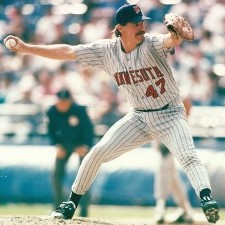
This is the 11th year Morris is on the ballot, and he is coming off his best showing. The hard-nosed pitcher received 44 percent of the vote a year ago. That figure, though, left him well short of the 75 percent players need for election. In raw votes Morris got 237 votes but needed an additional 168. That’s not close.
But he remains on the ballot unelected so here I go again.
Morris is among a group of pitchers who achieved great success in their careers but didn’t achieve enough to convince the voters they belong in the hallowed halls of Cooperstown.
Tommy John, for example, has been dropped from the ballot after his 15 years of eligibility. He won 288 games during his lengthy career, even won 20 games three times. But he remains the pitcher with the most wins who has been or is eligible for the Hall who is not a member. In his last year of eligibility a year ago he gained 31.6 percent of the 539 votes.
Roger Clemens, Greg Maddux, Tom Glavine and Randy Johnson won more games but have not completed their five-year waiting period. Johnson hasn’t even retired. Bert Blyleven won 287 games and is still trying to get to Cooperstown. He is on the ballot for the 13th time and had his best showing last year with 62.7 percent.
A 300-win career has meant automatic election, though not always immediately. Don Sutton, who had 324 career victories, won election in his fifth try. But the Hall of Fame isn’t solely about wins for pitchers.
Morris won 254 games in an 18-year career, but one win that isn’t included in that regular-season total is the 10-inning 1-0 decision he gained against Atlanta in Game 7 of the 1991 World Series.
That game, one of the greatest games ever pitched, epitomized Morris’ pitching style, which I believe overcame what might have been his shortage of victories or his 3.90 earned run average, which some voters think was too high to merit consideration.
Morris was not about to lose that game. He would stay on the mound as long as it took Minnesota to win the game and the World Series. That’s the kind of pitcher he was. His way could not be measured by the statistics that have infested baseball in recent years – FIP, WHIP, VORP and assorted other acronyms.
The purveyors of these statistics ignore the intangibles that enable someone like Morris to win a 10-inning Game 7. Pitchers, not initials, win those games. Sadly, we are heading for the time when voters who are immersed in those numbers and initials will be the preponderant Hall of Fame voters, just as they hijacked the voting for the Cy Young awards this year.
 In giving the awards to Tim Lincecum and Zack Greinke the voters said the number of victories a pitcher has doesn’t matter. I’m not sure how far they are prepared to take that stand, but wins still count.
Morris thinks so.
“It’s supposed to be about winning,” the 54-year-old Morris said in a telephone interview Friday, “but somehow that has faded away. It’s amazing. I don’t know why it’s evolved into this. Statistics are now used to pad stats for salary arbitration with little care if your team makes the playoffs with a chance to go to the World Series. Guys are missing out on the fun part of the game.”
I asked Morris how he felt about the so-called sophisticated statistics, the ones with the fancy initials. “I’m really not familiar with them,” he said. “I don’t even know what they are.” And then he thought of a statistic he obviously had no use for. “Quality start,” he said, “which means you have a 5 plus e.r.a. We always thought a quality start meant you won the game.”
Reminded of his ultra quality start in the ’91 World Series, he said, “It doesn’t happen any more and it probably won’t happen again. I have to believe there’s a kid who some day you would want to be in that position but won’t get it because the game had changed so much.”
Then he added, “The one I’m waiting to see is if anybody follows the Palmers and the Seavers and Carlton and Niekro, all Hall of Famers, who pitched in an era where 250 to 300 innings was common. They lasted 20 years. Is there anyone today who will last that long pitching 180 innings? They’re breaking down and going on the disabled list.”
How about a pitcher who duplicates Morris’ performance from 1979 through 1992, 14 years of his 18-year career? Morris won 233 games, 41 more than the next highest total in that period, and pitched 169 complete games, 62 more than the next highest total.
I asked three baseball writers (two retired, one still active), whom I respect more than others, their thoughts of Morris to learn why they have never voted for him. One dismissed the fact that Morris won more games in the 1980s than any other pitcher.
“I know about his leading stats in the 1980s, but that’s a matter of timing,” he wrote in an e-mail. “The prime of his career conveniently fell that way. If his career started in the mid-80s, there wouldn’t be a stat like that.”
But take any period, as I have done here, expanding the ‘80s to a 14-year chunk of his career. Think of those numbers: 41 more victories and 62 more complete games than anyone else. That’s not juggling numbers to create an advantage for Morris. That’s dominant pitching.
The right-hander also pitched 235 innings or more 11 times and won 20 games three times. The tag “workhorse” would apply to him.
“I view him as a workhorse,” one of the writers wrote, but also a “big-game pitcher who also mixed in a lot of mediocre games. I just got done telling you that he ‘pitched to the score,’ but 3.90 in that era is still too high and while he was usually viewed as being among the best of his era, he wasn’t the best, or probably in the top five in most years. He did not do too well in Cy Young voting.”
Another of the writers said he has never voted for Morris and isn’t sure about him now but added, “Anyone who is the best – in his case, the winningest – for a decade, has a no-hitter and that postseason resume deserves at least one more look from me. I never dismiss him.”
Morris, of course, will be marked on my ballot, but at this point, about four weeks before the voting deadline, I haven’t decided if anyone will join him. I like working on deadline.
WILL MAUER FOLLOW PUCKETT?
 Joe Mauer can be the second coming of Kirby Puckett. The Minnesota Twins only hope so. Or Mauer can be the first going of Joe Mauer. The Twins would prefer not.
When Puckett was a free agent in December 1992, he had a chance to go elsewhere, Boston, for example, for about $1 million a year more for five years than the Twins were offering. At that time an extra million was a lot of money.
Earlier that year, in July, the Twins’ general manager, Andy MacPhail, and Puckett’s agent, Ron Shapiro, reached an agreement on a five-year, $27.5 million contract. The deal was slightly below market value because Puckett wanted to stay with the Twins. But about a week later Carl Pohlad, the Twins’ owner, vetoed the deal.
Once the season was over and Puckett was a free agent, he began talking to and visiting other clubs, including Boston and Philadelphia. The Red Sox offered four or five years for $5 million more than the Twins were prepared to pay. The Phillies didn’t make a formal proposal but indicated that money wouldn’t be a problem.
Facing the reality of the escalating pay players would be getting, Pohlad called Shapiro’s office and invited the agent and Mr. and Mrs. Puckett to dinner at his house. MacPhail was there, too, and at about 4 o’clock in the morning, he and Shapiro agreed to a $30 million deal.
Mauer, the Twins’ highly talented catcher, has a contract that runs through the 2010 season. He is a Minnesota native and like Puckett, would ideally like to stay. But he’s not about to jump at anything prematurely.
“I’ve always said it will take care of itself when it needs to,” Mauer said. “I’ll let it happen when it needs to happen.”
Might the Puckett example influence him?
“Yeah,” he said but added, “I think this will happen when it needs to happen. I definitely enjoy playing in front of my family and friends here. Can we win here? Yes. That’s what I’d like to do.”
96 + 3 = 99
All of the obituaries said that Tommy Henrich was 96 years old when he died last week. Fay Vincent, the former baseball commissioner, knows that was not Henrich’s age. He was really 99.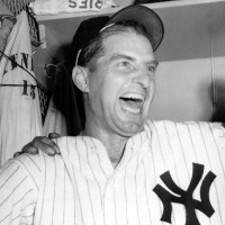
“Tommy Henrich told me ‘when you see my age in the paper, add three years because I lied when I signed. Everyone did,’” Vincent related..
Vincent told another Henrich story. The Yankees were playing the St. Louis Browns, and the game was in the ninth inning. Joe DiMaggio was on what would become a 56-game hitting streak but was hitless in this game. Elden Auker was pitching for the Browns.
Henrich went to bat with one out and a runner at first base. DiMaggio hit behind Henrich. As Henrich told Vincent the story, “I came up with one out and a man on first. If I hit into a double play, the big man doesn’t get up.”
So, Henrich related, he went to manager Joe McCarthy with an idea. “I said to McCarthy, ‘Boss, what would you think of me bunting here?”
“Young man,” McCarthy replied, “that would be perfectly all right.”
Henrich beat out a bunt, and DiMaggio went to the plate. “First pitch to Joe D. he hits a line drive over shortstop for a single,” Henrich told Vincent. It was game No. 38.
“Joe said Henrich was the smartest player he ever played with,” Vincent said.
And, Vincent added, “Bob Feller said Henrich ‘hit me like a drum. I couldn’t throw a fast ball by him.’”
THE SHORTSTOP GAME GOES ON
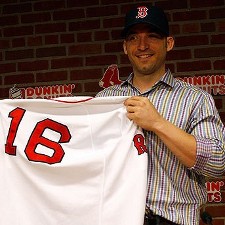 And now the Boston Red Sox have yet another new shortstop, Marco Scutaro, as the game of transitory Red Sox shortstops continues. Since they traded Nomar Garciaparra during the 2004 season en route to their first World Series championship in 86 years, the Red Sox have had these starting shortstops:
- 2004 – Orlando Cabrera 57 starts, Pokey Reese 57
- 2005 – Edgar Renteria 150
- 2006 – Alex Gonzalez 110, Alex Cora 47
- 2007 – Julio Lugo 139
- 2008 – Julio Lugo 79, Jed Lowrie 45, Alex Cora 38
- 2009 – Nick Green 74, Alex Gonzalez 43, Julio Lugo 27, Jed Lowrie 18