“The two of them deserve each other; one’s a born liar, the other’s convicted.”
Billy Martin uttered those words to me and another reporter on July 23, 1978, as we walked through the O’Hare Airport terminal en route to the gate for the Yankees’ chartered flight to Kansas City. The next day Martin tearfully resigned before George Steinbrenner could fire him for insubordination.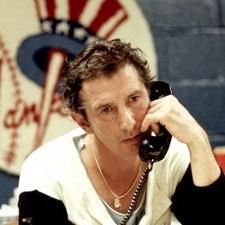
Steinbrenner would hire Martin four more times and fire him four times – and would have done it yet another time had Martin not been killed in the crash of his pickup truck 20 years ago Christmas night. But I might have been able to save his job the first time if other reporters hadn’t horned in on what the manager had intended to be a private conversation between him and me.
On that fateful day in Chicago, Reggie Jackson returned from a suspension Martin had levied for, of all things, insubordination. Martin irrationally detested Jackson and especially couldn’t stand the sight of the Yankees’ right fielder that day in Chicago.
On the bus to the airport, Martin asked if he could talk to me when we got there. I knew what that was about. Phil Rizzuto, his former teammate and a Yankees’ announcer, was Billy’s No. 1 confidant. When Billy had to get something off his chest, he would talk to the former shortstop.
Rizzuto, however, wasn’t on the trip. Neither was the reserve confidant, Moss Klein, the Yankees’ beat writer for the Newark Star Ledger. That left Martin with his reluctant third choice – me.
I don’t know how I gained that status. In Martin’s way of judging reporters, I wasn’t on his side. But as his agent, Doug Newton, often told him when Billy asked why Newton insisted that he had to talk to me, I might not be in his corner, but I was fair and always treated him fairly.
So there I was just inside the entrance to the O’Hare terminal talking quietly and privately to Martin. That is until Jack Lang, a reporter for the New York Daily News, joined us uninvited. Lang was not about to let Martin talk alone to The New York Times reporter unless Martin told him to get lost, which he did not.
Had the conversation remained private, Martin’s ensuing comments would most likely not have been reported. I understood Martin’s need to vent; I had previously witnessed it from a distance. His seething comments always remained private, and I think they would have this time, too. I would most likely have honored my understanding of his venting.
However, among the group of reporters who gathered around Martin was an Associated Press reporter from New York, Frank Brown, who had come to Chicago to cover the Jackson story and was returning to New York.
I saw the possibility of Brown’s hearing Martin’s comments, then leaving the group to get his flight while Martin told the rest of us that what he had said was off the record. As we walked through the terminal, I whispered to Brown a cautionary comment. “This might be off the record,” I said.
Brown immediately asked Martin, “Is this on the record?”
“You bet,” Martin said enthusiastically. So much for saving Billy’s job.
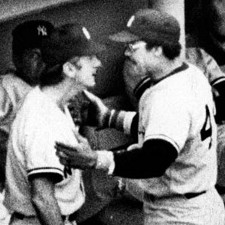 But he had yet to utter his infamous remark about “the two of them.” That came in phase II of the diatribe.
When Martin finished his comments and headed for the airport bar to await the delayed flight, I went to a pay phone – yes, it was so long ago it was before cellular phones – and called my office to dictate a new story to include Martin’s comments mainly about Jackson.
Henry Hecht of the New York Post had somehow missed Martin’s volley of Jackson comments but noticed me on the phone and waited for me to finish. Just as I did, Martin came by and, having noticed me on the phone, said, “Did you get all that in?” He clearly was enjoying his harangue of Jackson.
Assuring him that I had got “all that in,” I figured that he was finished. But as we began walking toward the gate, he began again and that’s when he said, “The two of them deserve each other; one’s a born liar, the other’s convicted.”
Reggie, in Billy’s eyes, was the born liar; George, who several years earlier had pleaded guilty to having made illegal contributions to President Nixon’s 1972 re-election campaign, was the convicted liar.
As it turned out, it was not the first time Martin had used the line. In fact, he had said something similar earlier in the day, before the game, speaking to a magazine reporter in his office. But the comment appeared in the Times, a morning newspaper, first (the Post was then an afternoon paper) and so the focus was on what I had quoted Martin as saying.
When we got to Kansas City, I called Steinbrenner for reaction. He was stunned and asked me to repeat what I had just told him. When he hung up with me, he called Al Rosen, the club president, and ordered Rosen to go to Kansas City the next day. By the time Rosen arrived at the Crown Center Hotel, Martin had already resigned.
He denied having made the volatile remark but subsequently acknowledged that he had said those words. I was never concerned that people might believe his initial denials. Martin didn’t have a high ceiling of credibility.
Like a bad penny, Martin kept coming back. Steinbrenner couldn’t resist hiring him again and again and again and again and apparently would have done it yet again if Martin had not suffered the fatal accident. Whenever the owner remarked that he had seen Martin and he looked really good and healthy, it was a signal that Martin would soon be managing the Yankees again.
Martin was susceptible to Steinbrenner’s machinations because he wanted desperately to manage the Yankees. But he wanted more. He wanted to be the owner’s friend and have the kind of relationship with Steinbrenner that Jackson had, but that wasn’t happening.
Martin was an outstanding game manager, as good as any, better than most, but he fell short in managing the players. It never took long for him to lose the trust of his players and soon his job.
His career was filled with controversy and paranoia. He never trusted anyone he didn’t know well and was constantly challenging reporters from opposing teams. In his repeated appearances with the Yankees, I would cringe sitting in his office when a visiting reporter would ask a question that I knew would set him off, which happened often.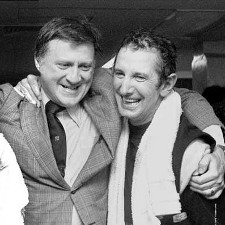
I was the object of his paranoia one of the first times I encountered him. In the 1969 playoffs, when Martin was managing Minnesota, Rod Carew, the Twins’ second baseman, was supposed to have been serving on active duty in the Army reserves but was granted a delay so he could play.
Thinking ahead, I wanted to find out where Carew would have been stationed had he gone on active duty. If he got a big hit, I wanted to be able to write that instead of being at whatever base, he was at Metropolitan Stadium getting the game-winning hit. But when I asked Martin, he immediately thought I was trying to cause trouble for Carew and the Twins.
Even before Martin became the Yankees’ manager I was covering his escapades, including his fights with a Reno, Nev., sports writer and a Minneapolis marshmallow salesman. The highlight of his Yankees-era fights was his Saturday night bout with one of his players, Ed Whitson, at a Baltimore hotel.
I had long ago vowed not to spend my nights on the road in bars in a Martin surveillance so I didn’t see the post-midnight scrap at the Cross Keys Inn. And when two reporter friends banged on my door at 1 o’clock in the morning, I didn’t believe their tale of a bar fight.
Just then there was a commotion down the hall. I stepped out of the room and saw Martin and Whitson snarling at each other. They had taken separate elevators and arrived on their floor at the same time. Peacemakers, however, managed to get them to their rooms with no further fisticuffs.
Martin did not live a peaceful life, and even his death was controversial. He and a friend, Bill Reedy, were riding in Martin’s pickup on Christmas 1989 when it crashed near Martin’s farm in upstate New York.
Before Reedy learned that Martin had died in the crash, he told police he had been driving the truck. He subsequently was convicted of drunk driving even though he testified that he had said he was driving to protect Martin, who had a long history of problems with alcohol.
I always believed that Martin was the driver. I felt there was no way that he would have allowed someone else to drive his truck no matter how much alcohol he had consumed and especially since both he and Reedy had been drinking.
Martin was 61 when he died, his life cut short by a substance that was so integral a part of that life.
GO SOUTHWEST, YOUNG MAN
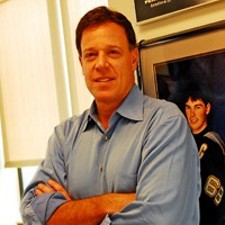 When he was a young baseball fan growing up in Pittsburgh, his father recalled, Chuck Greenberg said he someday wanted to own the Pirates. The current Pirates owners weren’t interested in selling the team, but when they were seeking a club president a couple of years ago, they interviewed Greenberg, a Pittsburgh sports lawyer.
They didn’t hire him either, leaving Greenberg free to form a group and buy the Texas Rangers. As with everything else they do, the Pirates owners very likely made a mistake by not selling to or hiring Greenberg.
“He would have given anything in the world to buy the Pirates,” his father said.
It remains to be seen how the Rangers will progress once Greenberg’s group assumes control from Tom Hicks, the debt-laden owner, who has operated the Rangers in a miserable manner. But with Nolan Ryan, the Rangers president, becoming a minority owner and remaining in charge of the baseball operation, the Rangers figure to continue improving.
“I’ll be managing partner,” Greenberg, 48, said, “but Nolan will have authority to do whatever he wants to do on the baseball side.” Hicks is one of about a dozen minority investor and will serve on the board of directors but will have no decision-making authority.
Greenberg still has to reach final agreement with Hicks on the approximately $525 million purchase and major league owners have to approve the sale, but no trouble is expected on either front.
My guess is Pirates fans will regret that the team’s owners didn’t want to sell it to Greenberg. “My oldest son is 24,” Greenberg said of Jeff Greenberg, oldest of his three sons. “He was 7 when the Pirates were last in the playoffs.” Jeff was also 7 the last time the Pirates had a winning season.
“As a fan it’s really tough obviously,” Chuck Greenberg said.
HO HUM, YANKS PAY TAX
Other teams complain about the Yankees with their $220 million payroll, but no one has a problem with the contributions the Yankees make with their luxury-tax and revenue-sharing payments.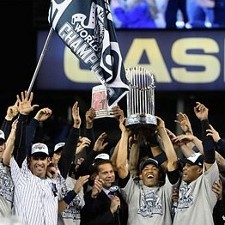
The Yankees learned last week they owe about $25.7 million in luxury tax and will learn next month how much over $100 million their revenue-sharing share will be. They are the only team whose payroll is high enough to trigger the luxury tax, and no other team pays as much in revenue sharing as they do.
All of that means the Yankees will have spent about $350 million to win the World Series. With that expenditure, it’s easy to understand why they get upset when they don’t win.
The Yankees are consistent. They have exceeded the payroll threshold and paid luxury tax every year of the seven years it has been in effect. The Red Sox, the Tigers and the Angels are the only other teams that have paid the luxury tax.
The tax threshold was $162 million, and the Yankees’ payroll for tax purposes was $226.2 million. The tax threshold next year will be $170 million.
The revenue sharing pool is based on each team’s revenue. The teams with the highest revenues are assessed money that goes into a pool to be distributed among the teams with the lowest revenues.