The Associated Press’s mission is to report the news, not make it. The news agency’s executives will tell you that. They tell their reporters that. If I can remember that many years ago, I was told that when I started out in this business working for the AP.
The other day, though, the AP made news. To be more accurate, the AP manufactured news. It decided to have a do-over in the voting for the AP’s 2009 defensive rookie of the year award. The winner of the original vote, Brian Cushing of the Houston Texans, was suspended for four games after a positive test for a performance-enhancing substance.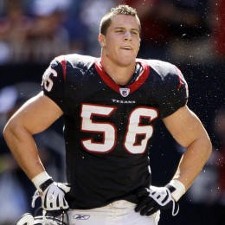
Wait a minute. Cushing plays football. This is a Web site about baseball. Why am I writing about a football thing? I am writing about a football thing because the AP has set a precedent, a bad precedent. With AP awards from hereon, a vote is never over until it’s over.
But wait another minute. The AP doesn’t vote player of the year type awards for baseball. There are no baseball awards for the AP to foul up. The Baseball Writers Association votes for individual baseball awards. But the AP has an associated group called the Associated Press Sports Editors (APSE for short). They are a potentially dangerous bunch.
For one thing, they are sports editors; that’s bad enough. But collectively they can be worse. At times the APSE has taken stands or threatened to take stands that are detrimental to the way sports writers do their jobs.
Now that the AP has created the do-over vote, the APSE might decide it’s a good idea and pressure (force? They are employees, after all) baseball writers to conduct do-overs.
Several years ago the APSE raised objections to their writers voting for post-season awards because players had bonuses attached to them. A motion was introduced at a BBWAA meeting that would have excluded players with such bonuses from consideration for the awards. The motion failed.
The Baseball Writers Association, whose awards are the most noted post-season sports honors, has no plans to follow the AP precedent. Jack O’Connell, the organization’s secretary-treasurer, said no one has suggested baseball-award do-overs. He recalled that when Ken Caminti won the most valuable player award in 1996 he got one call.
“Someone did call me when Caminiti had a big story in Sports Illustrated when he admitted to using steroids,” O’Connell related. “The caller said ‘are you going to take the award away from him and give it to Mike Piazza.’ Why would I take it away from him? It’s his, not mine.”
Terry Taylor, the AP sports editor, said the idea for a new vote was initiated in two calls she received on Mother’s Day from two voters saying “they think we should have a discussion about it.”
The next day, Taylor said, she had a discussion with one of the callers, and the matter progressed from there. “That it was unprecedented was not lost on anyone,” she said. “It came down to these two things. Anything we did with the awards and the college basketball poll our credibility is on the line.”
The AP long had college basketball and football polls until the Bowl Championship Series was created. I didn’t think the AP should conduct the polls because again, it was making news rather than reporting it. But the polls were popular and prestigious, and the AP was as vain as any other organization.
The AP has also long selected all-America college football and basketball teams. Would it declare a player ineligible for the teams if he tested positive for steroids?
“We’re not in the punishment business,” Taylor said. “If something comes up down the road that warrants attention, we’ll deal with it. Just as we did this time.”
To digress for a moment, to show how questionable the AP operation could be, let me tell you about how the AP selected its all-America college football team. The sports editor’s byline would be put on the article accompanying the listing of the team, but the sports editor neither wrote the story nor picked the team. A staff member did. For two years in the mid-60s I was that staff member.
One of the years I came down to selection time with four running backs for three spots on the team. When the sports editor asked how I was doing, I told him about the running backs. He asked who they were, and when I named them he immediately said, with no thought or discussion, “leave off Floyd Little. He was terrible against UCLA.” That had been Little’s only bad game of the season but it was also the only game the sports editor had seen, and in Ted Smits’ eyes it was enough to eliminate him from consideration.
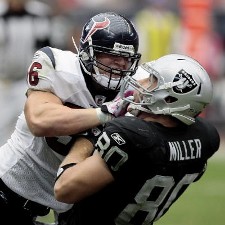 That history, of course, has nothing to do with Brian Cushing and Terry Taylor. However, she said the revote was relevant because “it was less than six months since the vote. She added, “We left his name on the ballot and he retained the award.”
Cushing retained the award, but in the do-over more voters changed their votes for him, 21, than voted for him a second time, 17. In another re-vote, the rookie lost his second-team outside linebacker spot on AP’s all-pro team.
I asked Taylor about the idea that the AP is supposed to report the news, not make it. “I don’t recall that as being part of the discussion,” she said. “Our name is on the award. That means a great deal to this company. You want to be responsible and credible and transparent.”
The National Football League watched the unusual development with interest but was not involved in it.
“It’s not our award,” said Greg Aiello, the league’s chief spokesman. “We have no involvement in it. It’s AP’s decision. We respect AP’s decision. We control our program. The consequences of a player violating the drug program is if a player violates it he is suspended and additionally he is not eligible for the Pro Bowl and per agreement with the union he cannot win the Walter Payton man of the year award and the Super Bowl most valuable player award.”
Those extras seem to be piling on, but that’s football and I write about baseball.