Jimy Kelly derives no consolation from his place in baseball history. He didn’t know, in fact, that he had a place in baseball history until a friend told him. But he would rather have had a lengthy major league playing career – no, make that a career of any length – and he would rather have a job in baseball now. Kelly, however, neither played in the majors nor works in baseball.
What, then, is his place in baseball history? Signed by the Toronto Blue Jays in February 1984 when he was only 13 years old, Kelly was responsible for the owners’ decision to change the age-eligibility rule in December 1984. Under what some called the Jimy Kelly rule, a player had to be 16 years old for a team to sign him, and he had to turn 17 during his first professional season.
“He didn’t know about it; I told him,” said a friend, Jose Campbell. “I said, ‘Do you know there’s a rule under your name?’”
Kelly, who was born in the Dominican Republic and now lives in the Bronx, played professional baseball at the age of 14, but he never played in the majors. He never even reached the highest level in the minors.
“I was too young,” Kelly said in a recent telephone interview. “I was doing the best I can, but I no hit the ball hard. They look at how you hit. I couldn’t hit like the older guys.”
Had he not been allowed to sign until he was 16, Kelly said, “things would have been different.”
“I was 13 when I signed,” he said. “My father signed for me. I was too young. My brother went for a tryout when he was 16. My father took me. He was told I was too young, but I took ground balls and when Epy saw me take ground balls he said wait, take five more, and he signed me.”
They were in the small Dominican town of Pagilla, and Epy Guerrero, a Toronto scout, ran the tryout.
“I was 13 and he signed me,” Kelly recalled. “I got a bonus, $5,000 I think.”
Guerrero recalls that Kelly was 13 when he took him to the Blue Jays’ complex in the Dominican but 14 when he was signed. However, baseball records show that he signed in February 1984, five months before he turned 14.
“He was outstanding,” Guerrero recalled, speaking from the Dominican Republic. “He was a skinny and tall guy. Like Tony Fernandez, that kind of guy. Like the guy from Milwaukee, Escobar. A skinny, tall guy. I never see a young kid with tools like Jimy Kelly. He was very close to the guy with Milwaukee right now. I signed both.”
He referred to Alcides Escobar, a 23-year-old Venezuelan, who will be the Brewers’ shortstop next season.
Back to Kelly, Guerrero said, “He had a lot of potential when he was 14. He had all the tools, the arm, everything. He had every tool to be a front-line all-star shortstop. I asked permission from Pat Gillick to sign him and he said there’s no rule against it.”
Gillick was the Blue Jays’ general manager, and he readily authorized Guerrero to sign the youngster.
“We thought at that time that he possessed the physical talent to be a major league player,” Gillick said recently. “Probably one of the reasons he didn’t become a major league player was he was probably signed a little bit too young. We probably should have waited a little longer until he matured, but certainly at that age he showed a lot of talent and a lot of potential and that’s why we did it.”
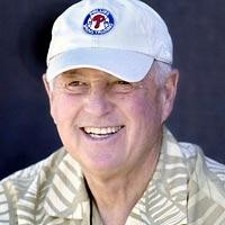 Had the Blue Jays waited, Gillick added, “I would have to think possibly he would have done better. Sometimes you have to take a chance and hope that it works out. Sometimes you take a chance and it doesn’t work out. If he had been a little bit older it would have worked out to another conclusion. It just happened that he didn’t develop in a way we thought he might and he didn’t reach the potential we thought he had as a major league player.”
I have long known about the young Jimy Kelly. I was aware of him at the time the Blue Jays signed him. But I lost track of him and several years ago decided I’d like to find him and talk to him about his experience. I heard he was living in New York and possibly playing softball in Central Park.
But I never found him. Then about two months ago I received an e-mail at this Web site about him.
“I’m writing you on behalf of Jimy Kelly,” Jose Chapman wrote. “Your article on Monday, March 23, 1998. He helped me a lot when I played in College as a shortstop and spoke to me a lot about how he would like to contribute to young athletes in baseball. He has always addressed me that he wants to work in the baseball industry as an instructor. Is there a way that he can get contacted by somebody and if you are interested in writing a story about him.”
I contacted Chapman and learned he was writing about the Jimy Kelly I had hoped to find. Sometimes you get lucky, though there’s my favorite saying from Branch Rickey, “Luck is the residue of design.”
“I met him on a baseball field about six or seven years ago,” Chapman said. “I played college ball at Bronx Community College. He’d run on the track every day. He came on the field and introduced himself to us. He saw something the shortstop was doing wrong. I started asking him a lot of questions and he helped me. We got to be friends.”
Kelly is 39 years old, living in the Bronx with his wife and their four children. He does not currently have a job.
“He’s still in shape,” said Chapman, who works in hospital outpatient psychiatry in the Bronx. “Sometimes he takes ground balls at shortstop. It’s sad that he isn’t in the industry. I’ve got to try to help him somehow. I feel bad for him. He has so much knowledge about baseball and he has no job in baseball. He doesn’t like to ask for favors. He’s pretty frustrated. He told me when he was signed and was on the 40-man roster he used to help guys. Nobody remembers him now.”
Kelly recalled that in his first year, 1983, “I don’t play. I weighed like 100 pounds. They sent me to Sarasota.” Then he went to Bradenton with Guerrero in 1984 but still didn’t play.
“He was just working out,” Guerrero said. “We didn’t use him.”
Kelly began playing in 1985 at Bradenton and struggled through five minor league seasons in the Toronto system, hitting .199 while rising above Class A only in 1988, when he played at AA Knoxville.
“After 1988 they sent me back to Florida,” Kelly said. “Barry Foote was the manager in 1988. We didn’t get along too well. He didn’t like me. I don’t feel good playing double A. They sent me back to the Florida State League.”
Kelly’s highest batting average in those five years was .218, and he was gone from the Blue Jays’ organization at an age (19) when many players have not even begun playing professionally.
His career wasn’t quite over. The Mets signed him for the 1990 season, and he batted .250 in 30 games with St. Lucie, also in the Florida State League. Then they released him.
“My last year was 1991,” Kelly said. “I signed with Cleveland and Milwaukee, and they both released me.”
Kelly has been out of baseball ever since, and he’d like to get back in.
“I’m looking for some jobs in baseball,” he said. “I’m looking to do something. It’s very hard for me now. Right now I’m not working. I think I can help young guys coming from the Dominican. I can help somebody.”
There was no one to help the 13-year-old Kelly. “I was too young,” he said. “I did the best I can.” And if he could do it over? “I would wait,” he said. “Now I understand better.”
NO YOUNG TALENT? NO LEE, NO HALLADAY
The sad state of the Mets’ minor league system was on display for  all to see the past week when the Phillies got Roy Halladay for minor league prospects and the Mariners got Cliff Lee for minor league prospects.
Either pitcher would have looked like a crown jewel in the Mets’ starting rotation next season, but neither was available to the Mets because they had no minor leaguers who appealed to the Blue Jays and the Phillies. The Phillies and the Mariners did.
When the Mets acquired Johan Santana from the Twins two years ago, they used minor leaguers to make the deal. But that trade basically left the Mets’ system barren. They have some decent prospects but not many and none that other teams willing to trade top-flight pitchers consider blue-chip.
With those pitchers rare, teams in position to take advantage of their availability – the haves – are obviously going to benefit while the have-nots lose out. It’s not just money that shapes contending teams. Attention to player development can be critical, but the man in charge of the Mets’ player development, Tony Bernazard, evidently went about his job the wrong way.
BETRAYING THE BELIEVERS
A September column that was critical of the way the Pirates do business was greeted by an outpouring of surprising support for Pirates management. Half of the readers who responded liked what management was doing in trading established, higher-paid players for prospects.
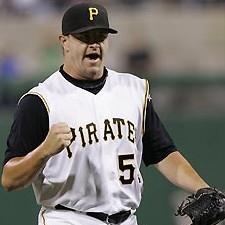 The question I raised in reacting to those management supporters was would the Pirates conduct their business any differently when those prospects developed into major leaguers. In other words, would the Pirates sign those players any more than they have signed their previously established players, the ones they traded rather than pay?
The first answer came last week when the Pirates did not tender a contract to their closer, Matt Capps, setting him free rather than having to deal with him in salary arbitration. The Pirates mumbled something about his ineffectiveness last season, but that’s Pirates speak for not wanting to pay.
Capps, who is only 26 years old, had a poor earned run average last season, 5.80, but subtract four of his 57 games in which he allowed 3, 4 or 5 earned runs and his e.r.a. becomes 3.51. Two of those games were also two of his five blown saves. The Pirates very likely feared that his net statistics would look good enough to the arbitration panel for Capps to win his case.
Capps earned $2,475,000 last season, and the Pirates didn’t want to have to pay $3 million or more next season. It doesn’t fit with their skimpy budget. There would be less money for the owner, Bob Nutting, to stuff in his pocket.
In his three seasons as the Pirates’ closer, Capps earned 66 saves in 79 chances, an 84 percent success rate. The percentages of more seasoned closers were higher, but if you combine Mariano Rivera, Trevor Hoffman, Francisco Rodriguez and Brad Lidge, their success rate of 88 percent in those three years would have resulted in an additional save each year for Capps.
In shedding Capps, the Pirates seemed to be cavalier about coming up with a replacement closer. They said, in effect, oh, we’ll find one somewhere. If the misguided Pirates’ fans were listening, they might have heard Pirates management playing their same old tune.
MORE LIKE A TRICKLE THAN A FLOOD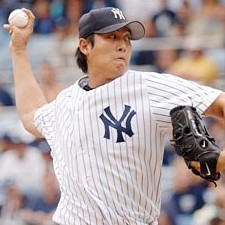
Every December there is talk of teams flooding the market with free agents by not offering contracts to arbitration-eligible players. A player who is not tendered a contract by Dec. 12 becomes a free agent.
A prominent, veteran agent said last month that a general manager, whom he did not identify, told him early this year that the owners “‘at a meeting decided to flood the market with free agents and see what happens.’” It was, the agent suggested, to be the latest step in the clubs’ game of collusion.
Along with the agent’s report, ESPN.com said it had talked with many general managers and reported that dozens of arbitration-eligible players would be non-tendered.
The tender deadline came last week, and 39 players, including the Yankees’ Chien-Ming Wang, were not tendered contracts. The number was the second lowest in the last eight years. Rather than a flood, it resembled a leaky faucet.