Adam Silver, the new commissioner of the National Basketball Association, has received rave reviews from all corners – fans, news media, players – for his handling of the racially repugnant Donald Sterling affair.
Had Silver’s predecessor, the overrated David Stern, done his job competently, Sterling would not have survived long enough for Silver to be in position to do what was necessary to defang the Los Angeles racist.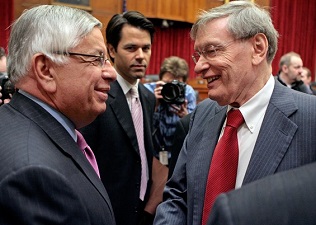
Had Sterling been the owner of a Major League Baseball team or Bud Selig been the NBA commissioner, Sterling would not have lasted as long as he did as the Clippers’ owner.
That’s the point I want to make here, and I stray into basketball to make it. Selig has long questioned why baseball is held to a higher standard than the other major professional sports, and because it is, he is criticized far more than the other commissioners. Compared with them, though, he is undeservedly maligned.
No one who has read some of my columns about Selig, the column before this one, for example, would mistake me for a Selig publicist so I feel comfortable in stating this position. In terms of dealing with problematic owners, Selig scores a slam dunk over Stern.
Based on news reports, Stern had plenty of reasons to take disciplinary action against Sterling, if not divest him of his ownership of the Clippers. A recent Sports Illustrated piece by Franz Lidz offered vivid examples of why Stern should have acted long before Silver did.
According to the article, Sterling agreed to pay $2.73 million to settle a federal case in which he allegedly systematically discriminated against Latinos, African-Americans and families with children at scores of apartment buildings he owned.
Elgin Baylor, the Clippers’ general manager for 22 years, sued Sterling for age discrimination, harassment and wrongful termination. The former NBA all-star lost the case, but a commissioner can view evidence in such a case differently from a judge or jury.
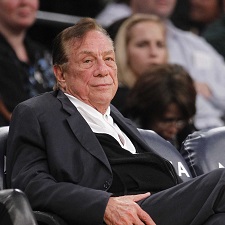 Interestingly, Sterling fired Baylor’s successor, Mike Dunleavy, who went to arbitration and won $13 million he was owed.
The NBA, Lidz wrote, “has long given Sterling a free pass. His prime enabler” was Stern, “who surely knew the potential for disaster.”
I come to the same conclusion and would like to have talked to Stern about his reason for letting Sterling avoid disciplinary action for his questionable behavior. However, Brian McIntyre, senior communications adviser to the commissioner, said Stern was out of the country.
Michael Bass, executive vice president for communications, did not respond to a telephone message or an e-mail in which I asked:
- Whether Stern ever took any disciplinary action against Sterling for any of his questionable behavior while Stern was commissioner
- Whether Stern ever spoke to Sterling about his reported transgressions
- Whether Stern ever made any comments publicly about Sterling’s reported transgressions.”
“If the answer to any of these is affirmative, can you say what Stern did or said? If he did or said nothing, can you say if he had a reason for not saying or doing anything?”
If Stern were commenting on Sterling, he would not choose to talk to me. He became disgusted with me in 1995 when I covered labor negotiations that led to an NBA lockout of the players.
Central to those talks was an internal union dispute in which a dissenting group of players held different views from the union leadership. Because this was a different kind of negotiation, I talked to the lawyers for the dissenters as much as I talked to lawyers for the union and the league.
Stern objected to my talking to the dissenting faction and complained to The New York Times sports editor. He was unsuccessful in trying to be a sports editor as well as commissioner.
Unfortunately for the NBA, Stern did not do his job with Sterling. He would have done well to take a hint from Selig’s response to the questionable ownership of Marge Schott of the Cincinnati Reds and Frank McCourt of the Los Angeles Dodgers.
As was the case with Sterling, Schott’s language got her in trouble and paved the way for her departure. Selig became concerned with the way McCourt was operating the Dodgers, placed a caretaker in the team’s office to run the team and eventually forced McCourt to sell.
Unlike Stern, Selig did not ignore existing or potential problems. Stern did, and so did another commissioner, Roger Goodell of the National Football League. When a Times reporter, Alan Schwarz, began reporting on the impact of concussions and other brain injuries, the NFL denied the accuracy, or at least the significance, of Schwarz’s reporting.
The league and its commissioner were wrong and subsequently acknowledged it.
In a similar fashion, Selig initially ignored the impact of steroids in baseball and was widely criticized for his stance. His situation, however, was different from Stern vis a vis Sterling and Goodell vis a vis concussions. To act on steroids, Selig needed the cooperation of the players’ union.
Once the players decided they wanted to liberate the game of illegal performance-enhancing substances, baseball adopted what is viewed as the toughest drug program in league sports.