John Henry, the Red Sox principal owner, says that neither he nor Tom Werner, the club chairman, or Larry Lucchino, the president, was the source of comments last week that disparaged the team’s recently departed manager, Terry Francona, who left with two World Series championships.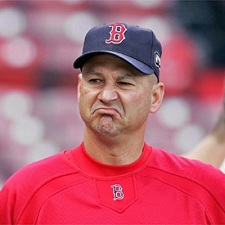
Though short of lie detector tests, there’s no way of knowing if Henry’s claim is correct, I would like to think it is.
The Boston Globe quoted Red Sox sources as saying that Francona was distracted during the season by marital problems and his use of painkillers. He has denied both aspects of the alleged distraction.
The 2,500-word article appears to have been well researched and sourced, though all of the sources are anonymous. The reporter, Bob Hohler, wrote:
“This article is based on a series of interviews the Globe conducted with individuals familiar with the Sox operation at all levels. Most requested anonymity out of concern for their jobs or potential damage to their relationships in the organization. Others refused to comment or did not respond to interview requests.
Having done this sort of thing for four decades, I understand what went into the reporting and the need to grant anonymity. Readers have to trust the reporter that he’s not making it up. They do or don’t based on his record of reporting.
Although I don’t know who Hohler’s sources were, I am certain that one or more of them were clubhouse kids or attendants. They make excellent sources. In the 1970s, a young man who worked in the Yankees’ clubhouse served as the primary, if not the sole, source of a book about George Steinbrenner and the Yankees.
It is virtually certain that Red Sox clubhouse kids told the Globe about Josh Beckett, Jon Lester and John Lackey drinking beer and eating fried chicken in the clubhouse during games.
Besides players, clubhouse kids would also be in the best position to observe Francona’s loss of influence with the players, as the Globe reported. They would also know about players ignoring the strength coach and his exercise routine.
Of course, none of this would have come out had the Red Sox maintained their division or wild-card lead and advanced to the playoffs. It’s only when a team fails that its dirty laundry shows up on the clothes line for all to see.
But the Globe’s disclosure of the Red Sox dirty laundry raises a relevant question. If all of this stuff was going on during the season, why didn’t the Globe and other Boston area newspapers report it?
The Globe said Francona, separated from his wife, lived in a hotel for the entire season. Why was that fact of Francona’s life not reported? Maybe it wasn’t deemed sufficiently significant to let Red Sox fans know?
But the Globe said his marital problems distracted him. Why wasn’t that noted when it was happening? If it was important enough to report in October, after the Red Sox had crashed and burned, it was important enough to report in September when the Red Sox ignited their self-immolation.
The same goes for Francona’s use of pain medication for his surgically oft-repaired knees. The Globe said the pills distracted Francona, too. Why didn’t the Globe know that during the season? If Francona was a distracted manager, why didn’t Red Sox reporters report it?
Did they know it or at least think Francona was being distracted and didn’t inform their readers because they were protecting Francona? Were they too close to the manager or the players that they didn’t want to create problems for them? Probably not, but where was the Globe and other newspapers that cover the Red Sox daily? Were they not paying attention?
When I discussed the Red Sox quagmire with a reporter friend from the years we covered the George and Billy and Reggie Yankees, he recalled that we didn’t wait until after the season or two seasons to learn that problems existed. We were constantly in the clubhouse and sensed when something wasn’t right.
Or were the developments the Globe reported overblown, an exaggerated attempt to explain one of the worst late-season collapses in baseball history?
As the Globe quoted Francona two-thirds of the way through the article, in the 36th of 54 paragraphs:
You could say Wilpon and Katz want to have their cake and eat it, too, or just call it a classic case of chutzpah – nerve, gall, audacity.
“You never heard any of these complaints when we were going 80-41 [from April 15 to Aug. 27] because there was nothing there,” Francona said. “But we absolutely stunk in the last month, so now we have to deal with a lot of this stuff because expectations were so high.”
Francona no longer has to deal with it because two days after the season ended he vacated the job he had held for eight years. It was very likely that had Francona not left he would have been invited to leave.
He met twice with the Red Sox top officials that day, and they apparently did not offer to exercise the option they had to keep him for 2012.
 They apparently didn’t have a whole lot of interest in keeping general manager Theo Epstein either, no matter what John Henry has said.
The owner showed up unexpectedly on a Boston radio show the other evening, having been driving in the area and hearing things being said that he thought were wrong so he drove to the station and appeared on the air as an instant guest.
“I’d love to have Theo back,” said Henry, who has always spoken highly and affectionately of Epstein. “I would have loved for Theo to have been our general manager for the next 20 years.” he told WBZ Radio Friday.
“That was my hope. That would have been my hope. But you don’t always get what you want. I did everything I could, personally – and so did Tom and Larry – to make that happen.”
Epstein, however, had a year left on his contract, and the Red Sox could have enforced it if they really wanted Epstein to stay. They didn’t have to let the Cubs talk to him and offer him $15 million or $20 million for five years. But the fact is, and I think people don’t understand this, the fact is that being the general manager in Boston or being the manager in Boston is a terrifically tough job.”
Would the Red Sox have had an unhappy general manager in their front office? Maybe. But if Epstein is as smart as the Cubs think he is, he would have understood the Red Sox position.
The ruling triumvirate could have sat Epstein down and said, “We created you – at the unheard age of 28 yet – and you at least owe us the year on your contract.”
To do that, though, the Red Sox would have had to want Epstein to continue as general manager, and they evidently didn’t want that as much as they didn’t care to have Francona continue as manager.
In the radio interview Henry said, “He never saw the general manager’s role as longer than 10 years for himself. “I mean, maybe he did early on, but certainly after a few years he knew the stress of this job was too much.”
But let’s do a little math. Epstein has been the Red Sox general manager for 10 years, and if the teams agree on compensation, which they hadn’t done as of Saturday night, he will sign a five-year contract with the Cubs. Ten plus five is 15. So much for a 10-year career as a general manager.
TAMPERING? WHAT’S TAMPERING?
CC Sabathia, the Yankees’ ace pitcher, can opt out of his contract in a few days, as Alex Rodriguez did during the 2007 World Series. Sabathia has played three years of the seven years of his $161 million contract, and the Yankees owe him $92 million for the remaining four years.
No team has come out and said it wants to sign Sabathia if he opts out and becomes a free agent. But leaks and rumors have begun to flow. First up: the Texas Rangers. If Sabathia becomes a free agent, ESPN.com reported, the Rangers will try to sign him.
If a team official made such a statement, he could be fined for tampering because he was telling the player publicly what he is barred from telling him or his agent privately.
But all a club official has to do is leak the intent to a trusted reporter, and he accomplishes what he wants, letting Sabathia know, for example, that there’s at least one interested party if he opts out. Agents can engage in the same practice, letting clubs know their players will be available.
A few years ago the Los Angeles Dodgers were certain that the Red Sox, through Drew’s agent, Scott Boras, tampered with Drew, who opted out of his Dodgers contract and signed with the Red Sox for more money than he had left in the Dodgers contract.
The Red Sox and Boras denied that they tampered, and the Dodgers never filed a tampering charge against the Red Sox.
With Bowie Kuhn as commissioner, the Red Sox would probably have been disciplined. Bud Selig has taken a less severe position on tampering.
It’s a sensitive area for reporters because they know teams and agents use them. However, they usually write the story because they figure someone else will if they don’t.
A union official once angrily accused me of aiding and abetting clubs with articles about free agents. I considered what he said and went on writing what I thought were newsworthy stories.
As for Sabathia, I expect he will opt out for strategic purposes, then sign with the Yankees for more years and more money.
CHUTZPAH A.K.A. METS OWNERS
Mets owners Fred Wilpon and Saul Katz know very well the meaning of the Yiddish word “chutzpah.” Last week they demonstrated the meaning of the word for everyone else.
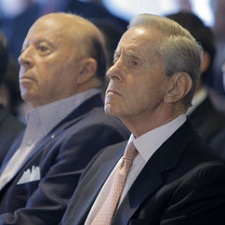 Wilpon and Katz are feverishly fighting a $1 billion lawsuit filed against them by Irving Picard, the trustee for the victims of Bernie Madoff’s massive Ponzi scheme.
Picard filed the suit in United States Bankruptcy Court. Wilpon and Katz wanted no part of that court and filed a motion to have the case removed to United States District Court. A judge granted that motion.
The next dispute between the parties was over whether the case should have a jury trial or be heard only by a judge, the Federal judge who threw out a large portion of Picard’s suit.
Wilpon and Katz presumably feel that a jury would be more sympathetic than a judge to Madoff’s victims, for whom Picard is fighting. So lawyers for Wilpon and Katz filed a motion in Federal court last Friday arguing that bankruptcy courts don’t permit jury trials, and those rules should prevail in this case even though it’s in U.S. District Court because it began in bankruptcy court.