A casual review of the history of the leadership of the National Hockey League Players Association should be enough to scare off any rational being from the idea of adding his name to the list. I am not suggesting that Donald Fehr is not a rational being, but he has been asked to assume command of the hockey union and he hasn’t said no.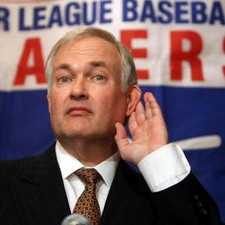
Fehr has declined to talk about the offer or even acknowledge that he has one to accept or reject. But people who know him from his 26-year tenure as head of the baseball players union believe that the job is his if he wants it but say unanimously he would be crazy to take it.
Which is why Fehr may very well accept the offer.
“I don’t think anyone can predict what he’ll do,” said one man who has known Fehr as long as he has been a union official.
When I said to another long-time Fehr acquaintance that I thought there might be a one percent chance that he would take the job, he said he would make it a 10 percent chance.
N.H.L. Commissioner Gary Bettman declined to comment on the Fehr matter. “He doesn’t comment on, or speculate regarding, matters of the Union’s internal business,” Frank Brown, the league’s spokesman, said in response to an e-mail request for an interview with Bettman.
If Fehr were to say “I do,” he would most likely do it because the challenge intrigues him.
“I’ve never seen such a mess,” said Marvin Miller, the patriarch of sports union leaders.
Miller retired twice as head of the baseball union. He initially retired in 1982, then returned briefly the next year when the players quickly became disenchanted with his successor, Ken Moffett. When he retired again in 1983 at the age of 65, Miller stayed retired.
Fehr is 61. He left the baseball job a few months ago with no specific plans for the next stage of his life. In discussing possibilities, he said union leaders generally have difficulty finding a worthwhile endeavor if they seek one. They rarely, if ever, move to the leadership of another union.
The hockey union has been plagued by a series of poor and questionable, if not downright criminal, leaders. Alan Eagleson, the first head of the union in 1967, wound up in jail on charges of fraud and embezzlement.
“I once told him he was going to go to jail,” Miller recalled. “I knew Eagleson well. He was a charming guy but as a trade unionist he was the biggest bust. He got into business deals with owners in Europe at the same time he was representing players. Talk about conflict of interest. He was writing the book.”
Bob Goodenow, a Harvard graduate and a lawyer, succeeded Eagleson in 1992 and led the union through its most tumultuous times.
 In his early days on the job, he led the players out on a 10-day strike prior to the Stanley Cup playoffs. In 1994, not long after the baseball players struck, the N.H.L. locked out its players in an action that lasted 103 days. Those disputes were topped by the league’s ultimate labor stoppage, the cancellation of the 2004-05 season.
That dispute ended July 13, 2005, and two weeks later Goodenow was asked to resign. Unlike Eagleson, Goodenow did nothing criminal. Rather, the players felt he was too militant to lead them successfully.
But his successor, Ted Saskin, didn’t last long. Saskin, who had been a union executive, incurred opposition among the players, who accused him of improperly gaining access to players’ private e-mail accounts. He was fired in May 2007.
Then came Paul Kelly, a lawyer, who like Saskin survived in the job less than two years. His departure, however, was not linked to wrongdoing. He appeared to become caught in a power struggle within the union.
“Kelly never had a chance,” a player agent said. “He had a dysfunctional group.”
But Kelly also lacked negotiating experience, which will be needed because the current labor agreement expires at the end of the 2010-2011 season.
Miller, a career trade unionist, has been critical of all of the other sports unions because the players have hired former players or others as leaders who lacked union experience.
“From time to time, some of the player reps have called me,” Miller said, referring to the N.H.L. union. “I had lunch with one of them. I discussed the things they were facing and the people they hired to do it. I stressed that you never hang on to what doesn’t work. namely picking an ex-player for the job. It never worked anywhere.”
The hockey union has suffered probably the worst beatings of any of the sports unions and currently is in dire condition. Does Miller think the union is salvageable? “Not in my time,” the 92-year-old Miller said.
Miller said Fehr has spoken with him about the hockey union and his involvement with it, but Miller said he has no idea what Fehr plans to do.
There is a history between the hockey union and lawyers from the baseball union. Michael Weiner, who is now the head of the baseball union, did some work for the hockey union, and two or three years ago, during one of the many times they were between executive directors, hockey players asked Weiner to become their head. He declined.
Knowing they needed help again, the hockey union’s player leaders asked Fehr to help them plan their future, including finding a new executive director. It comes as no surprise that they have asked Fehr to take the job himself.
“We’ve had a couple of discussions,” Miller said. “Mostly I try to be encouraging in trying to help them but discouraging when he raises the question of whether he should become more deeply involved.”
Others who spoke about the matter were unwilling to speak for attribution, not wanting to seem to be nosing into Fehr’s business, but their view was similar, as in, “What, is he crazy?”
“I don’t know what the attractions are,” one long-time friend said. “If I can guess, he’s had an obvious interest in higher positions on the Olympic committee. Hockey is an established sport of the Olympics and baseball is not. Whether that’s a factor here I don’t know.”
Another person who knows Fehr well and has known him for a long time said he is flattered by the union’s interest in him and finds the challenge intriguing. “Part of him wants to stay involved,” the person said but added, “He’d be nuts to do it.”
Inherent in the union membership is a large unknown factor that could make Fehr’s job – if he took it – far more difficult than his old baseball job.
“You’d have to know more than I do about their mindset,” Miller said. “So many of them are European players. I don’t know what their mindset is. They came here because conditions were more attractive than anything they could get in Europe. There might be a tradition that prevents them from doing things that have to be done. They might not have the ability to do it.”
There are two major roles a new leader would have to fill. He would have to reorganize and regalvanize the union, and he would have to negotiate a new collective bargaining agreement.
“They have a tremendous need to be represented in labor negotiations by somebody who has undeniable ability to do so,” a knowledgeable labor person said. “They got crushed in the last negotiation. It’s been a disaster.”
I wondered if it would be possible that Fehr could agree to represent the union in negotiations for a new agreement but not take on the more permanent role as union leader.
“I wouldn’t rule out anything, including that idea,” that person said.