Thirteen years have passed since the Toronto Blue Jays shafted Dave Stewart. The team’s assistant general manager for three years, Stewart received little consideration in 2001 when the Blue Jays sought a new general manager.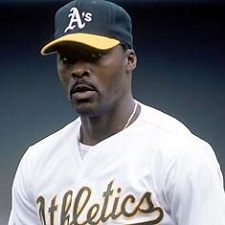
The job went to J.P. Ricciardi, whose sales pitch to the team’s president was “I can do more for less.” Eight years later the Blue Jays were looking for another new general manager because Ricciardi had done less for more.
After a 12-year run as a player agent, representing Matt Kemp and Chad Billingsley among others, Stewart is a candidate for the general manager’s job with another team – the Arizona Diamondbacks.
Tony La Russa has identified Stewart as one of many candidates for the job. La Russa is the chief of the Diamondbacks’ baseball operations. In the late 1980s and early ‘90s, he was the manager of the Oakland Athletics, for whom Stewart pitched and was a 20-game winner four years in a row.
The way I see it this is a perfect scenario for Stewart. I have no doubt that La Russa will name him the Diamondbacks’ general manager. I will be stunned if he doesn’t. Stewart, however, isn’t making any plans to move from San Diego to Arizona just yet.
“Tony and I, even before this, we’ve got a 28-year relationship,” Stewart said in a telephone interview. “I’ve been talking to Tony the last couple months.
“I’m honored that Tony thinks of me in that way. To be able to have contributed to and work with one of the greatest baseball minds will be a very interesting and great situation. But right now my primary concern is the guys who have been with me. They are important to me as well.”
In our conversation, Stewart seemed to be torn between getting a job as a general manager and continuing to represent players.
“It’s a really difficult situation for me,” he said. “Twelve years ago I would have said hell yes, but 12 years is similar to having children. I have to make sure my kids are ok. If I go to another life I just gotta be sure that my guys are taken care of. Do you let someone else take care of them? I want to be sure of that. I still represent players and the message to my players is important to me.”
Despite his conflicted feelings, Stewart is virtually certain to accept the Arizona job if it is offered. He’s not about to pass up the opportunity to take, as he put it, one of only 30 jobs in existence.
Granted, some circumstances may be different from what they were in November 2001 when he was Toronto’s assistant general manager, but consider his reaction when the Blue Jays passed him by in replacing Gord Ash.
‘I think the whole process is a waste of time,” the outspoken Stewart told me at the time. ”When I started out seven years ago trying to become a general manager, Sandy Alderson, who was the first person I worked for, told me that to become a general manager you should be in the office every day, learn about managing people, learn scouting and development, learn the Basic Agreement and the rules of the game.
”Eventually you should be able to run a department and you negotiate contracts. After you learn to do all those things and you do all those things, you’re qualified to do the job. Once you’re a general manager, he said, there are no rules. It’s a matter of your style versus everyone else’s style. But what general managers should have in common is they should all go through that progression. I like J. P. Ricciardi, but in this case, J. P. Ricciardi has not done that.”
Speaking of Paul Godfrey, the club president, Stewart added, “’This guy, before he hired Buck Martinez as his manager, offered the position to me. But I didn’t want to manage; I wanted to be a general manager. I don’t understand. If I’m a guy you can trust to manage your field staff and your players, what is it you couldn’t trust about me running your team?”
“For me, the process is disappointing and I’m very discouraged by how things are going in the area of minority hirings,” he said. “I don’t see any point of being in the office when our hiring showed that you don’t have to work in an office to get a job.”
Two and a half years earlier, Commissioner Bud Selig had ordered clubs to include members of minorities among candidates for openings in what are basically decision-making positions.
 Despite Selig’s directive, clubs often ignore it and get away without incurring discipline. A Selig spokesman, Pat Courtney, said Wednesday the commissioner “is proud of the work we’ve done but there’s more work to be done. He’s hopeful. We need to do better.”
Much better, as far as I’m concerned. I have watched minority hiring closely over the years, and I believe Major League Baseball has to do a better job.
After the recent departure of managers Bo Porter of Houston (fired) and Ron Washington of Texas (resigned), MLB has three minority managers – Lloyd McClendon (Seattle), Fredi Gonzalez (Atlanta) and Rick Renteria (Chicago Cubs) and one general manager, Ruben Amaro (Philadelphia).
That’s one of the lowest totals of blacks and Latinos in years.
As concerned as Selig is about his legacy, it will not include high marks for minority hiring. Selig can’t tell clubs whom to hire, but he can do a better job of using his office to encourage clubs to interview and consider more minorities.
Baseball is concerned about the decrease in blacks as players and fans. Having blacks in the dugout as managers and in the front office as general managers would serve as prominent invitations to blacks to return to playing fields and ball parks.
The Diamondbacks could aid baseball’s effort by naming Stewart their general manager.
If he gets and takes the job, the 57-year-old Stewart will have to give up his agency. The New York Daily News reported last weekend that he “recently divested himself from his player agency.” He has not.
“I’ve had conversations with a couple agents I’ve had good relationships with,” Stewart said. “We’ve been talking about a merger.”
Speaking candidly, he added, “The great thing about it, if the job was offered to me, I’d probably have no other alternative but to take it. It’s a job I’ve wanted. The challenge is the thing to me. That’s not an everyday challenge. There’s an everyday challenge being general manager, picking the right people and building a championship team. It’s a 12-month job.
“It’s a great city with opportunity to build a championship with Tony. It would be a great opportunity to make it happen.”